



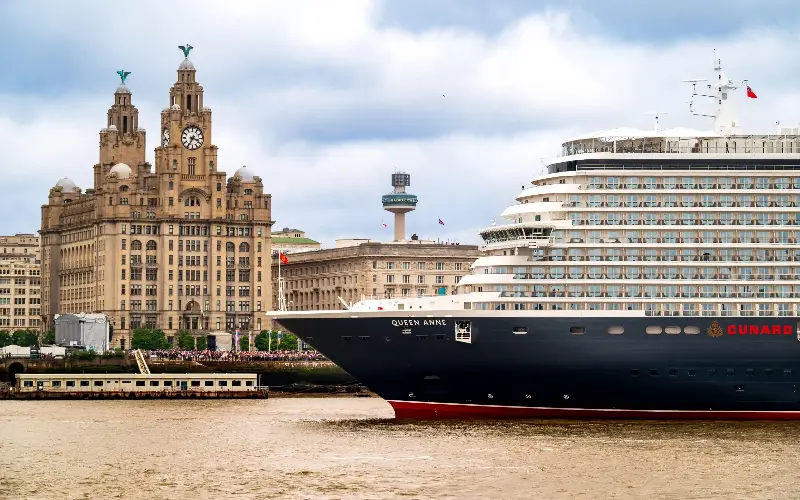
Having languished in the shadows of the cruise industry for so many years, the British Isles appear to be enjoying their place in the sun, with more than 50 ports across the UK, Channel Islands and Isle of Man now welcoming cruise ships.
Liverpool is the latest to announce expectations of a record-breaking year, with 118 cruise ships due to visit in 2026, bringing an estimated 350,000 passengers and crew. Regional ports, including Portland and Aberdeen, also have high expectations, and Stornoway is expecting 60,000 cruise arrivals and 89 ship calls.
It’s a trend that is reflected across the country: in five years, Portsmouth has doubled the number of annual cruise visitors, rising to 30,000 in 2024. Aberdeen and Stornoway have reported even more drastic increases, rising from 2,500 to 17,500 and 16,500 to 57,000.
“The number of passengers embarking from British ports has risen by 45 per cent since 2019 to more than 1.6 million,” says Cruise Britain chairman Ian McQuade. “Those visiting ports for a day are up 25 per cent to over two million guests.”
More scope and sailings
As momentum for sailing in UK waters has strengthened, cruise companies have responded. Lines such as P&O Cruises, Royal Caribbean and Celebrity Cruises are basing ships at British ports (notably Southampton) during summer, and there are more departure points than ever before, including the likes of Portsmouth, Tilbury and Falmouth.
Others have boosted the scope and number of sailings around the UK, spurred on by the variety of destinations their ships can visit. This isn’t restricted to major cities such as Newcastle, Edinburgh and Bristol, but smaller ports including Dartmouth, Fowey and Cowes, or the offshore attractions of the Isles of Scilly, Channel Islands and Scottish Hebrides.
To this end, Iglu chief executive David Gooch predicted “even more enquiries” for British Isles cruises and ex-UK voyages, adding that the cruise agency had already seen a rise in demand and bookings for destinations such as northern Europe and the Norwegian fjords.
It comes as rising opposition to cruise ships in some European destinations has led to restrictions on arrivals. The full effect of this has yet to impact figures, though according to the Association of Mediterranean Ports (MedCruise), passenger arrivals in Marseille and Genoa fell 6.3 per cent and 10.8 per cent respectively between 2023 and 2024.
Still, the British Isles have some way to go before challenging the dominance of the Mediterranean, which attracts nearly 5.7 million passengers as the second-most popular cruising region after the Caribbean.
Attracting a new audience
It took the Covid pandemic and the proliferation of “Seacation” cruises around Britain’s shores to not only attract a new audience (first-timers were estimated to account for 20 per cent) but to open people’s eyes to what was on their doorstep.
“Any one itinerary story can span English country houses, and charming coastal villages; Welsh castles and Northern Irish craic; Scottish lochs, glens and the opportunity to sample island life in the Channel Islands and Isle of Man,” says McQuade.
A factor in the region’s favour could even be the notorious British climate. Some cruise companies say they are seeing evidence that southern Europe’s oppressive heatwaves of recent years are deterring guests in the peak summer months.
Star Clippers is one such line. The tall-ship line reported that September departures had sold out, even though there is still availability for July and August sailings – a prospect unheard of just a few years ago.
Princess Cruises is another, having launched an extended Northern Europe programme – which includes an eight-night Irish Counties & Scottish Shores itinerary departing from Southampton – for 2027 due to customer demand.
Not all smooth sailing
Such burgeoning popularity hasn’t all been smooth sailing, however, with the volume of cruise calls in ports such as the Orkney Islands’ capital, Kirkwall, raising issues of overcrowding. Elsewhere, the 1,000-passenger ships calling at the Cornish hamlet of Fowey split the community between those in favour of the extra business and opponents citing overcrowding and pollution fears.
While local businesses and tourism operators point to a valuable influx of spending (and according to the Cruise Lines International Association, more than 60 per cent of cruise guests will return to places they have visited on a cruise), critics say the scale and frequency of visits can strain infrastructure and alter the character of smaller destinations.
Ex-fishing boats and traditional yachts
The British cruising scene tends to be dominated by larger ships from mainstream lines such as P&O Cruises, Royal Caribbean and MSC Cruises – who base ships in Southampton – but local waters are increasingly seen as prime adventure territory for the rising number of smaller expedition ships.
There’s the authentic feel of the traditional boats of the Cornish sailing company VentureSail that explore the coastlines of the West Country and the Scilly Isles. And around the Scottish Isles, atmospheric craft include the former fishing vessels of Majestic Line, Hebridean Princess (the luxury cruise ship that was twice chartered by Queen Elizabeth II) and the intimate boats of small independent operators such as St Hilda Sea Adventures and Red Moon Cruises.
“UK cruising is carving out its own distinct space,” says Jonny Peat, cruise director of the Advantage Travel Partnership. “Rather than competing with the Mediterranean, it complements it, giving cruisers a compelling reason to look closer to home.”