



Dear Alex,
I purchased my 2021 Kia Picanto two years ago when I lived in Cornwall. I have now moved to the West Midlands. My yearly mileage is low, but I need to return to Penzance occasionally. After driving for years in Cornwall, traffic and road systems here seem daunting in the tiny Picanto. I still want a small car (I rarely carry passengers), but would like something a little larger, perhaps a Volkswagen Polo. Is this a good choice?
– CS
Dear CS,
There’s a reason why Volkswagen’s Polo supermini is so popular – actually, there are many. The current Polo is comfortable, roomy, well built, easy to drive and cheap to run. In fact, the only downside is a relatively high list price compared with some other small cars, although this is mitigated by the fact that Polos hold their value pretty well.
However, only two engines are offered: a 79bhp 1.0-litre and a turbocharged version of the same, with 94bhp. The former feels rather weedy on the motorway, and while the latter is fine, you might find a bit of extra punch in reserve will help you to feel more confident among the hordes of flash 4x4s.
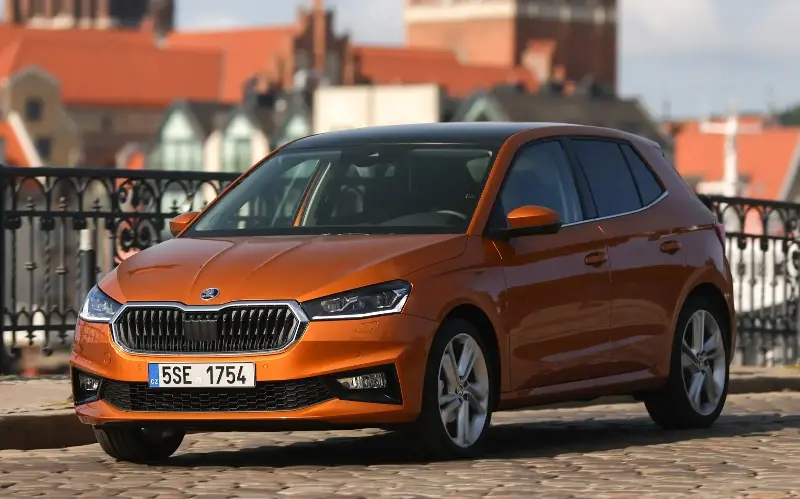
That is why it’s worth looking at the Skoda Fabia instead. It is based on the same underpinnings as the Polo but, crucially, there is a wider range of engines. You can opt for a 113bhp version of the 1.0-litre, or even a 148bhp 1.5-litre engine, both of which will provide extra flexibility on long runs to Cornwall.
As an added bonus, the Fabia is slightly roomier than the Polo, as well as smoother on motorways. It’s also better value. In fact, a mid-range Fabia Design Edition with the 113bhp engine is about the same price as the most basic Polo Life with the 79bhp engine.
Also worth considering is the Honda Jazz. The latest Jazz is really smart, with a beautifully finished interior. It’s very practical too, with the rear seats flipping up cinema-style to provide a tall additional luggage area if you aren’t carrying passengers in the back.
However, the Jazz is even more costly than the Polo. But you get what you pay for in many ways – not only is it incredibly easy to drive and very fuel efficient thanks to its hybrid powertrain, but it is immensely reliable and very comfortable on motorways thanks in part to a 120bhp engine, which means it never feels out of its depth.
What’s more, even the most affordable Elegance model is well equipped, so you don’t have to pay more to get essential equipment.
Should my Skoda have had its four-wheel-drive system’s fluid changed?
Dear Alex,
My 2021 Skoda Kodiaq TDI 4x4 has just had its fourth-year service at a Skoda dealership. Two years ago they advised an oil change for the Haldex four-wheel-drive system at 9,000 miles. I agreed as we tow a caravan for about 2,000 miles a year. This year, I asked if this was necessary at 17,000 miles; they didn’t answer but changed the oil anyway. Was this a waste of money? I also mentioned the possible timing belt change next year at five years, but was told that the belt is now Kevlar and the latest info from VW was to change it at 100,000 miles; mileage only, not time. What do you think?
– JH
Dear JH,
Firstly, I think that if you only asked about the possibility of changing the fluid, the dealer should have checked to confirm whether or not you wanted to go ahead, rather than doing the job and lumping the extra £150-odd to your bill.
Fortunately, in this instance, a fluid change would have been the right course of action. The servicing schedule on these Haldex systems is subject to a lot of confusion, but the current guidance is to change the fluid every two years, so yours was due some attention.
There is one note of caution, which is that the reason for changing the fluid is to prevent excessive wear on the pump by keeping the fluid clear of particles that can build up and block the pump filter. But the official servicing schedule does not include a recommendation for the pump to be removed and the filter cleaned, which I think is an oversight.
You can ask the dealer to do this when they change the fluid – but, of course, they will probably charge extra (besides, that is hard to do if they go ahead with the work without your knowledge!)
Most good Volkswagen Group specialists include a filter clean-out in their Haldex fluid changes, so the next time the change is required, in a couple of years, it might be worth finding an independent specialist to do the work instead.
Regarding the timing belt, until recently the recommendation was indeed to change it on a time and/or mileage basis, depending on the engine. However, controversially, this was a recommendation introduced by Volkswagen UK – head office only stipulated a change interval of 130,000 miles. Some owners now feel aggrieved that they may have paid to have the belt changed unnecessarily.
My feeling is that it’s better to be safe than sorry when it comes to timing belts. The newer belts undoubtedly have a longer life but, given your low mileage, it’s going to be a long time before you reach the 130,000 mark.
In this instance, therefore, consider changing the belt ahead of time, to be on the safe side, perhaps even keeping to the original five-year recommendation – even though there is no longer any stipulation from Skoda to stick to that schedule.