



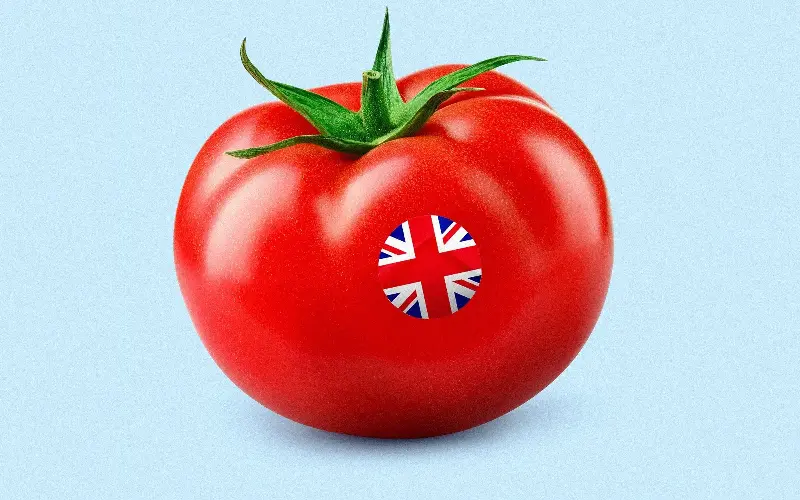
Walk into the supermarket and there’s a United Nations of food on the shelves. Strawberries from Greece, lamb from New Zealand, lobster from Canada, asparagus from Mexico and green beans from Morocco. All well and good for international relations, but these foods are available from the UK – when in season. So is it worth waiting for the British crop?
Let’s first be realistic. Few people could subsist entirely on British produce. As the late Charlie Hicks, presenter of Radio 4’s Veg Talk, once told me, eschewing all imports means “you’d die of scurvy or boredom, whichever got you first”.
Eating 30 different plants a week is recommended by experts; during the British “hungry gap”, from late March until May, when home-grown produce is thin on the ground, you’d be hard pressed. Much as I love cabbage, two months straight on brassicas is a dreary thought.
But there are other reasons to think twice about buying out-of-British-season imported produce: supporting British farmers for one, environmental concerns another. But more pertinently, much of our food tastes better: our lamb is more richly flavoured, lobster juicier. As for the fruit and veg, it’s fresher. Buying British pays dividends for the soul and stomach – as these foods prove.

Rhubarb
Out: Dutch forced rhubarb
In: British indoor and outdoor rhubarb
Bright-pink forced rhubarb appears in Britain from January, the best springing up after the frost in grow houses located in the region between Leeds, Wakefield and Bradford known as the Rhubarb Triangle. But beware: Dutch growers try to steal Yorkshire’s thunder with their own crop in December, from plants which have been pre-chilled or even sprayed with Gibberellic acid, a hormone which promotes early shoots.
British outdoor rhubarb, appearing later in the year, might lack the vibrant colour and flavour of the forced variety, but it has different charms: gutsier, with a heft of tannin and acid in the flavour that makes it great in combination with other fruit, especially strawberries (frozen, of course, if you’re eating it at this time of year).
Best to eat indoor rhubarb: from January to March when the rhubarb “crowns” have stored enough cold to shoot.
Best to eat outdoor rhubarb: from the end of March to September, before the stems get too tough.

Lobster
Out: Canadian lobster homarus Americanus
In: British lobster homarus Gammarus
North American lobster is available year-round but our British lobster is seasonal. “They go into a sort of hibernated state in winter, then when the water warms up again in the spring they start feeding, meaning the fishermen can put out their pots and start catching them,” according to Mike Warner, a seafood consultant.
For the Christmas market, after the season is over and “when the price effectively doubles”, they are stored live in tanks. Either way, our lobster is sweeter and juicer, far superior to its transatlantic cousin, and available from Waitrose.
Best to eat: April to September, when the seas are warmer.

Green beans
Out: Extra-fine green beans grown in Kenya, Egypt, Senegal and Mexico
In: British dwarf and fine green beans
What used to be called French beans often come from anywhere but these days. Most are air-freighted in from Africa or South America. A fragile product, they are often tired and tough, sometimes even wizened or patched with bruising. As for the “ready-trimmed” beans, what’s the point? Browning at the ends, they need trimming all over again. Stick to the locally grown ones, with their juicy snap and leafy fragrance, when they come into season.
Best to eat: July to September.

Strawberries
Out: Strawberries from Spain, Egypt, Morocco and Greece
In: British polytunnel strawberries
A combination of polytunnels and heated greenhouses, plus new “Everbearing” varieties, have stretched the British harvest (which covered just June and July in the 1990s) to start in April through to October and beyond. In 2025, the inaptly named Summer Berry Company even started producing a British crop year-round. Mostly, though, imported strawberries from the EU and North Africa fill the shelves November to March, and bolster the home-grown supplies in the shoulder seasons. Our fruit is generally more tender and fragrant, especially the old-fashioned June-bearing varieties such as Cambridge Favourite.
Best to eat: June and July for June-bearers, and May to October for unheated polytunnel “Everbearing” varieties.

Asparagus
Out: Plastic-wrapped Mexican or Thai asparagus
In: Bundles of British asparagus with a paper cuff
Asparagus shoots appear in a matter of hours and our temperate climate provides optimal conditions for tenderness. The hotter weather of Spain or South America can make the crop grow even quicker, resulting in tougher, woodier spears. Either way, fast growth makes for fast respiration, the rate at which the picked veg loses moisture and sugars. “Freshly picked is sweeter,” says Chris Chinn of Wye Valley Produce, so time from harvest to dipping in your hollandaise matters. Chinn points out that it takes at least three days for a lorry load of produce to come from Spain and, allowing for logistics, the same for a planeful from Mexico. British asparagus can be in store within hours of picking.
Best to eat: from April to the end of June, though some British growers such as Wye Valley kick off as early as February.

Blueberries
Out: Blueberries from Mexico, Chile, North Africa and Spain
In: British blueberries
If you’ve ever opened a perfect-looking pack of blueberries and found them to be mushy and dull-tasting, that could be down to the distance they’ve had to travel. “The blue colour means you can’t see the bruises, but they do bruise,” points out Chinn of Wye Valley Produce. British blueberries can be in store in a day, while shipping from South America could take two weeks. Plus, our cooler climate means we grow the Northern Highbush variety, which has a better balance of sweet and tang compared with the sugary Southern Highbush.
Best to eat: July and August, though you may find some in June and September.

Apples
Out: Pink Lady apples grown in Argentina, Chile, France, Italy, New Zealand or South Africa
In: British-grown Jazz apples
There’s no beating British apples with their sophisticated flavour, a product of our cool maritime climate in which the fruit ripens more slowly. Supermarkets have become a bit better at stocking a range, and you may find early-fruiting Discovery, with its pink-and-white-flesh, as well as nutty Egremont Russet and late-season Ashmead’s Kernel. So why do we import more than 60 per cent of the apples we eat? Partly it’s to do with wanting a year-round supply, and even with ever more sophisticated chilling techniques, home-grown apples are thin on the ground from April to August. It’s also clever marketing from the likes of Pink Lady, a heavily marketed apple which, like the ever-popular Granny Smith, is rarely grown in the UK. British growers are fighting back with new varieties such as Jazz, offering a comparable tangy sweetness and crisp texture.
Best to eat: from August for the early-season varieties like Discovery, through to November. The stored apples take over into the New Year.

Lamb
Out: New Zealand leg of lamb in spring
In: British leg of hogget (lamb more than a year old)
We’ve got our Easter roast all wrong. Demand for prime cuts surges as the long weekend approaches in spring, but according to Will Greig of the online butcher Pipers & Co: “Most sheep lamb between September and March. So trying to get [the meat] ready for Easter is like fitting a square peg in a round hole.”
Imports plug the hole, with the vast bulk coming from New Zealand and Australia. But the Antipodean lamb is mild-tasting, which can be disappointing for traditionalists. Greig suggests trading your spring Sunday roast for one to two-year-old sheep known as hogget, still tender but packed with flavour from plenty of grass and forage.
Best to eat British lamb and hogget: lamb from the end of the summer, hogget from early spring. You’ll need to go to a good butcher for hogget, or buy online via Salter and King.

Tomatoes
Out: Bitter cherry tomatoes from Morocco
In: Farmers’ market soil-grown British mini tomatoes
Yes, those tomatoes from that Italian market or French roadside stall are often fantastic. But the tomatoes grown overseas and shipped to us are not the same, for the most part picked under-ripe and ripened with ethylene gas, not sunshine. We grow some great tomatoes, particularly small ones that do better in our climate and knock spots off the hard, acrid cut-price ones from North Africa. For the best flavour of all, seek out tomatoes grown in soil (most are grown hydroponically) from the farmers’ market, ideally from unheated polytunnels rather than heated glasshouses.
Best to eat: from unheated polytunnels July to October, while the heated glasshouse season lasts from spring to late autumn.
The environmental impact of seasonal eating – and a plea to supermarkets
The costs of growing food in a heated greenhouse in this country can wipe out any gains from not driving lorryloads of produce across the Continent. But air-freighting, common for fragile crops such as asparagus and green beans, tips the scales the other way. Factor in power-hungry refrigerated transport, or sapping precious water to grow sweet red cherry tomatoes in arid districts of Spain or Morocco, and the balance swings towards home-grown again.
Meanwhile, if customers are keen to buy British, the supermarkets need to step up. They know home-grown is worth a premium to us: at the time of writing, in Waitrose, British asparagus is selling for twice the price of the imported spears. And yet, despite hanging banners to proclaim they back British farming, some supermarkets stock relatively little. At Tesco recently, a placard showed tomatoes and a British flag, but not a single one of the 13 varieties on sale was grown on our shores.