



When you read reports of armed militias patrolling the streets of Caracas, food and medicine shortages, and rumoured Hezbollah training camps, it’s hard to believe that a decade ago Venezuela was a top up-and-coming adventure destination.
The biggest victims of Nicolás Maduro’s 13 years of misrule – during which GDP per capita shrunk by roughly 80 per cent and eight million citizens fled – were, of course, the Venezuelan people. But the nation’s slide into chaos also made it a no-go zone for tourists, putting one of the world’s most captivating countries out of reach. It was placed on the Foreign, Commonwealth and Development Office blacklist in 2017, and remains there – an “honour” it shares with the likes of Iran and Syria.
A record 1.1m overseas tourists visited Venezuela in 2013, with then tourism minister Andrés Izarra saying he planned to put the country on the map as a holiday hotspot. But tourist arrivals fell off a cliff shortly after Maduro came to power, plummeting to less than half the 2013 number by 2017, according to the UN World Tourism Organisation.
Multiple European and US-based airlines withdrew from Caracas citing restrictive currency controls, their South American counterparts complained of contaminated fuel, and the airport had become better known for ransacked luggage and fatal shootings at check-in desks than as a cosmopolitan gateway to other-worldly escape.
Paradise lost
José Manuel Silva is a Venezuelan guide who has soldiered on through the slump, relying mostly on domestic tourists to sustain his business. On January 3, he was due to leave for a trek to Mount Roraima – the table-topped tepui said to be the inspiration behind Sir Arthur Conan Doyle’s The Lost World – when he heard news of the US military operation that captured Maduro. The mountain is shared with neighbouring Guyana, and the Venezuelan side offers the most accessible way up, but the route closed and he was forced to suspend multiple tours.
“Ten years ago, tourism in Venezuela was very fluid and there were people of all nationalities,” he says. “What changed was the infrastructure and the state of the roads. Public transport declined drastically. We used to use it but we would sometimes spend 24 hours broken down by the roadside.”
The major concern for international companies were the skyrocketing crime rates and political instability that saw carjackings become commonplace and tour clients deported just for “looking like” journalists.
UK firm Wilderness Explorers used to run trips through Canaima National Park to Roraima’s plateaued summit, but it pulled the plug on its Venezuela offering in 2014 after deciding “it put ourselves and our customers at a level of risk we were unable to accept”. A beloved local tour guide would later be killed by regime forces for allowing humanitarian aid through the park.
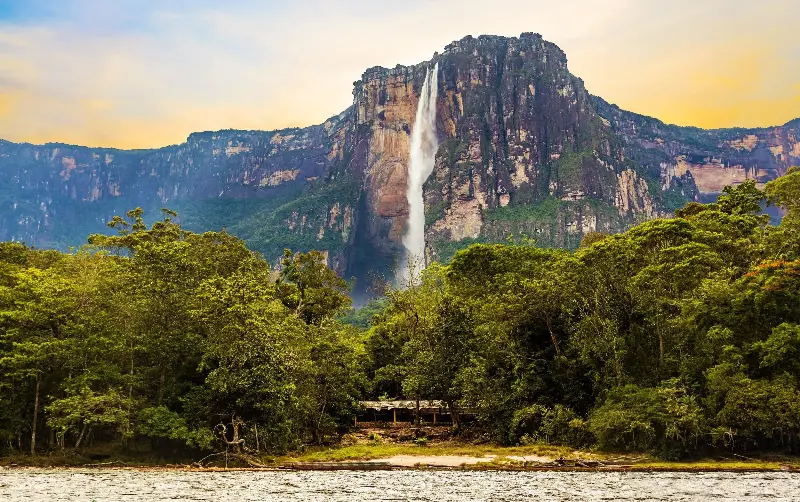
It was not only the Roraima-bound traveller that Venezuela attracted. Canaima’s rainforest drew birding enthusiasts. Hardy travellers trekked to Angel Falls to marvel at the world’s tallest uninterrupted waterfall – a sight Sir Michael Palin described in a recent Channel 5 documentary on Venezuela as “cataclysmic, but also very, very beautiful.”
The megadiverse land also drew visitors to the savannahs of Los Llanos – where cowboys work alongside capybaras bathing in nearby marshes – while city lovers admired colonial architecture and rode the world’s highest cable car in Mérida. Those on the hunt for natural phenomena made pilgrimage to the near-constant Catatumbo lightning displays, often staying in the colourful stilt houses on nearby Lake Maracaibo. It had been these seemingly floating structures that gave the country its name, which translates as Little Venice.
Venezuela had become the richest country in Latin America by 1970 thanks to its vast oil reserves, attracting the mega wealthy with magnate-friendly luxury hotels. Some, like the mountaintop Humboldt in Caracas, survived the subsequent socialist spiral, but this had more to do with nationalisation than filled rooms.
Symbols of a country’s dashed hopes for international glamour still stand elsewhere in the capital, such as the unfinished edifice of El Helicoide, which is now a brutal prison that looms over the slums below and is said to contain torture chambers. The building’s original purpose? A leisure complex containing a five-star hotel.
“Caracas looked like Dante’s Inferno on stormy nights,” says travel writer Chris Moss, who visited Venezuela in 1999, back when BA flights still regularly skidded onto the capital’s runway (the national airline, Viasa, had already gone bust). “But I also took a beach holiday on Margarita Island. That was very pleasant and old-fashioned, and felt totally safe.”
The largest of the country’s sprinkling of Caribbean isles, Margarita Island boasts the azure waters and pale sand that is so often synonymous with tropical luxury. However, by 2016 hotel owners were seeing occupancy rates of only 35 per cent, and instructing guests to pack their own toilet roll.
The long road to recovery
There have been some signs of resurgence in recent years, largely aided by flight agreements with nations including China, Cuba and Russia. In an unfortunately timed interview last November, the president of the National Federation of Hotels of Venezuela said that the sector was preparing for the “high-demand season” of early January.
Those holidays might have been scuppered by Trump’s intervention, but it was not wrong to indicate a growing appetite among travellers – Wilderness Explorers’ director, Claire Thorne, says the company has had an increase in requests for Venezuela in the last 12 months.
Yet, despite the fall of Maduro and a handful of optimistic operators advertising 2026 tours, few expect Venezuela to return to mainstream holiday itineraries any time soon.
Marc Leaderman, director of product and operations at Wild Frontiers, which specialises in destinations previously wiped from the travel map, says: “It’s not about bragging rights in enabling people to get to the country as soon as possible. Reliable international air access in and out of Caracas is a must. We would also need to see some indications that the situation in the country is stable and is likely to remain so for a while to come, and we’d need to go out first to undertake a detailed inspection trip.”
Like many others, Leaderman will be monitoring Venezuela closely, hoping to open bookings in a year or two if security improves.
“Visiting a country that has only recently reopened to tourists can be one of travel’s most rewarding experiences,” he says. “Locals are genuinely pleased to see you, there are fewer crowds, and you can be happy in the knowledge that your money is going to people and places that have often had a hard time of it recently.”
For now though, those determined to see the country will probably have to be satisfied with the view from Mount Roraima – provided they’re standing on the Guyanese side.