



Once upon a time, we chose seafood based only on what we fancied or could afford, with little thought for sustainability. We now at least know better.
The Marine Conservation Society estimates 93 per cent of fish stocks globally are fully exploited or overexploited, with sea life under added pressure from climate change and pollution. In the latest update to its Good Fish Guide, sustainability ratings for cod and langoustine (often referred to as scampi) have slipped, pointing to mounting pressure on some familiar favourites.
This doesn’t spell the end for fish and chips, although it does mean looking beyond cod caught in British waters, either to responsibly sourced stocks from further afield or to alternatives such as European hake, which offers the same clean, flaky texture but comes from healthier populations. Haddock can still be a good choice too, particularly when sourced from the North Sea or the west coast of Scotland.
As those distinctions suggest, it’s not just the species of fish that matters for sustainability, but location – and fishing method – as well. It’s not always easy to tell where and how your seafood was caught, however, so below are eight swaps that are likely to be more sustainable under today’s conditions, based on the Good Fish Guide.
1. Cod
UK stocks are doing badly, although in Icelandic waters they are at sustainable levels.
Swap out for: European or UK-caught hake.
2. Tuna
Sustainability depends on the species, location and fishing methods.
Swap out for: Sardines from the southwestern UK certified to the Marine Stewardship Council (MSC) Fisheries Standard are a great choice thanks to healthy population sizes and a low-impact fishing method.
3. Prawns
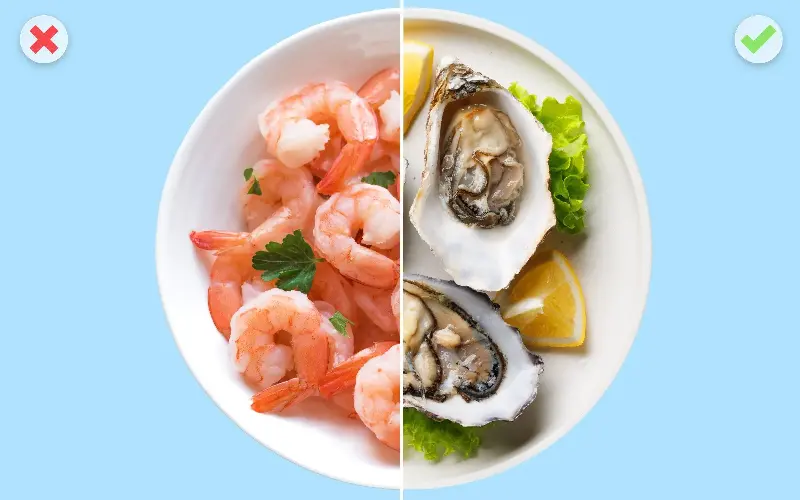
Can be sustainable depending on the species and where and how they were caught or farmed (see langoustine, below). Choose organic, MSC or ASC (Aquaculture Stewardship Council) labels.
Swap out for: Rope-grown mussels or farmed oysters, which don’t need any feed or chemicals as they get everything they need from the sea.
4. Salmon
Wild Atlantic salmon are not doing well, and some farmed salmon are negatively rated for the environmental impact of the farming conditions. Organic and Scottish ASC-certified farmed salmon are the better choice.
Swap out for: UK freshwater farmed rainbow trout.
5. Langoustine
Also known as scampi, langoustine populations have been declining in recent years – the better choices are those caught by pot or creel.
Swap out for: Recirculating aquaculture systems (RAS) king prawns, which are farmed in the UK and raised on land in contained tanks, with water continuously filtered and reused to prevent waste, pollution and contact with wild ecosystems.
6. Octopus
Sustainability varies, but avoid all octopuses caught in British waters as there are no controls to protect them.
Swap out for: UK farmed king scallops.
7. Dover sole
Sustainability varies depending on how and where it’s caught; look out for those caught in the North Sea and western English Channel, but avoid those caught in the eastern English Channel.
Swap out for: Plaice from the North Sea.
8. Mackerel
Because of “significant” concerns about mackerel stocks, consumers are now advised to avoid it.
Swap out for: European anchovies caught in the Bay of Biscay or Chilean jack mackerel.
How to choose fish sustainably
Making responsible choices can be a complicated endeavour, as made clear by the regional and method-based differences highlighted in the Good Fish Guide.
“For example, the sustainability of scampi or langoustine – which are the same species – really depends on how it’s caught,” says Kerry Lyne, the Good Fish Guide manager. “Langoustine caught with pot or creel has a much lower impact on the environment than if it is trawled, which involves dragging nets suspended from heavy beams along the seabed.”
Dredging, widely used to harvest scallops, clams and oysters, can also destroy the seabed and unintentionally catch vulnerable species. Pots, traps, hand lines and pole lines, meanwhile, are considered the most sustainable fishing methods.
It’s something Mitch Tonks, a chef who runs the Seahorse restaurant in Dartmouth and the Rockfish chain of restaurants in the South West, recognises. “That’s why we took dredged scallops off all our menus at Rockfish a few years ago and now use either hand-dived or Disco, a new innovative, low-impact method which we’ve championed from the very start,” he says.
Tonks further advocates that Britons buy local, though he points out that beam trawlers are a long-established part of the British fishing fleet, responsible for catching 90 per cent of the fish landed at Brixham and Newlyn, two of Britain’s biggest fish markets. “If you say you shouldn’t eat anything from a beam trawler, you’re suggesting something that’s unattainable,” Tonks says. “My view is, buy British, know which fishing port the fish is from, and let’s hope that we can put enough pressure on the industry so it can change itself.”
He urges consumers to choose fish carrying the “blue tick” eco-label, which is applied only to MSC-certified seafood, a standard for which he is an ambassador. The vast majority of cod and haddock sold in UK supermarkets now carry the MSC label, making certified options widely available. The best farmed seafood options carry the ASC label.
Whether you vow to buy British seafood, opt for blue-tick fish or swot up on fishing techniques, every small effort can lead to changes for the better.
Other Marine Conservation Society recommendations...
- Haddock from the North Sea, west of Scotland and Iceland
- Sea bass from the North Sea, English Channel and Celtic Sea, or ASC-certified farmed in Europe
- Alaska pollock caught in the Gulf of Alaska and the Bering Sea, if MSC-certified
- Monkfish caught in the North Sea or by otter trawls in the Celtic Seas and Bay of Biscay