



I’ll lay my cards out firmly on the table straight away here and admit that I love Japan – indeed, in my travels to more than 100 countries, it remains up there with my favourites. And the great news is that a cruise ship voyage actually removes a couple of the things people sometimes struggle with in Japan – the sense of culture shock at how different everything is and the sheer geographical diversity of what is, to many visitors, a surprisingly large country (over 50 per cent larger than the UK).
Cruising in Japan provides a familiar base to return to every night, no matter how synapse-popping the day has been. And you cover a lot of ground, missing out the ubiquitous mountains, as you sleep soundly en route to your next destination.
Japan used to be just a stopping-off point on longer itineraries, but today more and more people crave this destination and cruise companies are responding. Indeed, there has never been more choice of cruises to and around Japan. And with what seems like half the world desperate to visit Japan post-Covid, visiting on a cruise ship is a great way to do it, with a set budget and travelling with your own oasis of calm away from the increasing crowds.
This mesmerising land of epic mountains, jaw-dropping cities, moody temples, bubbling hot pools and unforgettable food awaits in a country that never fails to be anything but utterly bewitching.
In this guide:
Before you book
Where can I go?
The big hitters on most itineraries are the obvious city stars of Tokyo – Japan’s unmissable capital – and brilliantly fun Osaka, which, in my experience, is even better for food. Do not miss either and also look at Hiroshima or Nagasaki, preferably both – not just for their sobering Second World War history, but for their modern faces too.
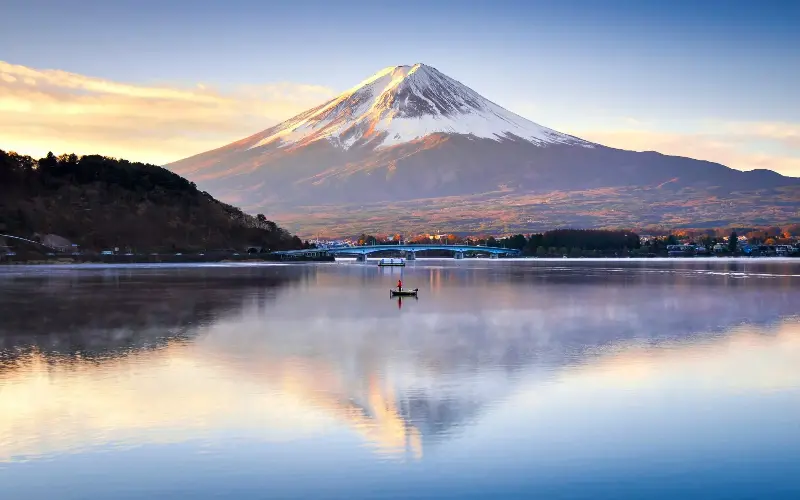
Visit Beppu for hot springs and traditional onsens, and Shimizu if you want to box tick Mount Fuji. Japan is a country with myriad faces, so exploring less-visited ports brings further rewards.
When should I go?
With its eclectic climate, it’s best to do your planning if you don’t enjoy the cold or being too sticky. The most obvious time to visit is during the famous cherry blossom season in March and April. Both spring and autumn in Japan are breathtaking. Showing Japan’s geographical diversity, the blossoms often don’t peak in Hokkaido until May.
How long will I need?
A week lets you visit some of the main ports like Tokyo and Osaka, and you can circumnavigate some of the main islands. However, if you can spare the time, a fortnight is better, which will allow you to cruise around all the main islands. The domestic cruise market is more focused on a week, usually less, so if you’re tight on time and happy to travel aboard a Japanese-oriented vessel, that’s another option.
Is a Japan cruise expensive?
In short, yes, and more than most countries, the cost of cruises in Japan varies wildly. If you want to make it part of a longer adventure, including other countries, you’ll pay for that, but the (very popular) flights to Japan can be expensive too, so beware popular Tokyo round-trip itineraries that don’t include flights.
What facilities are on board?
Think of your ship as a floating hotel that you don’t really need to leave. It’s Japan, though, so you will always want to at every port call. You’ll have a sweep of dining options, at least one swimming pool (often with hot tubs too) and most likely a spa. How fancy the latter is depends on how fancy the ship is. The same goes for entertainment.
Will I get to see the ‘real Japan’?
Japan can be a hard nut to crack, and a cruise that just skirts Tokyo and then a couple more destinations can feel too flimsy, so I’d plan on more time and more ports. Also check out the shore excursions – some lines trot out obvious things you could sort yourself, but the more luxurious ones tend to offer bespoke experiences that genuinely offer a window into Japan. Educational programmes vary too; Fred Olsen is especially renowned for its on-board cultural talks.
What’s included in the price?
You can expect all meals to be included on a Japan cruise, though speciality dining can be extra. Drinks are often included with meals, with the more luxurious lines going more all-inclusive. A key component in Japan can be whether excursions are included – or you have an allowance – as this is a cost that can add up.
What’s new?
Long gone are the days when cruise lines just made cursory Japan stops on longer repositioning cruises and round-the-world itineraries. Today, an increasing number of companies are realising the demand for either including a larger share of Japan in wider cruises or dedicated Japan-only voyages. Explora Journeys is demonstrating its faith in Japan, venturing to the country for the first time in 2026, with Explora III calling at Japanese ports in its maiden season.
Life on board
What does a typical day look like?
The cruising distances are not vast, with very few sea days, so you’ll typically be in a port early morning with a decent amount of time. This creates flexibility with the opportunity often to enjoy a half-day shore excursion, as well as explore your port of call.
Do I have to leave the ship every day?
You never have to leave the ship, and indeed, you cannot on sea days. The choice is yours, but you’ve come all this way to a country this remarkable, so you really should.
What are excursions like?
Excursions are a real highlight of a Japan cruise, from bubbling away in a hot spring or a traditional onsen to letting a chef from the ship share with you the delights of an Osaka market, before cooking you a feast with the fresh produce you manage to snare together. Then there are spirit-soaring temple visits, adventures to take in Tokyo’s bright lights and insightful visits to museums in Hiroshima and Nagasaki. In short, excursions in Japan are generally nothing short of utterly compelling.
Can I cruise solo?
Absolutely. Solo cruisers these days are no mere afterthought, with most vessels including social activities geared towards solo travellers. Expect the crew to be attuned to the needs of single travellers too.
Do I need to fly to the ship?
If you really want to maximise your time actually in the country, then, yes, though Japan is also included in many Asia/Australasia itineraries and round-the-world voyages.
Can I keep active?
Yes. Most ships have reasonable outdoor space for walking and light jogging, with gyms too. The more luxurious ships boast state-of-the-art gyms, personal trainers and tailored exercise classes.
How much should I tip?
The most luxurious cruise companies often remove tipping stress by including gratuities in their fares. Otherwise, there will usually be on-board guidance or even automatic service added to your account.
Will there be Wi-Fi on board?
Usually and increasingly, it’s free – otherwise you can buy a package to suit your needs. The most luxurious ships sport super-fast Wi-Fi using Starlink technology.
Before you go
What should I research?
Everything and anything. If it’s your first time, you’ll get culture shock, usually in mainly good ways. Read up on history and, crucially, etiquette and you will win new Japanese friends and find your trip more rewarding. The food is remarkable – I recommend researching which delicious dishes you want to try before you travel and then joyously ticking them off as you go.
About our expert
Robin McKelvie
Robin McKelvie has spent the last three decades exploring the globe as a travel writer, venturing to over 100 countries and cruising all of the world’s oceans. He loves that round-the-world cruises offer the chance to live and breathe the cruise life for months on end in a once-in-a-lifetime adventure where the world really is your oyster.