



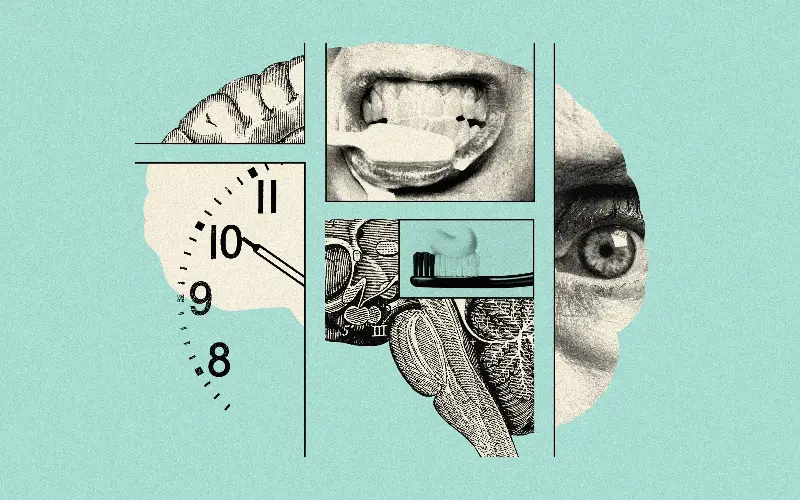
When I smile in the mirror, I wince. My gums are receding, several teeth are wobbling, it feels as if I have more gaps than teeth. My dentist says I have periodontitis, advanced gum disease. My mouth looks Dickensian and does little for my self-esteem – but what really terrifies me is that I could be facing a much greater risk of dementia, heart disease, arthritis and other health conditions.
Research presented recently at the American Association for the Advancement of Science (AAAS) annual conference, in Phoenix, Arizona, implicated gum disease with around 50 health conditions: rheumatoid arthritis (RA), dementia, diabetes, Parkinson’s disease, heart disease, stroke, erectile dysfunction, and asthma, to name a few.
The researchers recommended brushing your teeth three times a day (ie after each meal) to ward off gum disease and help protect your overall health – and the majority of us should probably be heeding this advice. According to the National Institute for Health and Care Excellence, up to 90 per cent of adults in the UK have some form of gum disease.
Gum problems start with gingivitis, inflammation in the gums caused by a build-up of plaque (a film of bacteria, saliva and food particles) around the gumline. “Gingivitis is extremely common,” explains Luigi Nibali, a professor of periodontology at King’s College London. “The more advanced form of gum disease, periodontitis, affects about half the population. It should be considered a systemic disease now – not just a local gum inflammation.”
So how can our oral health lead to conditions such as dementia and heart attacks, and what can we do to improve our gums and our overall health?
How gum disease and tooth loss affect the brain
A 2025 review in IBRO Neuroscience Reports stated that periodontitis could increase the risk of dementia by 95 per cent, even if you live an otherwise healthy lifestyle. The problems start when we don’t clean our teeth immaculately. Plaque hardens into tartar (also known as calculus), providing the perfect platform for bacteria to breed below the gumline.
Oral bacteria, such as Porphyromonas gingivalis (P. gingivalis), have been found in the brains of people with Alzheimer’s disease and other forms of dementia. These bacteria leach into the bloodstream and trigger the immune system, which releases proteins that cause inflammation, eventually damaging the gums and bone surrounding the teeth, as well as the release of enzymes known as gingipains that act like molecular scissors, damaging nerve cells, which can lead to memory loss.
Chronic inflammation can also damage the delicate inner lining of blood vessels, which, in turn, makes narrowing and clot formation more likely. This can increase the risk of stroke and vascular dementia (memory loss caused by reduced blood flow to the brain). However, Prof Nibali says that more studies are needed to confirm the extent of the association.
Interestingly, studies show that each tooth you lose is linked to a small increase in dementia risk. By the time you lose all your teeth, your risk of cognitive impairment rises to 54 per cent (and a 40 per cent higher risk of dementia). Curiously, the risk drops when dentures replace missing teeth. “The data [for that link] is clear,” says Prof Alpdogan Kantarci, of the University of Minnesota School of Dentistry and the American Board of Periodontology. “We just don’t know the exact mechanism yet.”
Bacteria can trigger heart attacks
The link between heart disease and poor gums has been known for decades but the evidence is now incontrovertible. Once P. gingivalis is in the bloodstream, the bacteria can contribute to inflammation and the build-up of fatty deposits (known as atherosclerotic plaques) inside arteries. These narrow and stiffen blood vessels. If a plaque ruptures, it can trigger a clot that blocks blood to the heart (causing a heart attack) or to the brain (causing a stroke).
People with severe periodontitis have up to a 30 per cent higher risk of heart disease or stroke compared with those with healthy gums. A study at Aberdeen Royal Infirmary in 2023 found that two thirds of the people admitted with a heart attack had a severe gum infection.
The researchers also looked at levels of genes involved in the switch from the bacteria living harmlessly in the mouth to becoming “bad” and causing inflammation. Expression of these genes was also increased in people with more severe heart damage and coronary artery disease.
Treating gum disease can ease joint pain
Gum disease and rheumatoid arthritis have a toxic circular relationship fuelled by chronic inflammation in which each condition worsens the other. P. gingivalis produces a specific enzyme that alters certain proteins. Our immune system flags the proteins as intruders and creates inflammation, followed by the destruction of joints.
People with rheumatoid arthritis are up to four times more likely to have gum disease. Researchers from the University of Birmingham published a study last month showing that treating gum disease can significantly reduce inflammation and improve symptoms in people with rheumatoid arthritis.
“The data on how periodontal treatment can reduce the symptoms of RA are clear,” says Prof Kantarci. Is it possible that treating gum disease might also help improve or reverse heart disease or dementia? “The data on dementia and other neurodegenerative diseases is accumulating but we don’t have a strong link… yet,” he says.
Oral care is essential healthcare
The message is clear: looking after your teeth and gums may be one of the simplest, most effective ways to protect your overall health. The AAAS panel recommended brushing your teeth three times a day and going to the dentist regularly to improve people’s overall health.
“Gum disease is treatable,” says Prof Nibali. “And in some cases, the damage caused to gums and bone can be reversed.” He says we need more recognition of the link between our teeth and our wider health. “Many people only seek care when problems arise and there are barriers such as difficulty finding a dentist and affordability. We need more investment in prevention and public education.”
Researchers are looking into innovative ways to target problematic bacteria and to heal damaged gums (including using stem cells to grow new gums). However, the simplest, safest answer is to prevent gum disease in the first place – and that sits firmly in our own hands, and mouths.
“Around a third of gum disease is inherited,” says Prof Nibali. “The rest is largely due to health behaviours such as dental cleaning, regular attendance at the dentist, smoking etc.”
There is hope. My dentist says that after two extractions, several deep cleans, a new toothbrush and stringent oral hygiene (I spend a small fortune on TePe sticks), my mouth is heading in the right direction. It’s a huge relief; something to smile about at last.