



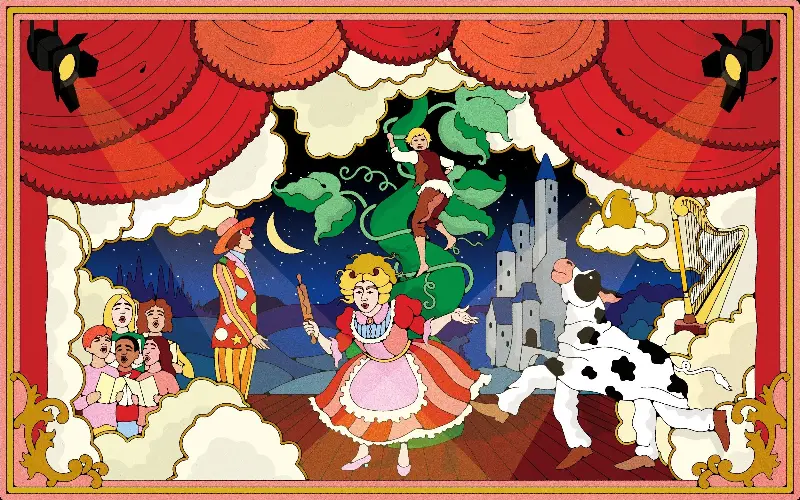
Pantomime is one of the UK’s only traditional art forms. A true test of this is to take anyone from outside the UK to a panto; they would sit there looking rather confused at the calls of “It’s behind you!” and “Oh no it isn’t!”, and yet nearly everyone in the UK will know what to do.
For UK theatres panto is a real life raft too, often generating enough income to bolster the rest of the year’s losses. It makes in excess of £60m a year in ticket sales, with estimates that more than 250 professional pantomimes will be staged in the UK in the 2025/2026 season.
What I particularly love about panto is how it can be localised and tailored to the community for which it is written. It is also, of course, not merely for professionals with hundreds of amateur groups mounting productions each year.
Now I am going to share some ways to approach a panto. I write the only Jewish pantomimes in the UK (probably the world!) for JW3 and Plotnek Productions, and this year’s offering is Cinderella and the Matzo Ball: a traditional pantomime written for our community and audience. But my approach can be used for any type of audience.
So here goes.
1. Know your characters
There are very specific archetypes needed to make a pantomime, with each character playing a specific function and role. Only use the ones you need, and if possible, write with your specific actors in mind. They’re the ones performing it, after all. Here are the main archetypes required.
The Dame
The Dame, normally played by a man (but not always), is the heart of the pantomime. The Dame should feel like a warm hug, a squeeze on the bum and a kick in the leg all at the same time. The Dame provides most of the adult laughs: she understands every joke, every pun, and speaks directly to the audience. Some writers leave gaps for the Dame to insert their own routine. I write for our Dame, Debbie Chazen, though she normally changes it all!
The Silly Billy
This is the clown, usually the young comic. They can be funny… but not as funny as the Dame. They’re often in love with the Principal Girl, but don’t always get her. Whereas the Dame is the leader of the verbal gag, the Silly Billy is more of a slapstick role, often causing mischief on purpose or by accident. In terms of humour, this character will be more on the children’s level.
Principal Girl and Boy
Sometimes both are played by women. These are your love interests and heroes – think Cinderella and the Prince. They should make us feel warm and fuzzy inside but not necessarily laugh. You don’t have to make these two funny; they’re there to tell the actual story.
The Skin Part
The old panto cow! You’ve got to have at least one person... but traditionally two people in the same costume… they are there to be cute and cuddly and make the audience go awwwww. Unfortunately, it does require one performer drawing the short straw and playing the back end of the animal… but anything for show business, ay?
The Baddie
Your baddie should be… well, awful.They should inspire booing and hissing simply by walking on stage! But they should also have a glint of goodness so that there is the possibility of redemption.
The Chorus
Every panto needs a chorus. Whether that is two people who double up as understudies, a chorus line of dancers, or a whole team of children from your local under-15s dance schools. This is vital for making your world look bigger and more fun. These are your rats in Dick Whittington or your villagers in Jack and the Beanstalk. Make sure you write these in. They can represent the first time some people ever perform on a stage.
2. Know your story
Choose a familiar fairy tale, a story that has been part of everyone’s childhood. That said, this can make your job as a pantomime writer either harder or easier. Some of these stories are packed full of plot, such as Cinderella, Dick Whittington and Aladdin. For others such as Goldilocks or Hansel and Gretel, which are lighter on story, you have to do more work. Whichever tale you choose, make sure you include the elements the audience expects or they will leave disappointed. Don’t leave out the glass slipper in Cinderella, the magic cat in Dick Whittington or the genie in Aladdin.
3. Know your audience
This is where the local flavour and specifics of your crowd really come into play. It’s important to know the nuts and bolts of where you are and what people will want to hear. I write Jewish pantos for JW3, so in my pantos the characters eat beigels, moan about the North Circular and sing Yiddish songs. If I was writing for Jewish Panto in Leeds they might live in Alwoodley and eat bagels. But you should write for the people who will be in your audiences. I remember the Dame in North Yorkshire singing à la Amy Winehouse: “They tried to make me go to Ripon… I said no, no, no.” The audience loved it.
Think about how you can represent your audience on stage. This can be through a location, or through the wider message of the show. When I saw Dick Whittington arriving on the Empire Windrush at the Hackney Empire, it represented a journey experienced by the relatives of many members of the audience. It felt very special. Equally, this year I’m calling the sisters in Cinderella “Milchig and Fleishig”, Yiddish terms for dairy and meat, often used when talking about kosher kitchens. While audiences should feel represented, it is also important to remember that not every audience member will get every joke. That is OK.
4. Leave your inner critic at the door and let in your inner child
You may find yourself reaching for a really silly joke, something that makes you groan. I say… put it in! That’s what pantos are about. Include the silly jokes you loved as a child. In my first pantomime, I almost resisted having our Dame fart a lot and sing a song about having a smelly bum. It is the one thing everyone, young and old, remembers. Now it returns every year.
5. Give the people what they want
People come to pantomimes expecting to shout at certain times, boo at certain times, sing along. They also want sweets. Do not deprive your audiences of these. Put them in, even if it seems forced. It’s essential to the panto experience. These things make a panto, and people will feel short-changed without them.
People will also expect songs, but you don’t have to write new ones. Our musical director Josh Middleton and I take songs written or made famous by Jewish artists and change the lyrics. This year we have I Don’t Want to Miss a Thing (Aerosmith), Willkommen (from Cabaret), and The Loco-Motion (Carole King). You might choose to throw in songs that have been made popular this year, you don’t have to write new ones. The point is to get the audience singing and toe-tapping.
We have a live klezmer band, but live musicians are not essential – you could use recorded music. In the UK, there is a copyright exception for parody, caricature and pastiche which permits the use of copyrighted material without permission for panto purposes... so go for it! (You’ll still need to pay the Performing Rights Society, though.)
6. Edit, edit, edit… did I mention edit?
Every word should be working for you – whether that’s a gag or simply moving the story along. This is not naturalism. There should be no unnecessary chat or subtext. Make every word count and pull its weight. Also, remember there are children in the audience. If it says it’s going to be two hours with an interval… it better be, or people will be leaving before the curtain call.
7. Don’t be precious
Pantomimes are all about the relationship between the audience and the performers. So, if a performer changes something you’ve written and it’s still funny, let them. If I have learnt anything from working with the director Abigail Anderson, it is to be open to ideas and never be precious. Everyone ultimately wants the same thing – the biggest laughs.
8. Stay relevant
Panto should be responsive to current politics, pop culture, even social media. Even if it’s just name-checking events or people. This year our show features a Labubu (LaJewJew), songs from Wicked, a reference to The Traitors and in year one we had a whole song about Roshi Sunak. Pantomime is all about interaction: not only with the audience, but with the world.
9. Have fun
For God’s sake, have fun when writing it. It’s a pantomime. If you’re enjoying yourself, the audience will too. So yes, let’s be serious, but be serious about being silly. Nothing encapsulates this more than ending on a song sheet, when the audience stands up and sings and dances with the whole family. They may cringe about it in the moment, but it will leave them with a warm feeling and a memory of having had a good time.
Cinderella and the Matzo Ball by Nick Cassenbaum is at JW3 until January 4, jw3.org.uk