



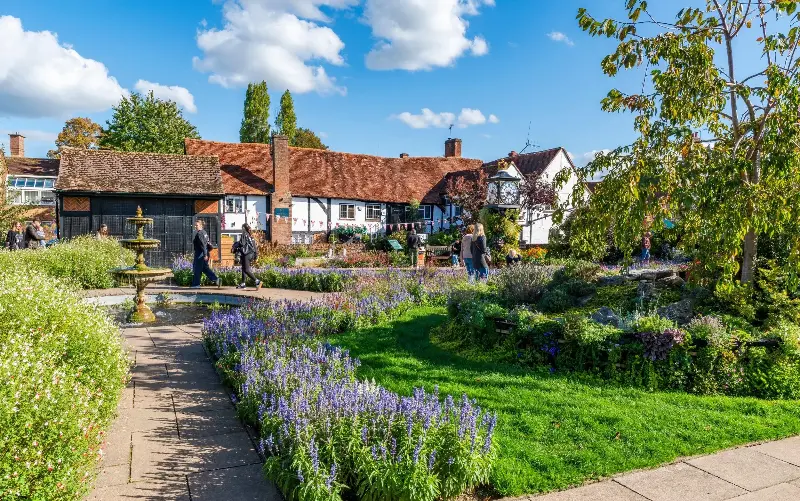
At some point over the past century, the London suburbs gained a terrible reputation. Arriving with the expansion of the railways, they became symptomatic of the urban sprawl flattening open fields to make way for rows of mock-Tudor monotony. “Do you realise that people die of boredom in London suburbs?” lamented Isabel Dalhousie in Alexander McCall-Smith’s 2005 novel Friends, Lovers, Chocolate (no matter that she was Edinburgh-based).
The boring reputation lingers, despite the fact that many of these places now come with birdsong, neighbourhood restaurants, independent boutiques – and hardly any tourists. Dig a little and you will find history worth exploring too, from origins as hunting grounds for Henry VIII to inspiration for Oscar Wilde. Below are 10 destinations worth heading out of town for, as well as five that still give the suburbs a bad name.
10 suburbs to seek out
Beckenham
For al-fresco fun
Until recently, this little town in Bromley traded solely on its links to David Bowie, who spent his early life here. Walk west along its lively High Street (stopping for coffee in converted public toilets at Daisy Grey), and you will eventually reach the Grade II-listed bandstand at Croydon Road Rec, where he performed in 1969.
The area has another reason for visits these days: the bucolic sprawl of Beckenham Place Park. Formerly a golf course, the park was transformed by a Lewisham Council rewilding project that produced a swimming lake and walking trails through woodland. On long, balmy evenings, the park’s Homestead Cafe also opens late for pizza and Aperol Spritz surrounded by the heady lavender and roses of the walled garden.
How to get there: Trains from London Victoria to Beckenham Junction take 23 minutes.
For country-style walks
Petersham and Ham
Trips along the towpath to Petersham involve wellies, cheery greetings and, preferably, a cocker spaniel or two. Lesser-known neighbour to the well-heeled town of Richmond, the area has a countryside feel – in part thanks to the cows, grazing incongruously by the Thames at Petersham Meadows. In the 18th century, all this earned it the nickname “Arcadia”, which is still fitting today.
Chief among its attractions are the greenhouses of Petersham Nurseries, which house an Italian restaurant and a less formal Teahouse (both make fantastic date territory). From there, it’s a 15-minute walk along the river to Ham House, a 17th-century pile with fairy-tale gardens.
How to get there: It’s a 20-minute walk along the river from Richmond station, served by the District line or National Rail services from Waterloo (16 minutes).
For being on the river
East Molesey
Though it’s best known as home to the railway station for Hampton Court Palace (a must-see on the other side of the river), this riverside suburb deserves a wider wander. Once given over to Henry VIII’s hunting grounds, its wide side streets reveal the occasional Georgian manor alongside Edwardian mansions.
Among it all is one of London’s oldest pubs, the Bell, said to date back to 1460. Its higgledy-piggledy 16th-century facade has earned it the nickname “Crooked House”.
Closer to the river, a village centre comes crammed with cafés, antiques sellers and boutiques, while Floatin on Thames gives Stand-up paddleboarding lessons on a surprisingly sleepy stretch of water. Reward yourself with tea and cake at Little H, in a prime position on Molesey Lock.
How to get there: Trains from London Waterloo take 37 minutes.
For an alternative east London
Wanstead
Nearby Walthamstow gets all the attention, but lesser-known Wanstead is every bit as charming and much more bucolic. This may be the gateway to Essex, but leave your stereotypes in the tanning booth: residents take riding lessons at the local stables, mooch regular craft and farmers markets and join September’s lively Fringe Festival.
Meanwhile, a handful of east London legends keep things authentic, with Robins Pie & Mash for eels and liquor alongside perfect pastry, and Harveys, the most gorgeous greengrocer you’ll ever see.
Wander among the 140 acres of Wanstead Park – best in April and May when Chalet Wood is tinted mauve by a carpet of bluebells – then join the regulars for a roast at much-loved local the Duke.
How to get there: Wanstead is on the Central Line, around 20 minutes from Liverpool Street.
For a trip back in time
Wimbledon Village
A steep walk from Wimbledon railway station, the Village is a place where history is easy to trace. Behind the grand mansions at its edges, Dairy Walk – once used to deliver milk across empty fields – remains, trimmed in trailing roses and glossy ferns. Then there are the gardens of nearby Cannizaro Park, where writers including Oscar Wilde sought inspiration amid tree-shaded pillars and pergolas.
Life in the Village is still rather rosy. A Sunday farmers market sells stacks of podgy Scotch eggs and towering cinnamon bun cakes. Meanwhile, on sunny days at the Crooked Billet, regulars grab pints and deckchairs to sit out on the long grass of the common.
How to get there: Wimbledon is around 30 minutes from London Victoria on the District line. From the station, it’s a 10-minute uphill walk or a short journey by bus.
For cultural endeavours
Dulwich Village
This is a leafy enclave straight from Dickens (literally: he was a regular at the original iteration of the Crown & Greyhound, while the cottage thought to have inspired Samuel Pickwick’s retirement home in The Pickwick Papers is currently up for rent).
Close to the station, the extravagant, Renaissance-style facade of Dulwich College (alma mater of Ernest Shackleton, PG Wodehouse and Nigel Farage) provides a landmark starting point for a mooch. Stop in at Dulwich Picture Gallery, with works by Rembrandt and Gainsborough in an opulent building designed by John Soane. Across the road, Dulwich Park comes with rowing boats and all manner of bikes for hire too.
A little farther north is a neat parade of shops and houses bordered by picket fences. Stop in at Maison Curate for homeware before lunching on steaming bowls of linguine allo scoglio at Rocca.
How to get there: West Dulwich Station is 12 minutes from London Victoria by National Rail.
For a lively food scene
Southall
Nicknamed “Little Punjab”, Southall first gained its moniker in the 1950s when Punjabis who had travelled to the UK for work set up home in the suburb. An afternoon here involves time on a high street packed with restaurants, tailors, jewellers and mini-markets where outdoor tables heave with myriad fruit and veg. There’s a different soundtrack to London’s usual sirens and honks too. Here, music resounds from the stores, and families gather at street stalls vending sugarcane juice and pani puri (deep fried, stuffed balls of deliciousness).
Try afternoon tea Southall-style – with Barbie-pink cake and chai – at Chai Mast or a veggie lunch at Bikanervala. King Charles’s favourite curry house, Brilliant, may have closed in 2025, but a new sister joint, Brilliant Gastro, is every bit as good as the original.
How to get there: Southall is on the Elizabeth Line, 20 minutes from Paddington.
For utopian ideals
Hampstead Garden Suburb
Hampstead Garden Suburb was envisioned as the ultimate mixed-income suburban spot by founder Henrietta Barnett, who was motivated by her husband’s tenure as the vicar of St Jude’s in Whitechapel. Architect Raymond Unwin was drafted in to design the neighbourhood and it shot up with impressive speed, completed in 30 years across 800 acres.
This is the genteel England of American films: box-hedged, scattered with poppy-red postboxes and blooming with roses. It’s looked after with a watchful eye – even a home EV charger requires guidance from the Hampstead Garden Suburb Trust.
At its edge, the Hampstead Heath extension comes with its wide skies and empty paths for walking. And the Lutyens-designed Central Square, dominated by the vast St Jude on the Hill, with its impressive murals, is worth a look too.
How to get there: Hampstead Garden Suburb is a five-minute walk from East Finchley station, which is around 15 minutes from King’s Cross on the Northern Line.
For a complete escape
Amersham
Amersham is farther from the centre of London than the other places on this list, but makes the cut because it’s on the Tube network. That puts the town firmly in commuter territory, despite the fact that Old Amersham’s High Street has more in common with cutesy rural villages than the suburban sprawl (and is a 20-minute yomp downhill from the station).
First built in the 13th century, its half-timbered houses have been joined by a 16th-century market hall and a scattering of pubs (one of which, the Kings Arms, hides cosy suites in its stables, if you feel like staying over). The town’s museum charts its history well and also runs excellent walks, including a Tudor-themed one with guides in historic finery, on the last Saturday of every month.
How to get there: Amersham is on the Metropolitan line, around an hour from King’s Cross.
With children in tow
Hanwell
Though just one Tube stop from Southall, Hanwell feels like another world. Here, streets of neat Victorian terraces trail towards the Grand Union Canal with its bobbing house barges (stroll beside the Hanwell Lock Flight to watch them navigate along the water, spotting kingfishers and dragonflies along the way).
Chief among its child-friendly attractions, however, is bijou Hanwell Zoo, which comes with rare South American Margay cats, porcupines and lemurs. It’s part of lovely Brent Lodge Park, which also houses a yew tree maze.
Hanwell’s Carnival returns in June, with a craft tent, funfair and dog show. Once all that has been explored, grab a table in the Fox’s fairy-lit beer garden for a burger or pie of the day.
How to get there: Hanwell is on the Elizabeth Line, around 15 minutes from Paddington.
Five suburbs to give a miss
Anerley
Stuck between family-friendly Beckenham and cool Crystal Palace, this place has a station and not much else.
Croydon
This “mini Manhattan” once had oodles of promise. With 16-minute train connections to central London it still should – but a decimated centre and soaring crime have stopped it fulfilling its potential.
Edmonton
What was once a Middlesex village is now a sprawl of chicken shops and gang crime.
Harlesden
People who couldn’t afford Notting Hill moved to Queen’s Park. People who couldn’t afford Queen’s Park moved to Harlesden. Many regret that decision.
Surbiton
In the 1970s, Surbiton so embodied suburban life that it provided the setting for The Good Life. Not much has changed.