



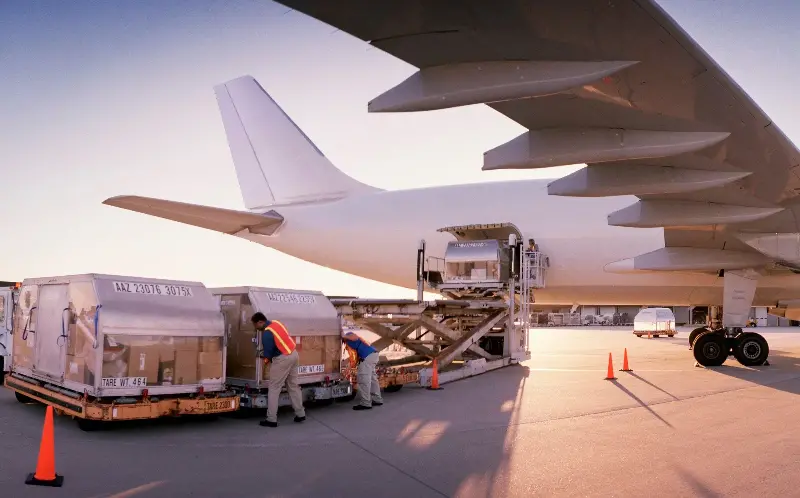
We are all used to hearing unnerving bumps and rattles on planes. But what about the sound of a person banging beneath your feet, screaming for help in the cargo hold?
This is what passengers heard on an Air Canada flight from Pearson International Airport in Toronto to Moncton on December 13, 2025. As the plane began taxiing, there was audible commotion coming from the belly of the aircraft.
In a video posted on social media, one of the pilots can be heard addressing the passengers.
“I’ve never had that in my life, first time, hopefully first and last, but that’s the reason we had to go back to the gate, to get that person out of the air plane,” the pilot is heard saying.
“The good news is that the person is fine and safe, but we just have to deal with a little bit of paperwork. Again, we do apologise for all of the delays today, and we’ll get you to Moncton as soon as we can.”
Air Canada said in a statement: “On flight AC1502 on December 13, 2025, the aircraft cargo doors were inadvertently closed while a member of the ground crew was inside.
“Upon discovery, the aircraft returned to the gate. There were no injuries, but as this presented a potential safety issue, we have reinforced our procedures with our ground crews.”
The discovery was made at around 7.30pm, and passengers disembarked the plane an hour later. Tracking data on FlightAware shows that flight AC1502 was cancelled on December 13, but the flight the following day departed on time.
Baggage handlers ‘don’t always have radios’
Saj Ahmad, who previously worked in baggage and cargo at Heathrow Airport and is now chief analyst at StrategicAero Research, says: “This sort of occurrence is mercifully rare, for good reason.
“When baggage or containers are loaded on air planes, there’s always a reporting chain to ensure that whoever has to be in the hold is accounted for before the door is closed.
“Clearly in this case, there’s been a communications breakdown and astonishingly no one on the ground noticed the man was missing.
“Often, baggage handlers don’t have radios but a situation like this almost certainly warrants the need for them for just such an event.
“Critically, another level of checks has the impact of slowing down departures but, if the point of that saves a life then it’s worth it.”
Kristina Galvydyte, who previously worked as a flight attendant for a major airline, says: “I’ve never heard of this happening before – it is a very serious incident.
“This person is very fortunate to have been heard by passengers in time. My two cents would be to learn from this and for the airline to have two baggage handlers at all times when in and around the aircraft, and have that added as a standard operating procedure.”
Why he may have survived
While the recent Air Canada incident is rare, it is not unheard of. In December 2024, a baggage handler became stuck in the hold prior to take off on a Turkish Airlines flight from Istanbul to Athens.
Ali Celikten told the German newspaper Bild that he banged on the door and called for help as the Airbus prepared for take-off, but nobody heard him. During the flight, the temperature inside the cargo hold dropped to –25C.
When staff realised his absence, air traffic controllers were notified of the incident and the plane was diverted to Izmir an hour into the flight. Cellikten sought warm clothing from luggage to survive the ordeal, but was later treated for frostbite and hypothermia.
In another case In October 2017, a plane bound for Angola from Porto made an emergency landing in Lisbon after it became known that a member of the ground crew was trapped in the hold. He was taken to hospital, also suffering from hypothermia.
“Many are surprised to hear that the cargo hold in the belly of an airliner is pressurised,” Doug Morris, an Air Canada pilot, told The Telegraph in 2018.
“Conditioned air is directed from the cabin, so the air tends to be a little cooler by the time it reaches the cargo areas, which are also less insulated than the cabin. Cargo temperatures vary in our fleet.
“The Boeing 767 maintains its baggage hold above 7C, but the bulk area (where animals are carried) can be heated above 18C.
“Controlled temperature cargo bins are also available when temperature-sensitive goods are being shipped,” Morris added.