



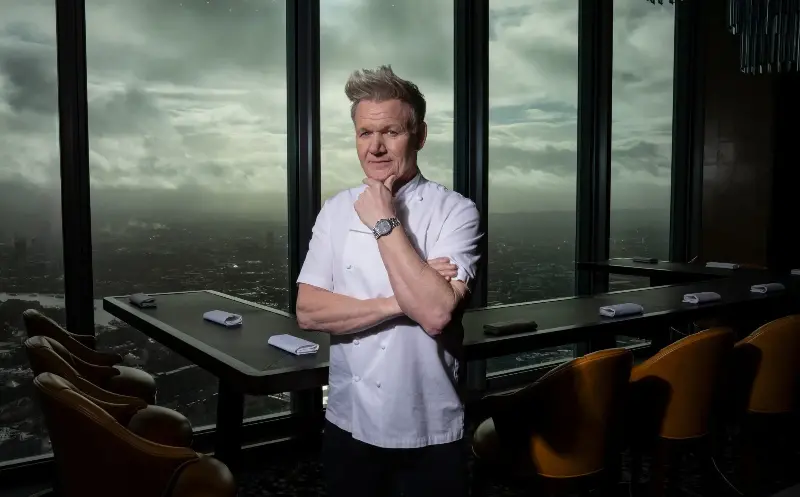
Gordon Ramsay is adding service charges as high as 20pc to diners’ bills under an American-style tipping culture creeping into British life.
The celebrity chef has implemented the high tips on at least two occasions at his Lucky Cat restaurant in Bishopsgate in what are thought to be some of the first examples of 20pc charges being applied in British restaurants.
While Mr Ramsay typically charges 15pc at most of his establishments, he added a “discretionary service charge” of 20pc at his skyscraper restaurant complex in London’s 22 Bishopsgate at Christmas and New Year’s Eve.
Both are steeper than the typical 10pc or 12.5pc tips requested of diners at the end of meals.
They are also far higher than the service charges of other celebrity chefs, including Mr Ramsay’s former mentor Marco Pierre White, as well as Raymond Blanc, whose establishments typically charge 12.5pc.
Heston Blumenthal at the Fat Duck and Rick Stein at the Fish Restaurant in Padstow both charge 12.5pc.
Until now 20pc service charges have mainly been limited to restaurants in America, where the tipping culture is more widespread. In the US it is not uncommon to tip for drinks at bars, for help carrying luggage, or for tips of 15pc, 18pc or 20pc to be added to bills.
American waiters, whose typically lower salaries are designed to be supplemented with tips, have been known to chase customers down the street if they forget to add extra for the service.
An Americanised gratuity culture is becoming increasingly common in Britain.
A number of high-end London restaurants now charge 15pc for service, with 20pc tips typically only used for large parties or for room service in luxury hotels – until now.
Pub-goers in Britain have even been asked in some cases to pay American-style service charges for pints of beer.
A string of bars and pubs in Scotland, owned by The Scotsman Group, began levying an automatic 2pc service charge on drinks ordered at the bar in 2024 – a practice alien to most British drinkers but common in the US, where a tip is normally expected with each drink purchased, even without table service.
Restaurant-goers are also increasingly being asked to pay voluntary charity charges, typically a pound or two, which some businesses add to other tips.
Mr Ramsay applied the 20pc charges at his Asian-inspired Lucky Cat restaurant, which forms part of a new complex of five restaurants at the top of a skyscraper in the City of London.
It is featured in the chef’s six-part Netflix documentary, Being Gordon Ramsay. In it he reveals he has put £20m of his own money into the 22 Bishopsgate project, described as delivering an “exceptional dining” experience above the London skyline.
He says it is “the most ambitious project” he has ever taken on in his life, saying “if it was to fail I am f-----”.
He has said the project “scares the s--- out of me”, adding that it will take “balls of steel” to pull off.
His venture comes at a challenging time for the hospitality industry, which is under strain from higher taxes and business costs imposed by Chancellor Rachel Reeves.
This includes an increase in employer National Insurance, as well as increases to the national living wage.
Top chefs including Tom Kerridge have warned the higher costs will result in the closure of restaurants and pubs.
Kate Nicholls, chairman of UKHospitality, a trade body, said: “Restaurants continue to face increasing cost pressures, from rising business rates to the cost of food, drink and energy going up. Hospitality has one of the highest cost burdens in the economy and it’s crucial the Government brings this burden down to support the sector.
“Throughout these challenging times, our staff continue to work tirelessly to deliver fantastic experiences to our customers, and 100pc of all tips or discretionary service charges go directly to them as recognition of their hard work.”
Gordon Ramsay Restaurants was approached for comment.