



I stared at the MRI scan on my computer screen with a mixture of alarm and disbelief. The large pink swathes coating my abdominal organs indicated the presence of visceral fat – 5.6 litres of it in total, sufficient to fill 10 pint glasses – which was steadily corroding my insides.
Most worryingly of all, the scan showed that this gel-like substance was rapidly clogging my liver, the vital that we rely on for breaking down alcohol and other toxins, regulating our blood sugar and processing nutrients. In my case, a tenth of its capacity was being swallowed up by fat, a threshold that technically classifies as fatty liver, one of the UK’s fastest-growing health conditions.
When I showed my results to Louise Thomas, a University of Westminster professor who is one of the country’s leading experts on the subject, she was unequivocal in her assessment. “Ten per cent liver fat is bad,” she said. “People say that the normal range is five per cent, but ideally, you’d want to be around two per cent. When it’s reaching 10 per cent, that’s the level where you really need to act, because once it’s developed into more progressive liver disease, it’s harder to do anything about it.”
But how did I get here, why is fatty liver quite so bad, and what can we do to fix it?
What is fatty liver?
According to the Foundation for Liver Research, non-alcoholic fatty liver disease now affects one in three UK adults, with a quarter of these cases progressing to serious disease.
Despite being highly preventable, such cases of liver disease are expected to overtake heart disease as the biggest cause of premature death in the UK. One of the main reasons is that fatty liver is a silent condition – there are few or no warning signs.
I discovered that I’d developed fatty liver only after getting an MRI scan as part of a suite of tests investigating my health and the rate at which I was ageing as part of my reporting for my new book, The Age Code.
It’s particularly vital to catch it early for numerous reasons. Visceral fat in the liver drives progressive scarring, which can restrict liver function. While alcohol-induced liver disease was once the primary reason for liver transplants, this is rapidly changing. Instead, in the UK and most other Western countries, fatty liver is now expected to overtake alcohol as the main cause by 2030.
Why is this happening?
As a health journalist who reports on the latest research surrounding visceral fat and other major drivers of ageing, I found the discovery both sobering and somewhat mortifying but also viewed it as an indication of how insidiously fatty liver can develop.
Visceral fat is a major driver of accelerated ageing across other bodily systems, as it’s highly inflammatory. While my BMI hadn’t suggested any major concerns – I was just slightly overweight – a series of internal, biological ageing tests painted a very different story. Consistently, they suggested that, biologically speaking, I was two years older.
So how did this happen? Like many people in their 30s, I’d found myself often turning to what I call “fast calories” to cope with the various stresses of life – my father’s dementia diagnosis and the frustrations of dealing with the NHS, a house move, and the fast-paced world of time-pressured newspaper deadlines. I thought little of the lunchtime meal deals, the ultra-processed snacks I’d buy when needing a mid-afternoon hit or the weekend treats, but cumulatively they were taking their toll. When I assessed my diet with a nutrition expert, I was often consuming 2,700 calories a day. An experiment designed to reveal how many calories my body actually required produced a figure closer to 2,100.
The good news, however, is that fatty liver – at least, before it develops into progressive scarring – is highly reversible. As part of my book, I spoke with some of the world’s leading ageing scientists and committed to a two-month diet that enabled me to slash my liver fat nearly in half.
These are some of the key lessons I learnt – or jump ahead to see my results.
Focus on eating no more than you need
The primary goal of my experiment was to cut my average daily calorie intake by 500 to 600 calories and attempt to consume no more than 2,100 calories a day. During the two months, I gave myself four “off days” when I could eat what I liked – to cover weddings and friends’ birthdays – but the rest of the time I had to stick to the limit.
Thomas reassured me that this would be sufficient to make a difference. “We’ve looked at calorie restriction diets where you reduce your intake by 500 calories per day, and in all of those studies visceral fat is the first fat depot to be reduced and in greater proportions than your subcutaneous fat,” she said.
Do strength training exercises
Whenever you’re reducing your calorie intake, it’s vitally important to ensure you’re doing some kind of strength work, whether that’s lifting weights or doing sit-ups and press-ups. Otherwise, your body ends up burning away vital muscle tissue as well as the visceral fat, and retaining muscle mass is important for all aspects of health as we age.
I played weekly tennis during those two months, but I perhaps should have lifted weights too. While I lost predominantly visceral fat, I still shed a bit of muscle tissue.
Choose nutrient-dense foods
A common mistake when cutting calories is that people skip meals or try to eat smaller portions without considering the quality of their diet. This is both less sustainable and more likely to leave you malnourished.
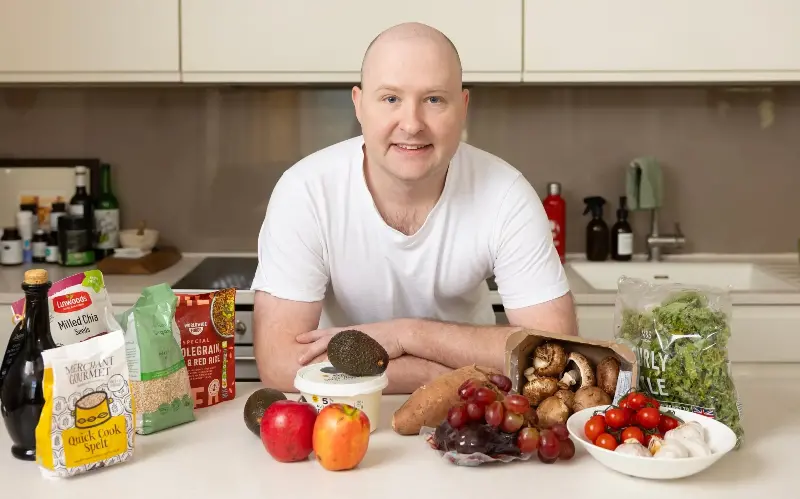
My approach was to follow what ageing scientists call a low-calorie, nutrient-dense diet. I found that I could cut my intake by 600 calories a day merely by replacing pretty much all ultra-processed foods with nutrient-rich whole foods. Instead of packaged breakfast cereals, I ate oatmeal and fruit. Rather than snack bars and biscuits with my morning and afternoon tea, I switched to nuts, raisins and seeds.
Avoid sugar
Since childhood, I’ve retained an intense sweet tooth. While I’ve never had much desire for alcohol as an adult, I’ve always craved sugar – and have a particular weakness for chocolate digestives. It meant that the hardest part of my diet was always going to be eliminating sugary foods, but given its addictive nature I knew it would be necessary. Sweets, chocolate and sugary soft drinks all contribute heavily to fatty liver when consumed too regularly, as they contain fructose, a simple sugar that is readily absorbed by the liver and converted directly into fat.
The first fortnight was painful. I felt as if I were in the throes of a substance addiction, and attending an international cancer conference that offered biscuits and other sweet treats throughout the day was a particularly chastening experience. But within two weeks I felt as if my brain had rewired. The cravings subsided, and after a month I barely thought about sugar at all.
Drink green tea
While I enjoy coffee, I sought to drink more green tea during the two months. This is because green tea is particularly abundant in a type of plant chemical known as epigallocatechin gallate (EGCG). Various studies have suggested that consuming anywhere from 150 to 900mg of EGCG (found in one to three cups of matcha green tea) a day for eight to 12 weeks can reduce both visceral fat and waist circumference.
Avoid fruit juice
Many of us have grown up perceiving a glass of orange juice for breakfast as one of the healthiest things we can drink. But researching The Age Code shifted my perspective on juice, especially in the context of fatty liver. As pointed out by Robert Lustig, a neuroendocrinologist at the University of California, San Francisco, the lack of fibre in juice means it’s essentially just liquid fructose, which again goes straight to the liver in the form of fat. Opt for a whole orange or tea instead.
Cut down on the booze
I didn’t go alcohol-free for the two months, as on my four days off I drank as I normally would at a wedding or social gathering. But overall I predominantly gave alcohol a miss and turned to various kombuchas with the goal of reducing calories and nurturing my gut.
And the results were…
It was, by and large, a success. I lost 13lb in weight and a litre of visceral fat, and the proportion of fat in my liver dropped to 5.3 per cent from 10 per cent, putting me back into a much healthier range.
There were wider benefits for my health as well, particularly for my immune system. My inflammation fell significantly, while the populations of immune cells in my blood that help to resolve inflammation had doubled. One test suggested the age of my immune system had improved by two years. I felt healthier, lighter, more capable of dealing with stress and also somewhat empowered. In just eight weeks, it had been possible to radically shift the trajectory of my long-term health.
The Age Code: The New Science of Food and How It Can Save Us is out now