



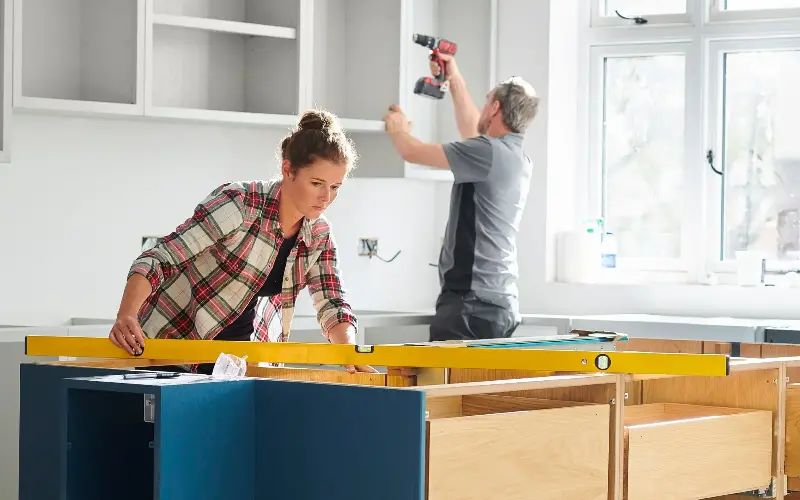
If you’re considering selling your home this year, you might be tempted to fix everything you can before putting it on the market.
Whether it’s replacing your outdated kitchen or getting new carpets, many sellers think a bit of investment will help secure a higher price or a quicker sale. But some fixes simply won’t pay off.
Certain improvements will waste both your time and money, and may well get replaced by the new owner as soon as they move in.
Angela Kerr, from the HomeOwners Alliance, said: “Home buyers realise a home has been loved and lived in, so will have some wear and tear. While in an ideal world, your property would look perfect, you need to prioritise spending money on essential repairs and minor redecoration that will help your home sell faster.”
To maximise value and minimise stress, knowing where to hold back on improvements may be just as useful as knowing where to take action.
Here, Telegraph Money has asked the experts which common property fixes sellers shouldn’t bother spending money on.
1. A kitchen replacement
Think twice before going all out and installing a shiny new kitchen, especially if your current one is functional.
There’s a risk you could spend thousands on this outlay shortly before selling, only to discover it does little to increase your home’s value.
Tom Evans, sales director at estate agency Purplebricks, said: “Most buyers prefer to personalise this area for themselves. As long as it works – and isn’t too shabby or flimsy – I would advise against the time and expense of upgrading.”
If you’re looking for a quick fix in the kitchen that won’t break the budget, consider replacing just the cabinet doors, handles or worktops to give your existing room a bit of a revamp.
2. Adding an extension
Another common mistake sellers make before putting their property on the market is going all out on a loft conversion or extension.
Marc von Grundherr, director of estate agency Benham and Reeves, said: “What sellers should avoid is embarking on expensive projects purely to try to increase the sale price in the short term. Major extensions, loft conversions or structural layout changes rarely make financial sense if the only goal is to sell the property immediately afterwards.”
While projects like this can add value, they can also be very pricey – not to mention time-consuming.
Mr Evans said: “An expensive conversion is unlikely to ever correspond with a particularly elevated property price. There is a risk that if you, say, spend £50,000 on the extension, it might only add £40,000 to the property.”
Another big no-no is “over-improving” the area.
Mr Evans added: “If your home is already at the top price range for your street, there is little point in putting more time and money into the property pre-sale.”
3. Redesigning the garden
If you’re considering giving your outside area an overhaul, think again.
Mr Evans said: “Another area people tend to really push the boat out on is garden design. There’s a dizzying array of things you could do to your garden, and an eye-watering sum you could plough into making it look great. But from experience, this rarely makes a difference to the asking price – or the speed or amount the property sells for.”
Of course, you shouldn’t neglect your garden, either. But rather than spending money on a redesign that isn’t worth the time or money, carrying out smaller, more manageable tasks, such as tidying lawns, weeding flower beds and repairing fences.
It’s all about “kerb appeal”, according to Dominick Brown, director of buying agency Prime Purchase.
He said: “Think about that all-important first impression or kerb appeal. Is the driveway clear? Does it need additional gravel to fill in bumps? Does the house present as well as it possibly can at first glance? See if there are any slipped tiles which need to be corrected, bins hidden, and flower beds planted or tidied.”
4. New white goods
While you might like the idea of potential buyers setting eyes on a top-of-the-range fridge, freezer or dishwasher when they come to view your home, buying these appliances could be a waste of money.
Ms Kerr said: “You’re unlikely to recoup what you’ve spent when you sell. If you need to replace an appliance because it’s broken, consider a second-hand [one] to keep costs down.”
5. A bathroom upgrade
As with your kitchen, there’s a risk that if you pour lots of cash into bathroom renovations, it could be money down the drain.
Mr Evans said: “There’s no point replacing a perfectly usable bathroom suite with an expensive one. If you do, there’s every chance the potential buyer will have different views on what their dream bathroom might be.”
As long as the taps and fixtures are working properly – and you don’t have any leaks – you are better off focusing your efforts on tasks such as deep cleaning, regrouting tiles and replacing worn flooring.
6. Expensive home improvements
While it’s not a bad idea to give your home a fresh lick of paint if needed, be sparing, as doing too much could end up putting buyers off.
Your choice of decor is important, too. Give bold colours a wide berth, and focus instead on using just a fresh coat of neutral paint to make your home feel lighter and brighter.
Mr Evans said: “Any home improvement that involves personal taste – or which is a trend – is not worth adjusting. If the imperfections are just cosmetic, and something that the buyer can live with, we would recommend leaving well alone.”
7. New carpets
If your existing carpets feel old and worn, you may be dying to refresh your home with brand new ones. But once again, this is not a sensible use of your cash.
Ms Kerr said: “Instead, for a much cheaper fix, get your carpets deep cleaned. You’ll be amazed at the difference it makes.”
You can either pay a professional to do the job for you. Or, to keep the costs down further still, you could hire the equipment and do the job yourself.
What is worth spending money on?
When preparing a home for sale, it’s important to spend time and effort on the things that genuinely reassure a buyer, rather than shelling out on upgrades that they may not like or will not be reflected in the sale price.
Mr von Grundherr said: “The priority should always be the fundamentals of the property. Issues such as damp, visible structural problems, electrical faults, heating issues or missing roof tiles are all immediate red flags because they raise concerns about the wider condition of the home.
“Even relatively minor problems, such as cracked plaster, can make house-hunters question whether there are deeper issues beneath the surface.”
Addressing these types of repairs before listing can make a big difference to buyer confidence.
Amy Reynolds, from estate agency Antony Roberts, said: “The key is to focus on issues that could derail a sale – rather than chasing perfection. If the rest of the property is in good condition, it is usually worth honing in on issues that regularly trigger down-valuations, renegotiations or even collapsed sales.”
This includes any problems that may get flagged up in a survey.
Mr Brown said: “For example, any lingering damp is likely to raise concerns for both buyers and their surveyors. Failing to remedy it will almost certainly become an issue during price negotiations or following a survey.”
Roof repairs are another no-brainer; you need to get these issues fixed as they will be visible to a buyer before they even step in the door, whether they get a building survey or not.
Remember the small ‘fixes’
If you are trying to move quickly, there are plenty of smaller tasks you can do yourself, which can improve the appeal of your home – without significant expense. Decluttering and deep cleaning are a great starting point.
Ms Reynolds said: “Focus on presentation – fresh paint, good lighting and declutter.”
Get rid of limescale, clean and repair tile grout, and wax wooden floors.
It’s not all about what a property looks like; make sure it smells good too. Ms Kerr said: “Try different products to get your bathroom to shine, get rid of odours, hang up fresh towels. This will make the place more appealing and allow potential buyers to imagine living there.”
Mr Evans added: “Whether it’s touching up scuffed paintwork, filling in small cracks in the plastering, replacing broken handles or light fittings, re-sealing bathrooms and kitchens, or deep cleaning carpets – a neutral, clean and well-maintained property will sell better than a stylish but tired one.”
If you’re not sure which jobs to prioritise before putting your home on the market, speak to an estate agent about which fixes are likely to make your home more likely to sell.
Ms Kerr said: “If you want to know if anything in your home is a potential deal breaker, then ask a good local estate agent. They will know what prospective buyers in your area are looking for.”