



Smart glasses that tell dementia patients when the kettle is boiling can improve their ability to carry out everyday tasks.
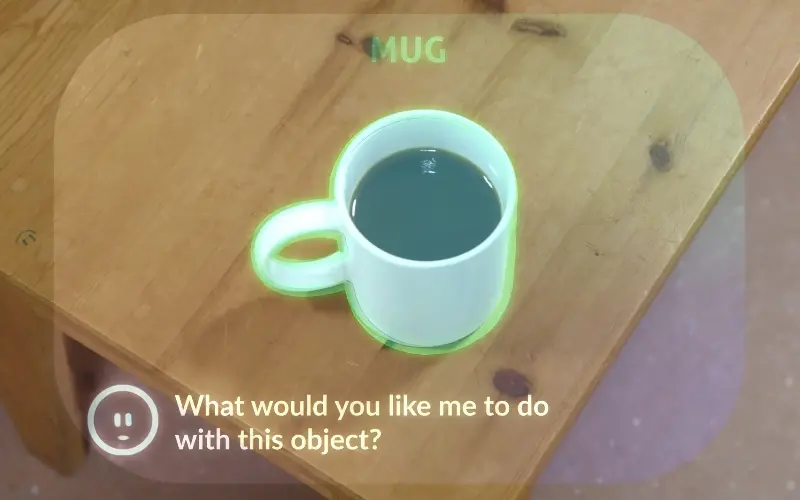
The glasses, powered by artificial intelligence (AI) technology, have a camera that “sees” the environment using visual projections on the lenses. Instructions are then provided through hearing aids to help patients remember daily tasks and avoid dangers in the home.
Some of the tasks the glasses can assist with include reminding users that the kettle is boiling as well as telling them how to get dressed and how to look after houseplants.
Tests also found that the glasses doubled most people’s ability to recall household objects, helping them maintain independence by remembering things for themselves.
The glasses, known as CrossSense, are expected to go on sale early next year, with experts suggesting they could stave off the need for constant care for dementia patients.
“I was absolutely blown away by the findings,” said Prof Julia Simner, of the University of Sussex, who was the science lead for CrossSense.
“They very much restore people to an earlier state when they were able to do the things they’ve lost because their brains can no longer remember.”
The instructions are provided by an in-built AI assistant called Wispy, which offers feedback through verbal cues and text that floats in the user’s eyeline. It also engages in light conversation to help keep users’ minds active.
Wispy’s team of AI engineers trained the glasses to give visual and audio prompts for dozens of everyday activities including making a cup of tea, managing household chores safely and interacting with loved ones.
The glasses can also read handwriting, reminding wearers of any upcoming appointments.
Wispy adapts to each user’s individual needs, but starts with a baseline set of rules such as reminding users if their attention to a task drifts for more than 30 seconds.
It is then able to provide different prompts depending on the person, whether they suffer from attention loss or struggle to name objects.
In a study of 23 pairs of people living with dementia and their carers, the glasses boosted patients’ recollection of household objects from 46 per cent to 82 per cent.
The study, which is yet to be peer-reviewed, found the benefits lasted long after the glasses were removed, with recollection remaining at 78 per cent an hour after they were taken off.
Prof Simner explained that this was because recalling a word in your mind was much easier once the memory had been activated already.
On Wednesday, the software won the £1m Longitude Prize on Dementia, receiving plaudits for its “revolutionary” potential.
The award supports the development of technology that helps people with the condition – which affects up to a million in the UK – retain their independence for longer.
Szczepan Orlins, the chief executive of CrossSense Ltd, said the prize money would go towards funding a four-week trial this summer in the hope of bringing the product to market by early 2027.
The glasses work with prescription lens inserts and are hearing aid compatible. A built-in battery lasts for one hour while a portable power bank weighing 80g can hook on to the frames and sit in a person’s pocket, making them last all day.
The CrossSense technology comes with a price tag of up to £1,000 for the glasses and an additional £50 a month for a subscription, although there are hopes they will become cheaper and eventually be made available through the NHS.
Prof Fiona Carragher, chief policy and research officer at Alzheimer’s Society, said: “Rapid advancements in AI will give people affected by early-stage dementia the opportunity to stay safely in their own homes for longer and lead more independent, fulfilled lives.
“These smart glasses are a prime example of harnessing technology to develop intuitive personal support that complements care given by humans.”