



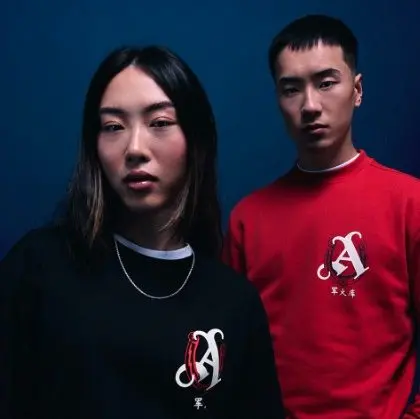
The most prolific employees of Arsenal are not the centre-forwards at Mikel Arteta’s disposal, but those who work in the club’s retail division. This arm of the business, alongside Arsenal’s commercial partners, unveils new clothing ranges even more regularly than the strikers produce goals on the pitch.
Since July 2024, Arsenal have released and promoted no fewer than 50 different clothing collections and ranges on their social media pages. The total count of fashion lines is understood to be even higher than that. In the same time, strikers Kai Havertz, Gabriel Jesus and Viktor Gyokeres have scored a combined 44 goals.
The relentlessness of Arsenal’s clothing releases, or “drops” as they are more fashionably known, has been remarkable. In 2026 alone, Arsenal have released a new retro range, an “On the Road” collection and a “Year of the Horse” collection. Those followed the “Firepower” range, “LFSTLR” range and the “92-94 Bring Back” collection from October and November.
One of the longer-running jokes among Arsenal supporters is that the club deploys these clothing collections as a distraction from bad results. It was striking, for example, to see Arteta wearing a stylish new retro tracksuit in his press conference last week, two days after the team’s demoralising draw at Wolves. Worried about the title race? Retail therapy might help.
There is, though, little merit to that argument. Arsenal do not pursue fashion collaborations and retail opportunities to lighten the mood in times of first-team trouble. They do so because clothing has become a fundamental part of the club’s off-field approach, brand identity and appeal; and because it has proved to be an extremely successful commercial strategy in recent years.
Arsenal’s latest accounts, published on Wednesday, show that the retail division is generating record-breaking revenue. The 2023-24 season smashed all previous club records and those figures were comfortably exceeded again in 2024-25, the first season after Richard Garlick’s promotion to managing director (Garlick is now chief executive officer). The club’s Kroenke owners, it is understood, have also encouraged Arsenal to pursue this approach with vigour.
“Retail operations delivered another excellent set of results with revenues some 27 per cent up on the record level established in the previous year,” the club said of 2024-25.
According to analysis by Deloitte, Arsenal have experienced a 104 per cent rise in commercial revenues since 2021. That is the greatest growth of any of the 10 highest revenue generating clubs in world football. By contrast, the other members of the Premier League’s so-called “big six” (Liverpool, Manchester United, Manchester City, Chelsea and Tottenham Hotspur) have achieved an average commercial growth of 53 per cent in that time.
Of course, clothing sales represent only one chunk of those total commercial revenues, but they are significant for the bank balance – and also for the club’s wider cultural appeal. Rival clubs might mock the sheer relentlessness with which Arsenal produce new clothing items, but they cannot question the results of this strategy.
At the most basic level, it works because Arsenal and their partners are regularly producing gear that supporters want to buy. For younger generations, especially, tie-ups with London labels such as Aries and A-COLD-WALL* are fundamentally cool. Older generations, meanwhile, often prefer wearing Arsenal-branded clothes to replica match shirts.
“Arsenal have understood something that many clubs are only now catching up to: culture compounds,” says Ted Kohnen, the chief executive of marketing and brand agency Park & Battery. “Football clubs used to treat merchandise as a byproduct of performance. Arsenal have treated it as a brand platform. Through smart collaborations and limited ‘drops’, they have positioned themselves less like a traditional sports retailer and more like a streetwear label with global distribution.
“For top clubs, merchandise and licensing can represent 15 to 25 per cent of commercial income, but the bigger impact is brand heat. When a drop sells out in minutes or a collaboration trends on social [media], it drives sponsorship value, global relevance and pricing power across every commercial line, from kit deals to regional partners.
“Arsenal have been successful because they’ve blurred the line between sport and lifestyle. They understand that a 19-year-old in New York or Lagos may engage with the badge through fashion before football.”
It works both ways, too. Associating with Arsenal, it seems, is a quickfire way for fashion brands to find their own success. According to an article in Vogue in November 2024, the Aries tie-up was the most successful collaboration the fashion label has ever produced. At the high point of demand, Arsenal were taking orders on Aries items every 2.5 seconds.
Arsenal are not the first to take this approach, with Paris St-Germain perhaps the original trendsetters in European football. But in the Premier League, no club has embraced the football/fashion crossover as enthusiastically as Arsenal in recent years. Last season, they even hosted a fashion show pitchside at the Emirates Stadium. Declan Rice was among those who walked the runway.
“Arsenal have capitalised on timing and audience alignment,” says Jack Shaw, the founder of marketing agency Shawfire Media. “Their resurgence on the pitch coincided with a younger, digitally engaged fan base. The club leveraged this momentum through culturally aware collaborations that resonate with Gen Z and millennial consumers. They have also benefited from strong creative direction, ensuring each collaboration feels contemporary and aligned with urban culture.”
With broadcasting revenues plateauing, the new financial battleground for the top clubs is commercial. Merchandise and clothing releases therefore constitute an increasingly relevant part of the economic landscape, and others are trying to catch up (some more effectively than others). Earlier this year, for example, Liverpool announced a new partnership with fashion brand Tommy Hilfiger.
“It taps into lifestyle economics rather than pure sport performance,” says Shaw. “As clubs seek resilience against fluctuating results, fashion provides a platform for year-round engagement.”
It has helped Arsenal that many of their highest-profile players are evidently engaged and interested in fashion. Myles Lewis-Skelly walked the runway at Paris Fashion Week last year, Eberechi Eze was seen at a Burberry event earlier this week and Riccardo Calafiori was recently styled in Dolce & Gabbana for a photoshoot (the Italian is also an underwear ambassador for Adidas). On the women’s side, Leah Williamson has worked with Gucci.
Indeed, many of Arsenal’s clothing ranges are enthusiastically promoted by the players themselves. Noni Madueke, Ethan Nwaneri and Martin Odegaard modelled the A-COLD-WALL* range. Rice modelled last year’s golf range. Bukayo Saka was part of the Aries photoshoot.
Would the strategy work without the buy-in of marketable players? Will there come a time when supporters simply grow tired of it all? It is possible. Trends change, after all. But for now there is no sign of this wave crashing any time soon. Arsenal, a football club that is also becoming a lifestyle brand and fashion house, continue to surf it with glee.