



Over the years, wildlife documentaries have offered so many spectacular scenes of tenderness, comedy and tragedy that it is hard to single out just one. Yet the moment in the BBC’s 1979 Life on Earth series, when the presenter Sir David Attenborough – poised to discuss opposable thumbs – instead found himself confidentially lolled on by a young gorilla as though he were a jolly – if inexplicably hairless – older cousin, is perhaps the most memorable of all.
“There is,” said Attenborough to camera, “more meaning and mutual understanding in exchanging a glance with a gorilla than with any other animal I know.” That friendly young gorilla – Pablo, as he became known – grew up to become the patriarch of a dynasty whose history Sir David, who turns 100 next month, traces in the Netflix documentary, A Gorilla Story.
The primatologist Dame Jane Goodall recalled that when she was studying at Cambridge in the 1960s, fellow scientists “objected – quite unpleasantly – to me naming my subjects and for suggesting that they had personalities, minds and feelings”. Yet it was obvious to her, as it was to Sir David, and as it is to the viewers of A Gorilla Story, which tells a story of family life, violence and alienation that could be the plot of an opera – or a soap opera.
The anthropomorphism – if that were what it was – of Sir David’s documentaries and Dame Jane’s research made an overwhelmingly beneficial contribution to the conservation, not just of our close genetic relations, the great apes, but of the wider natural world.
The idea that animals are not mere Cartesian bêtes-machines has gathered momentum in the almost half-century since Life on Earth. We are, to an extent, aware of our responsibility not to harm our fellow creatures, even if we don’t necessarily act on it.
Yet social media – with its remarkable ability to mimic the glass splinter that flies into the eye of Kay, the lost boy in Hans Christian Andersen’s story, The Snow Queen, corrupting everything he sees – has worked its baleful charm on our relationship with animals.
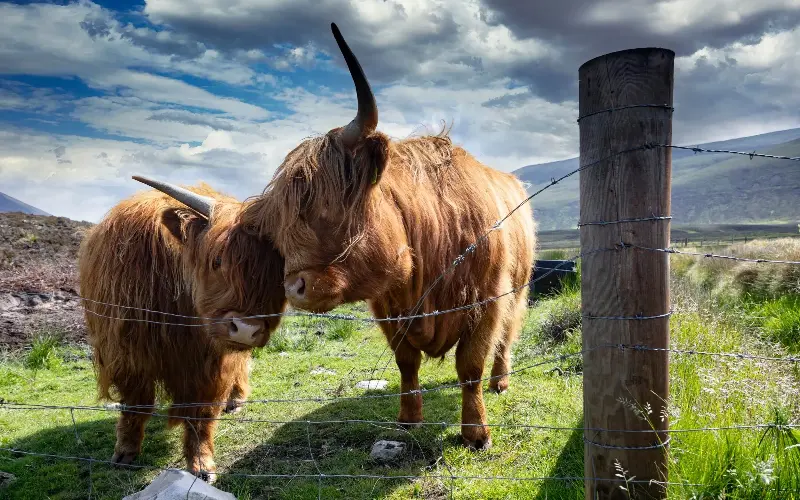
Last week, the Telegraph reported that Alex Birch, who keeps Highland cattle on his farm in the Peak District, has been so plagued by TikTok tourists taking selfies with his herd that he has decided to crossbreed them with hardy, but distinctly less photogenic, White Shorthorns. He is not alone: last month, Kent Wildlife Trust reported that the Highland cattle grazed on the Hothfield Heathlands nature reserve had been moved after viral social media posts attracted selfie-seeking visitors, who trampled fragile habitat and distressed the cattle by ignoring advice to keep their distance.
In most cases, it is probably not cruelty but ignorance that drives so many people who would describe themselves as animal-lovers to mistreat their fellow creatures for social media content. Yet as that pioneering work of animal rights activism, Anna Sewell’s Black Beauty, puts it: “Ignorance… is the worst thing in the world, next to wickedness”.
The astonishing fact that the gorillas approached Sir David Attenborough – and not the other way around – is lost on the selfie-hunters. But ignorance (unlike wickedness) is a condition for which a remedy exists. Here again, Black Beauty can help: “If we could act a little more according to common sense, and a good deal less according to fashion, we should find many things work easier.”