



When Georgia received its six millionth visitor of the year in 2016, it did so with much fanfare.
Bemused Dutchman Jesper Black was greeted with a bottle of wine at passport control, picked up in a limousine and driven through the streets of Tbilisi with a police escort. Awaiting him at the end of a red carpet was the then prime minister, who shook his hand before the pair sat down to dinner (the menu for which had been curated by the Georgian public).
The stunt was unusual by any standards, but a decade on, in the era of the anti-tourism protest, it can be especially hard to imagine many places giving holidaymakers a welcome even a fraction as warm. There are, however, still many superb destinations where tourists are more than welcome – here are a few.
1. Jamaica
This Caribbean island may have been scratched off some holiday lists after Hurricane Melissa caused widespread damage in October last year, but that’s precisely why it is waiting with outstretched arms.
Almost a third of Jamaica’s economy is reliant on tourism. Welcoming visitors back has been central to its recovery, and while the country’s tourism minister recently confirmed that every hotel on the island will be fully operational by the end of the year, the vast majority have already reopened their doors.
Lounging by the transparent waters of Negril’s Seven Mile Beach or venturing up into the (distinctly emerald) Blue Mountains have long lured holidaymakers seeking the ultimate Caribbean escape. Now, they can do so knowing that, for many Jamaicans, their visit represents the return of better days.
2. Albania
Previously in the blind spot of the European tourist, Albania has in recent years reinvented itself with remarkable success as one of the Mediterranean’s most alluring hotspots. The dramatic surge in summer visitors has been largely welcomed as sun-seekers discover its turquoise riviera which, in 2026, is set to receive its own gateway in the form of the new Vlora International Airport.
But beyond the beaches, Albanian tourism is shifting towards a more sustainable year-round model. Travel writer Heidi Fuller-Love has already sung the country’s praises as an off-season destination rivalling Turkey. If visiting Byzantine castles, quiet coves and Roman ruins before the crowds do sounds up your street, now might be the time.
3. Vietnam
Vietnam saw a 22 percent rise in tourist numbers last year (reaching a total of almost 22 million) and is showing no signs of wanting the growth to slow. The south-east Asian country has set itself a target of welcoming 25 million visitors this year. Much like Albania, a new airport is what many of these hopes are pinned on, with a hub in Long Thanh due to open in June.
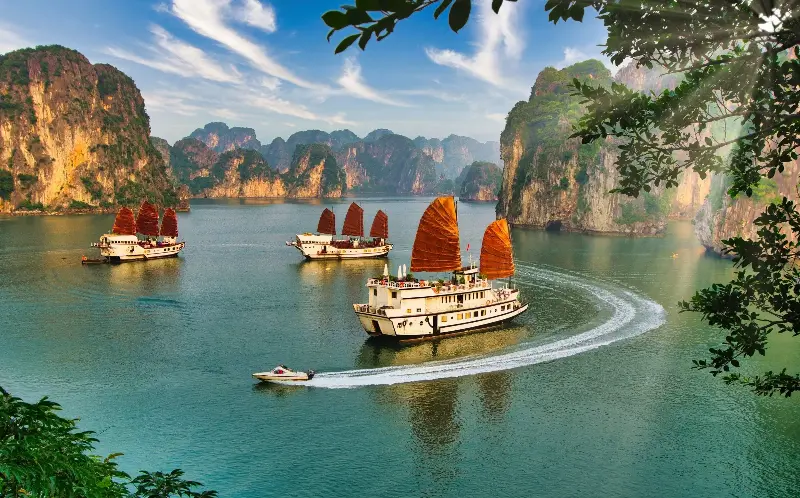
From the otherworldly Ha Long Bay with its sprinkling of column-like islands, to the delicious cacophony of Ho Chi Minh City’s food markets, Vietnam is too often overlooked in favour of its larger neighbour Thailand, despite offering more competitive prices. And yet, according to the celebrated novelist Graham Greene: “They say whatever you’re looking for, you will find here.”
4. Morocco
Africa’s most-visited nation seems determined to keep its crown by adding 1.5 million more airline seats flying into its airports this year.
One lesser-known destination that is set to benefit is the Moroccan city of Tétouan, which is receiving a new route from London Gatwick courtesy of Royal Air Maroc. The charming city offers blended surroundings, with a Unesco-listed medina hugging Spanish colonial architecture.
It is a step towards encouraging travellers away from the country’s beaten track, and towards more immersive and sustainable styles of holiday that put cultural experiences before beach-going. Mountassir Boullal, deputy director of the Marrakesh Regional Council of Tourism says: “Across the country, local communities are increasingly embracing experience-based tourism, offering visitors authentic encounters.”
5. Ireland
Unlike Vietnam, Ireland suffered a slight tourist slump last year, and as a result, Tourism Ireland wants to boost visitor spending by €10bn annually until 2031. To do this, they’re aiming to provide tourists with “travel that allows them to explore and disconnect”, chiefly by championing Ireland’s culinary scene as well as its offering of outdoor activities.
As the new initiative applies to the entire island of Ireland, visitors can expect to be greeted with equal warmth either side of the border, whether they are exploring caves in Enniskillen or cycling along forest trails in the Ballyhoura mountains. But Ireland is not a destination where tourists have ever really felt unwanted; there’s a reason it is nicknamed “the land of a thousand welcomes”.
6. Paraguay
Less-travelled than Brazil to its north-east, or Argentina to its south-west, Paraguay is firmly off the Latin America gringo trail. While it may not have beaches, it combines the crumbling colonial cities, impressive wildlife and hearty gastronomy found in its bordering countries with the bonus of fewer tourists.
Paraguay is almost twice as large as the UK and yet home to a population smaller than that of London, but it is keen to raise its international profile. Gaining particular attention is the region of Cordillera just outside the capital, where religious tourism to its basilica increasingly exists alongside nature travel to its lakes and waterfalls.
7. The Gambia
Sandwiched into Senegal – but not landlocked, thanks to a glorious strip of Atlantic coast – The Gambia is known for more than just quiet, unspoiled resorts. “We’re called ‘The Smiling Coast of Africa’ because of the exceptional service for which the country is renowned,” says its tourism board’s Mamou Suwaneh.
A trip down the Gambia River caters to birdwatchers and those curious to learn about a dark time in its history (stop by the ruins of the Kunta Kinteh Island slave fort), while cooking lessons in rural villages allow for a taste of Gambian tribal cuisine. And an added draw? Its culture and stunning beaches can be experienced by Britons jet lag-free, as it sits in the same time zone as the UK, within the so-called “golden GMT corridor”.
8. Canada
The 2026 FIFA World Cup is fast approaching, and with it, an imminent influx of visitors to Canada’s host cities of Toronto and Vancouver.
But the competition is being embraced as an opportunity for Canada to showcase itself beyond its two primary urban centres. From June to September, the Canada Strong Pass will provide discounts for museums and rail travel, and free admission to all national parks (Banff, Gros Morne, the Pacific Rim) – a far cry from the message recently sent by the US government, when it raised the price for non-nationals to visit many of its own national parks by $100.
9. Uzbekistan
Following a record-breaking 2025 which shot Uzbekistan into the league of fastest-growing destinations globally, the ancient Silk Road land is aiming to attract another 12 million tourists this year.
It is that clash of blue-hued Islamic domes and imposing soviet-era architecture which only occupies the heart of Central Asia, and in Uzbekistan it can be seen at its most simultaneously jarring and wondrous. Wind through Tashkent’s chandelier-adorned metro system or explore the city of Khiva, a gem which remains truly hidden.
10. Lithuania
Vilnius might have established itself as a charming European city break destination, but the Baltic country of Lithuania is otherwise rarely chosen by tourists. An airport expansion plus new rail links to the beaches of Palanga and the cobbled streets of Kaunas, however, are looking to change this, inviting travellers to discover its castle-peppered landscapes and fairytale towns.
“Lithuania combines historic cities, beautiful nature and the sense of space that many travellers are seeking today,” says Jolanta Masiulienė of Lithuania Travel. “Local communities across the country offer welcoming hospitality and the chance to discover uncrowded places at a slower pace.”