



A lynx rewilding consultation does not allow people to show their opposition to the proposal, farmers have claimed.
The Lynx to Scotland Partnership has held dozens of meetings in the Highlands highlighting its campaign to reintroduce the animals.
But the Scottish Gamekeepers Association (SGA) and National Sheep Association (NSA) have warned that the materials used in the roadshow could “skew” public opinion.
They pointed out that forms given to the public attending the events had no option to oppose lynx being reintroduced.
Questions about the impact on farming, land management and rare species such as capercaillie were also not “adequately explained”, they alleged.
Died out during Middle Ages
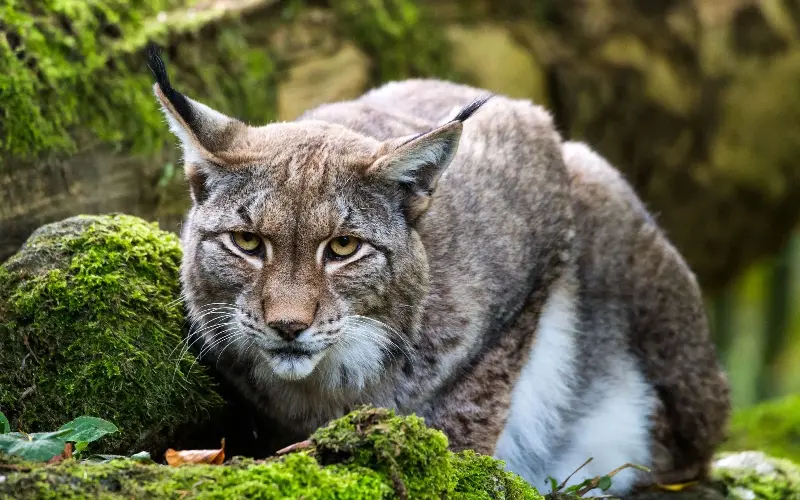
Lynx are about the size of a labrador and are thought to have died out in Scotland during the Middle Ages because of hunting and habitat loss.
Their prey ranges from deer and sheep to birds, rodents, rabbits and mountain hares.
Since 2020, the Lynx to Scotland Partnership has been assessing whether and how they could be brought back.
The group – involving the charities Trees for Life, Scotland: The Big Picture and The Lifescape Project – has argued the Highlands had enough woodland and prey to sustain up to 250 of the cats.
Any reintroduction would begin with a small number, it said, with up to 20 being released gradually over several years.
John Swinney, Scotland’s First Minister, last year ruled out the reintroduction of lynx and other carnivores.
But the partnership plans to increase public support for the move by contacting 89,000 households in the area and holding 42 public information sessions.
‘Cannot gauge public opinion’
Iain Hepburn, of the SGA, said: “Lynx to Scotland are perfectly within their right to promote their cause and lots of our respective members have engaged respectfully in the sessions.
“However, not being able to say ‘no’ is a glaring omission and the last thing we want to see in future is statistics saying x amount of people attending engagement sessions were in favour of lynx reintroduction, when that can only ever be incomplete.”
He added: “You cannot gauge public opinion when slanting things in only one particular direction and that is why this needs to be pointed out, publicly, now.”
Faye Bryce, the NSA Scotland policy officer, said: “This consultation appeared heavily weighted towards the reintroduction of lynx without always addressing significant questions around livestock welfare and farmer welfare with stress and worry about their stock being potentially attacked by lynx.”
Steve Micklewright, the chief executive of Trees for Life, confirmed that the campaign’s consultation did not include a ‘yes’ or ‘no’ question on whether lynx should be reintroduced.
He said: “We already know the majority of Scots support the return of lynx – the questionnaire isn’t about that.
“It’s about encouraging people to share their views about different aspects of lynx reintroduction, so we can better understand questions, concerns and local issues.”
He added that the consultation had reached “large numbers of people, with clear, accessible information” and the next stage was to hold in-depth discussions with groups such as farmers and gamekeepers.
‘Threat to rural business’
Sir Edward Mountain, a Tory MSP, said: “We accused the Victorians of using the Highlands as their playground. Eco warrior groups such as Trees for Life are proving worse.
“Introducing lynx to the Highlands is a threat to rural business and will do little to control deer, but lynx will kill our endangered wildcats and capercaillie.”
In January 2025, four lynx were illegally released in the Cairngorms National Park.
One of the lynx died after being recaptured, but the other three were rehomed at the Highland Wildlife Park in Kingussie.
The Lynx to Scotland Partnership condemned the way the cats were released, describing it as “illegal and irresponsible”.