



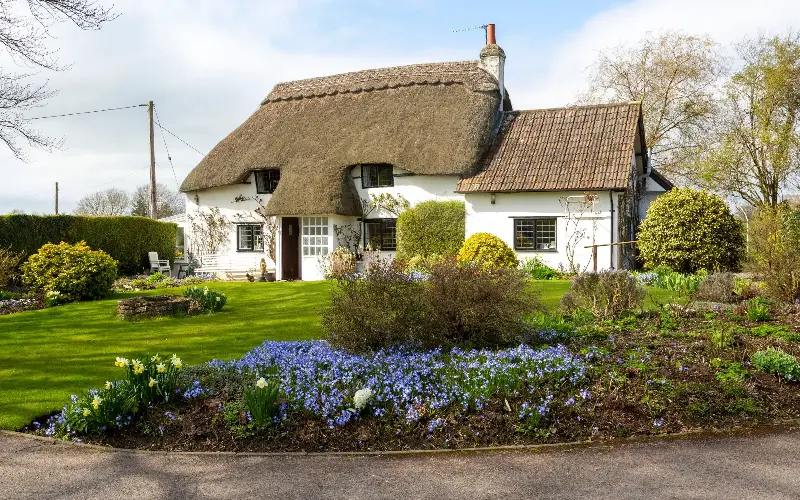
Imagine finally unpacking the final cardboard box in your new home, knowing you’ll never need to bother with the stress of moving house again.
Increasing numbers of property hunters are searching for a “forever home”, according to Barclays, with more than a third of recent first-time buyers stating their intention to buy a property they’d live in for at least 10 years.
But finding a property that will suit you and your family for the long-term is fraught with risks; what seems like the perfect home now can quickly become a poor fit in a few years if you haven’t planned properly for the future.
Luckily, we’ve sought the wisdom of expert buying agents – who are regularly tasked with finding the perfect properties for the super-rich – to find out the most common mistakes when buying a forever home and how to avoid them.
1. Stretching the budget to breaking point
Forever homes rarely come cheap, but that should not be a reason to max out what you can afford.
Whether it’s a huge mortgage that you would not be able to continue paying should yours or your partner’s income reduce, or failing to properly calculate the ongoing costs of running and maintaining the home over the long term, you could easily leave your finances too stretched to cope with other costs.
Verona Frankish, of online agent Yopa, said: “It’s vital to think about council tax, utilities, insurance, service charges and ongoing maintenance when working out the full cost of ownership. You also need to look at the age of the boiler, roof, windows and heating system, and so on.”
Financial pressures can mean you’re unable to afford things such as holidays and other luxuries, but could also render your forever home useless for the future if you’d been banking on borrowing more to make extensions and renovations.
Nick Mendes, from broker John Charcol, said: “This comes up constantly: buyers plan for an extension or renovation further down the line, but don’t check how affordability, lending criteria, or how their income and the property’s value might look by the time they come to apply.”
An in-depth assessment of your finances before you buy is key, taking in mortgage payments, maintenance and bills – as well as other life costs. If your forever home plans rely on borrowing more money in the future, you need to check this before exchange – not afterwards.
2. Buying for today’s life, not tomorrow’s
What looks like the ideal home for you and your family now can quickly be outgrown. Even if you have the “right” number of bedrooms, for example, the layout can soon become unsuitable for an older family.
“One of the biggest regrets comes from families who have bought for their current situation, rather than the life they’re growing into. Open-plan living is great for toddlers, but children quickly grow up and want privacy, somewhere quiet to study, and space to host their friends,” said Jo Eccles, founder and managing director of London buying agency Eccord.
You’ll also need to think about what happens as you grow older too and perhaps aren’t as mobile as you are now. If you aren’t willing to downsize, give some thought to whether the property could accommodate ground-floor living if needed, and whether it could be run efficiently with features such as zoned heating if children move out and not all rooms are being used regularly.
Charlie Warner, a buying agent at Heaton & Partners, added: “If you’re hoping to stay for the long term, you need a property that can expand and contract; that’s the holy grail.”
3. Not checking property restrictions
As we’ve mentioned above, having the flexibility to adapt your property over the years is a key way of making sure it suits your family over the years. But if you’re buying a listed property, or it’s in a conservation area, then your options can be severely restricted.
For one thing, extensions and even loft conversions could be off the table.
Mr Warner added: “If you’re banking on this being your forever home, having the flexibility to extend in the future could make all the difference. Just be aware that factors such as party wall agreements, conservation area rules or restrictive covenants can soon throw a spanner in the works.”
Take a look at other houses nearby and see whether they have had permission approved for side returns, kitchen extensions and any other developments you might be contemplating. It’s also worth speaking to a planning specialist before putting in an offer can give you a much clearer idea of what is – and isn’t – possible, and what it will cost.
As beautiful as they can be, this is particularly important if you’re looking at a listed property that requires work.
Ms Eccles said: “Any renovation work is likely to be at least 15pc more expensive than for a non-listed property. Timescales will be considerably longer. This is due to planning, and the specific skillsets required from architects, heritage specialists and craftspeople.”
4. Failing to predict future developments
While a peaceful village setting or open countryside view can be a major draw, there’s no guarantee it’s going to stay that way – particularly as successive governments have vowed to increase the country’s housing stock (albeit with varying success).
Before you even think about making an offer, be sure to research local planning applications and the council’s development plans. Also ask the seller and agent whether they know of any major proposals nearby.
Mr Warner said: “Don’t rely on AI or the internet to tell you what’s going to happen. You need to be willing to put in some hard graft. And if you’re not certain about any of this, employ someone who does this for a living to do the legwork for you.”
New housing developments, road schemes and commercial buildings can all change the look and feel of a neighbourhood.
Ms Frankish said: “Pay particular attention to plans that could affect traffic levels, pressure on schools and services, noise, privacy, or the outlook from the property.”
Even if nothing has been approved when you’re planning to buy, look for land that has been earmarked for future housing or infrastructure, and gauge how likely development is over the coming years.
Ms Frankish added: “Development is not necessarily negative, as new homes could bring better transport links, shops and local investment. The important thing is you understand what is planned, and make decisions with your eyes open.”
5. Overlooking issues you can’t change
“The emotional pull of a home can make it easy to dismiss a difficult commute, limited amenities or a neighbourhood that does not quite suit you. But what you need to remember is that while you can redecorate a house, replace a kitchen or alter the garden, you cannot pick it up and move it somewhere else,” said Ms Frankish.
This also applies to issues such as road noise, flight paths, orientation, or a lack of street parking.
You need to be realistic about how much of an issue these things are going to be – particularly if you’re planning to fight over parking spaces for many years.
If a property is near a school, drive past at pick-up time to check the traffic levels and parking. If the property is North-facing, use an app to check what time the garden becomes shady.
If you are planning to commute, do a few test runs; make time to visit the area at different times of the day and week. And chat to locals if you can, to help you get a feel for what it’s really like living there.
Ms Eccles added: “Ignoring fundamental issues because you’ve been seduced by certain aspects of a house is likely to lead to buyer’s remorse in the long run.”