



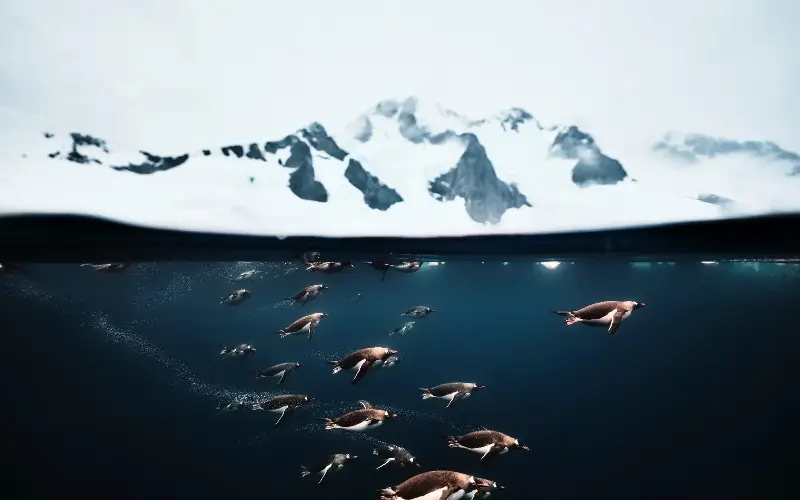
As families across Britain enjoy the final days of the summer holiday, on the other side of the world a different kind of gathering is under way.
Along the Antarctic Peninsula, penguin colonies pack the shoreline, whales arrive back after journeys of thousands of miles, and seals haul out to breed – all feeding on the same rich swarms of krill that sustain the entire ecosystem. This is a scene worthy of any comforting wildlife documentary.
But early this month, a far more worrying story about this hugely valuable ecosystem made headlines: for the second year running, the Antarctic krill harvest hit its catch limit and closed, months before the season was due to end.
Industry representatives pointed to the closure as proof that the management system is working exactly as intended. In one sense, they are right. But that misses the more important question. The issue is not whether the rules are being followed, but whether they remain suited to a Southern Ocean undergoing profound ecological and industrial change.
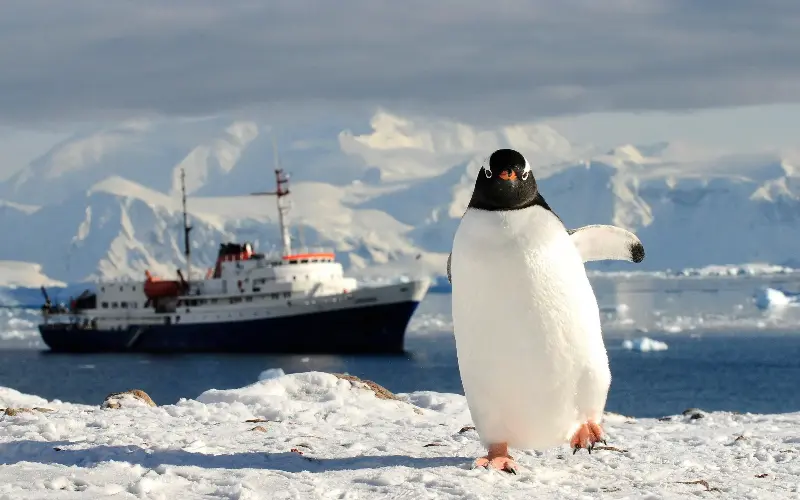
For decades, the Commission for the Conservation of Antarctic Marine Living Resources’s (CCAMLR’s) 620,000-tonne catch limit was rarely ever approached. Now it has been reached in two consecutive years, months before the scheduled end of the season.
Part of the explanation lies in the expiry, in 2024, of Conservation Measure 51-07, which capped how much of the krill catch could be taken from any single stretch of ocean, precisely to stop fishing concentrating around predator hotspots.
Without it, the international fleet – led by Norway and China, now the two dominant krill-fishing nations – has become increasingly concentrated around the Antarctic Peninsula. Some estimates suggest that as much as a third of the Southern Ocean’s krill may be found in this region, which is also one of Antarctica’s richest feeding grounds for a great number of different species.
Although the overall catch may be a small proportion of the total krill biomass, concentrating fishing in hotspots around the peninsula reduces prey availability locally, forcing wildlife to travel further for food during critical breeding and feeding periods.
At the same time, the fishery itself has become more intensive. Growing global demand for omega-3 oils used in aquaculture feed, nutritional supplements and pet food has driven investment in larger, more efficient factory vessels capable of harvesting unprecedented volumes.
That expansion is happening just as the ecosystem is becoming less stable, not more resilient. Declining sea ice and warming waters are steadily reducing the conditions krill need to reproduce, and some studies suggest krill abundance around the Antarctic Peninsula has fallen dramatically since the 1970s. In other words, the industry is scaling up capacity at precisely the moment the krill population can least absorb it.
Despite the mounting pressure on krill, the catch limit continues to rely on a population assessment completed in 2019, before successive record and near-record lows in Antarctic sea ice transformed the region. Against that backdrop, CCAMLR’s own scientists have delivered a striking verdict. The Scientific Committee – the body of independent experts that advises CCAMLR on the state of the krill population – has concluded that current fishing cannot be considered “precautionary”, meaning it does not meet the basic standard of erring on the side of caution when the science is uncertain.
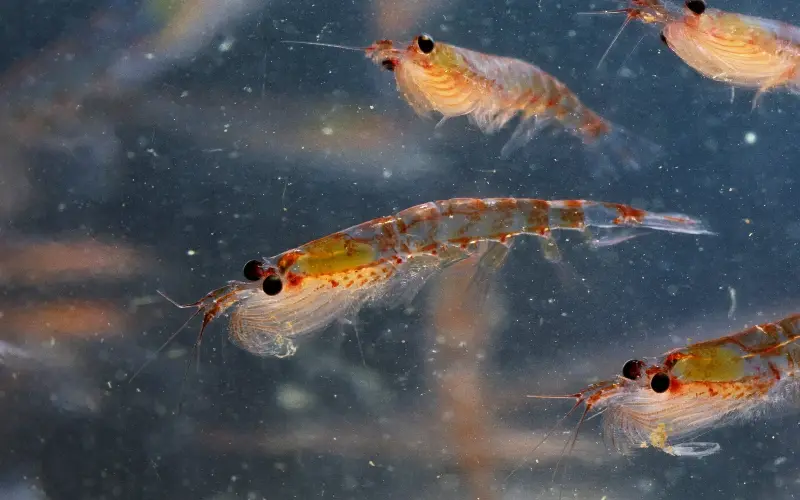
That is a serious admission for CCAMLR to make about itself: this is the organisation that pioneered precautionary, ecosystem-based fisheries management more than four decades ago, building a model that other fisheries around the world later tried to copy. Its own advisers are now saying the fishery it oversees no longer meets the precautionary standard it was built to uphold.
That same gap between principle and practice has fuelled scrutiny of the Marine Stewardship Council’s decision to recertify the Antarctic krill fishery as sustainable earlier this year. Environmental groups formally objected, and under the MSC’s own objections procedure, an independent adjudicator has already upheld several aspects of their challenge.
Whatever the final outcome, the broader issue extends well beyond a single certification. A sustainability label is supposed to tell consumers that a fishery is managed according to the best available science, and that its governance will tighten up if conditions get worse. That assurance is hard to sustain when the fishery’s own scientific advisers say its management no longer meets the precautionary standard the label is meant to certify.
None of this means the Antarctic krill fishery cannot be managed sustainably, nor does it diminish the efforts many companies have made to improve monitoring, transparency and scientific collaboration. But sustainability is not a status granted indefinitely. It has to be continually earned as ecosystems change, scientific understanding advances and governance evolves alongside them.
Britain enters this debate in an unusually influential position. As chair of CCAMLR until the end of the year, it will preside over October’s annual meeting at a pivotal moment for Antarctic governance. The chair cannot determine the outcome in a consensus-based organisation, but it can shape the agenda, broker compromise and press members to confront the central challenge rather than retreat into a familiar stalemate.
Three things should be at the top of that agenda.
First, spatial management should be restored, so fishing is no longer concentrated in the same hotspots that wildlife depends on most. Second, krill fishing management should be updated to reflect today’s climatic realities rather than assumptions made decades ago, using a stock assessment that actually accounts for the sea-ice losses of the past several years. Third, progress should be made towards establishing the long-proposed Antarctic Peninsula Marine Protected Area, as part of the broader commitment to protect 30 per cent of the Southern Ocean by 2030.
These are often treated as three separate negotiations. They are not. All three address the same underlying failure: governance that has not kept pace with an ecosystem changing faster than the rules meant to protect it.
Antarctica has long been one of the world’s greatest experiments in international cooperation. The Antarctic Treaty set aside territorial disputes in favour of peace and science. CCAMLR broke new ground by embedding ecosystem-based management into international fisheries policy decades before the term was fashionable. Those achievements remain remarkable, but institutions do not retain their authority simply because they were once innovative. They retain it by responding to changing realities.
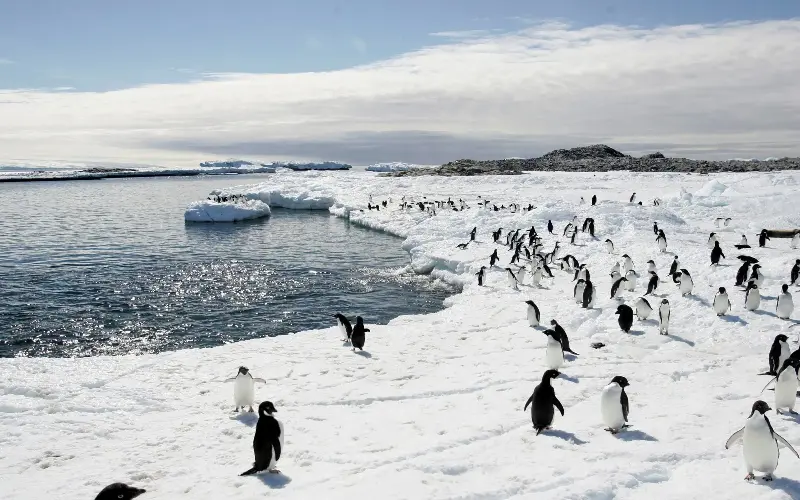
This back-to-back fishery closure raises a bigger question than the size of the krill harvest limit. It asks whether international governance can respond quickly enough to an ocean changing faster than the rules meant to protect it.
Britain cannot answer that question alone. But as chair of CCAMLR this year, it has the opportunity, and the responsibility, to show that adaptation, not inertia, remains the hallmark of effective international marine conservation. The penguins, whales and seals gathered on the Peninsula are not waiting for the next scheduled review. Neither should CCAMLR.
Zac Goldsmith served as Minister of State for Overseas Territories, Commonwealth, Energy, Climate and Environment from September 2022 to June 2023