



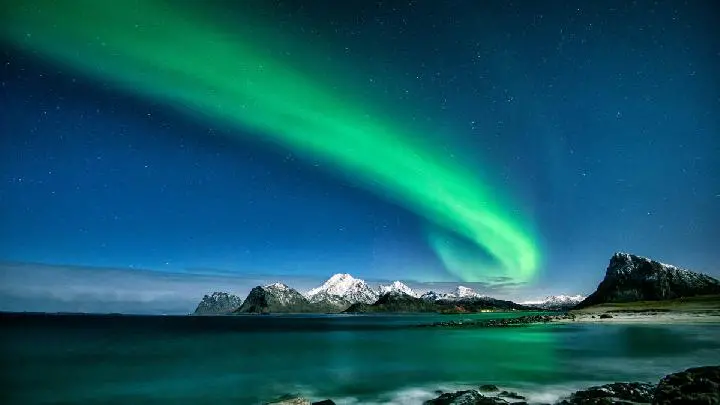
TEMPO.CO, Jakarta - Prepare yourself for another celestial spectacle as the Northern Lights may adorn U.S. skies tonight, Monday, March 30, local time.
A powerful solar flare classified as X1.4 has recently erupted from the Sun. Noted as one of the most intense categories, this event also triggered a coronal mass ejection (CME), a massive burst of solar particles released into space.
As the CME is expected to reach Earth, it could lead to a geomagnetic storm at G1 (minor) levels, with a chance of escalating to G2 (moderate). The Northern Lights then may appear brighter and extend farther south than usual, as the NOAA Space Weather Prediction Center reported.
Here’s everything you need to know about the Northern Lights tonight, according to People and The Economic Times.
When will the Northern Lights be visible?
The most ideal viewing window for the Northern Lights typically spans from late evening through early morning. During this time, the skies are at their darkest, and geomagnetic activity is often at its peak.
Where will the Northern Lights be visible?
The Northern Lights are projected to be visible across parts of the northern United States. States that may witness the dazzling display include New York, Wisconsin, and Washington.
How to view the Northern Lights?
Choosing the right location is key for viewing the Northern Lights. For the best experience, skygazers can head to areas far from city lights, where wide, unobstructed views of the northern horizon are available. Elevated or rural locations with minimal light pollution can also significantly enhance visibility and overall viewing quality.
Several sources also recommend allowing your eyes to adjust to the darkness for at least 20 minutes to achieve optimal visibility.
Tips for photography
The Northern Lights can be relatively easy to capture, but stability is crucial. Using a tripod or a steady surface for your smartphone or camera can make a significant difference in image clarity.
You can also enable “Night Mode” or “Pro Mode” on your device to improve exposure and capture more detail in low-light conditions.
Read: Why March Is Prime Time to See the Aurora