



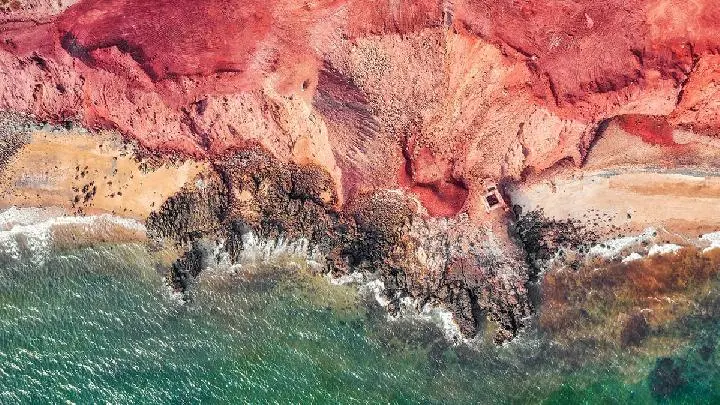
TEMPO.CO, Jakarta - The Iranian island of Hormuz experienced a unique phenomenon this week. The normally blue sea turned bright red during heavy rain. The color change occurred because bright red soil washed from the island's iron oxide-rich cliffs by rainwater into the ocean.
The island is famous for its distinctive red beaches. The red color is due to the high concentration of iron oxide in the sand and cliffs.
The rain, which began on Tuesday, December 16, 2025, brought sand with iron oxide concentrations, creating a beautiful contrast, according to a report by The Independent. This unique geological event attracted tourists, photographers, and significant interest on social media.
Beyond its visual appeal, the red soil, known locally as gelak, is exported in limited quantities and used in the production of cosmetics, pigments, and some traditional products.
Rarely Rains
Hormuz Island, located in the Strait of Hormuz, where the Persian Gulf meets the Gulf of Oman, is located about 1,080 kilometers south of the Iranian capital, Tehran. The island is relatively dry due to its infrequent rainfall. Most of the flooding occurs during the winter and early spring.
With its unique landscape, the island has become a popular tourist destination. Gulf News writes that Hormuz Island is often called Rainbow Island because of its colorful terrain. Beyond the red beaches, the island's landscape includes formations in yellow, orange, and other hues, the result of complex geological processes over thousands of years. Tourists come year-round to see its colorful soil, rugged coastline, and historical sites.
Furthermore, the island is rich in minerals, making its soil a popular seasoning. Locals use the metal-rich red soil to make a bread called tomshi. However, scientists advise against using the soil in cooking due to its heavy metal content.
NASA's Earth Observatory, in a statement earlier this year, described the island as a salt dome. Teardrop-shaped mounds composed of rock salt, gypsum, anhydrite, and other evaporites have risen through the overlying rock layers. "Rock salt or halite is weak and buoyant, so it loses its brittleness and flows more like a liquid when under high pressure."
Read: Iran Offers Humanitarian Assistance to Indonesia After Deadly Sumatra Floods
Click here to get the latest news updates from Tempo on Google News