



TEMPO.CO, Jakarta - The atmosphere in the Arctic region is now actively contributing to the acceleration of global warming, as revealed in the latest research published in the Bulletin of the American Meteorological Society. This research indicates that the air in the northern polar region is not only responding to climate change but also driving it through chemical and physical interactions occurring over ice and snow.
The thinning and cracking of sea ice trigger the convergence of sunlight, salty snow, open water, and human pollution. This interaction produces chemical reactions that form clouds, trap heat, destroy ozone, and accelerate warming in the Arctic, with potential impacts spreading to other regions of the Earth.
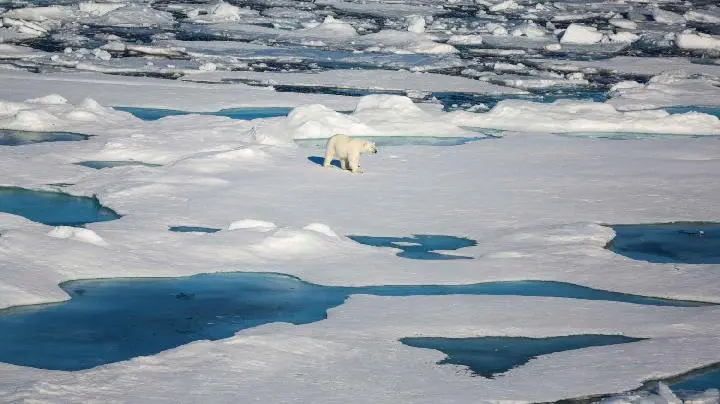
The Arctic region is warming at a faster rate compared to other parts of the Earth. The rapid loss of sea ice alters the energy exchange between the sea and the atmosphere, especially at the end of winter and the beginning of spring. First-year ice is now replacing multi-year ice, while ice cracks form open water channels exposed to sunlight.
The open sea surface releases heat, water vapor, and sea aerosols into the atmosphere. This condition disrupts the stability of the near-surface air layer and promotes the formation of heat-trapping clouds, strengthening regional warming.
To study these changes, scientists conducted coordinated field research in the Arctic involving various institutions. Observations were made through aircraft and ground stations in northern Alaska to measure greenhouse gases, reactive gases, aerosols, clouds, and atmospheric turbulence in real time, especially after sunrise in the polar region.
"This is an unprecedented opportunity to explore chemical changes in the boundary layer and understand how human influence is altering the climate in this important region," said study author Jose Fuentes from Pennsylvania State University, as quoted in the Earth report on December 15, 2025.
The data generated, according to Fuentes, "Provides a better understanding of the interaction between sea spray aerosols, surface-coupled clouds, oil field emissions, and multiphase halogen chemistry in the Arctic."
The research also found that salty snow and sea ice release reactive halogen gases, especially bromine, when exposed to sunlight. Bromine plays a role in ozone destruction near the surface, which then enhances warming and strengthens further bromine release.
In addition to natural processes, industrial activities in oil and gas also affect the atmospheric chemistry in the Arctic. Industrial emissions interact with natural chemical processes, forming a reinforcing feedback loop between ice loss, cloud formation, and heat retention.