



TEMPO.CO, Jakarta - According to the latest World Air Quality Report 2025 released by the Swiss air quality monitoring firm IQAir, only 13 countries worldwide currently maintain safe air quality, with only three of those located in Europe.
The report reveals that a mere 14 percent of cities globally possess safe air, marking a decline from 17 percent the previous year. Globally, air quality is assessed to be in a state of continuous deterioration, primarily due to human-induced climate change.
IQAir analyzed data from 9,446 cities across 143 countries, regions, and territories. The findings indicate that smoke from forest fires emerged as the primary factor behind declining air quality in 2025, followed by dust storms and other extreme weather events exacerbated by the combustion of fossil fuels.
In Europe, Andorra, Estonia, and Iceland stand as the only nations meeting the World Health Organization (WHO) annual PM2.5 standard of 5 micrograms per cubic meter. These three are among the elite 13 countries and territories worldwide that remain within these established safe limits.
Conversely, of the 143 countries analyzed, 130 approximately 91 percent fail to meet the WHO's safety guidelines. The five nations burdened with the highest pollution levels are Pakistan, Bangladesh, Tajikistan, Chad, and the Democratic Republic of the Congo.
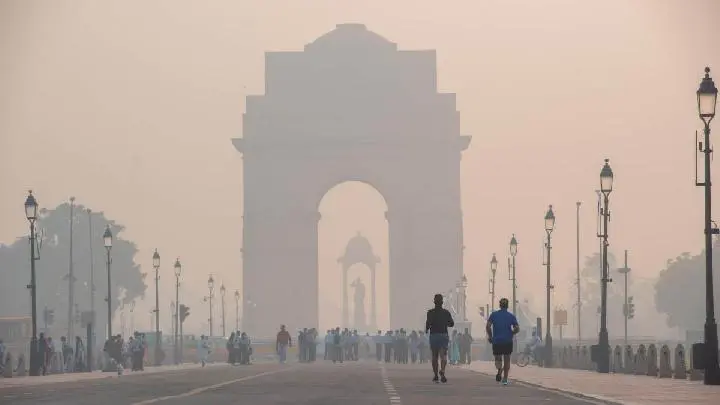
The report further notes that 25 of the world's most polluted cities are situated in India, Pakistan, and China, with India accounting for three of the top four positions. Loni in Uttar Pradesh ranks as the most polluted, recording an annual average PM2.5 concentration of 112.5 micrograms per cubic meter.
Meanwhile, Nieuwoudtville in South Africa enjoys the world's lowest pollution levels, with an average PM2.5 of just 1.0 microgram per cubic meter.
Within Europe, 23 countries saw an increase in PM2.5 concentrations in 2025, while 18 recorded a decrease. Switzerland and Greece experienced significant spikes due to forest fire smoke drifting from North America and Saharan dust from Africa, while Malta saw the largest improvement thanks to energy transition and emission control policies.
Real-time monitoring data from IQAir also identifies Paris as one of the five most polluted cities globally at the time of the report, joining Beijing, Dhaka, Wuhan, and Seoul. London also appeared within the top 10.
On Thursday, March 19, 2026, the Copernicus Atmosphere Monitoring Service warned of high PM2.5 pollution across Europe, triggered by ammonia emissions from agricultural fertilizers, rising pollen counts, and stagnant weather conditions. The combustion of fossil fuels continues to degrade air quality, particularly across Eastern Europe and the Balkans.
While 75 countries recorded a decrease in annual PM2.5 levels, 54 countries saw an increase, and two remained unchanged. The report also highlights a significant gap in global data, noting that only a small fraction of the world’s population has access to real-time air quality information.
"Without monitoring, we cannot fully understand what is in the air we breathe," said IQAir Global CEO Frank Hammes, as quoted in a Euro News report on March 24, 2026.
"Expanding access to real-time data empowers people to take action. By reducing emissions and addressing climate change, we can drive meaningful and sustainable improvements in global air quality," he added.
Read: Expert Tips for Staying Safe During Extreme Hot Weather
Click here to get the latest news updates from Tempo on Google News