



TEMPO.CO, Jakarta - The extraordinary sophistication of the Ancient Egyptian Kingdom sometimes still makes no sense to humans today. However, the stories of the Ancient Egyptian Pharaohs bring us closer to this amazing civilization that existed more than 3,000 years ago.
There were around 170 pharaohs who once ruled in Ancient Egypt. Their role is political and religious with varying interpretations from time to time.
However, apart from spiritual respect, the pharaoh was also responsible for the leadership problems they had carried out. Each Egyptian Pharaoh had a unique legacy. Some of them were architectural innovators or military leaders, while others were brilliant diplomats.
Famous Ancient Egyptian Pharaohs
Of the 170 pharaohs who ruled Ancient Egypt since 2600 BC (BC), here are the names of the ten most famous pharaohs to date:
1. Djoser (R. 2686–2649 BC)
King Djoser is considered the most famous Third Dynasty Egyptian Pharaoh, but little is known about his life. He supervised the construction of the famous stepped pyramid at Saqqara, a very important milestone in Ancient Egyptian architecture. The pyramid where Djoser is buried, was the first building with the iconic staircase design.
2. Khufu (R. 2589–2566 BC)
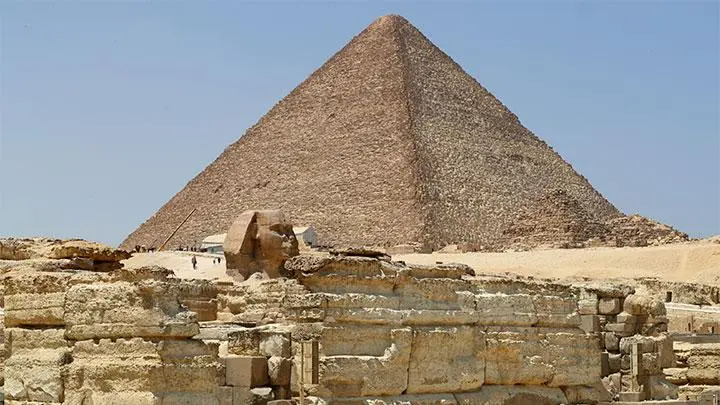
The Fourth Dynasty pharaoh, Khufu, left a legacy of the Great Pyramid of Giza which became one of the Seven Wonders of the World.
The monumental structure of the Great Pyramid of Giza is a testament to the mind-boggling sophistication of Egyptian architecture. Incredibly, it was the tallest man-made structure for 4,000 years. The pyramid was believed by Khufu to be a staircase to heaven. The means of construction of this extraordinary structure remains a mystery to this day.
3. Hatshepsut (R. 1478–1458 BC)
Hatshepsut was the second woman to become pharaoh (the first one was Sobekneferu, ancient Egypt's first female ruler). She was the wife of Thutmose II and ruled in the 18th dynasty. Her stepson, Thutmose III, was only two years old when his father died in 1479. This prompted Hatshepsut to immediately assume the role of pharaoh. Technically, Thutmose III also served as deputy leader at that time.
Hatshepsut strengthened her power as pharaoh by claiming that her mother was visited by the god Amon-Ra while she was pregnant. Hatshepsut called this a sign of divinity. During his time as pharaoh, he proved to be an accomplished ruler, restoring important trade routes and overseeing a period of peace.
4. Thutmose III (R. 1458–1425 BC)
Thutmose III dedicated himself to military training when his stepmother became pharaoh. He also took over the role of pharaoh when Hatshepsut died in 1458 BC.
Thutmose III's pharaonic military training paid off with his reputation as a military genius. Egyptologists sometimes refer to Thutmose III as the Napoleon of Egypt. Thutmose III never lost a battle. His military exploits earned him the respect and status of the greatest pharaoh from his people.
5. Amenhotep III (R. 1388–1351 BC)
During Amenhotep III's 38-year reign, the pharaoh ruled much of Egypt in peace and prosperity. Amenhotep III's achievements were more cultural and diplomatic than military. Few subsequent Ancient Egyptian Pharaohs can match his architectural and artistic legacy.
6. Akhenaten (R. 1351–1334 BC)
Akhenaten's birth name was Amenhotep IV. He then changed his name according to his radical monotheistic beliefs. The meaning of the name is "He who serves Aten" which is a tribute to Aten, the Sun God.
Akhenaten's religious beliefs made him move the capital of Egypt from Thebes to Amarna. The new capital was then called Akhetaten, "Horizon of Aten". Amarna was not a recognized place before Akhenaten's reign. The pharaoh chose this site because it was uninhabited and did not belong to anyone else.
Akhenaten's wife, Nefertiti, also had a dominant role during his reign. Nefertiti played an important role in the religious revolution. He also became increasingly famous for his limestone statues. The statue is one of the works of Ancient Egyptian art in the Neues Museum and is the most reproduced.
After Akhenaten's death, Egypt quickly returned to polytheistic beliefs and traditional gods that had been rejected previously.
7. Tutankhamun (R. 1332–1323 BC)
Tutankhamun became the youngest pharaoh in Ancient Egyptian history, ascending the throne at the age of 9 or 10. This made this pharaoh famous among others.
Tutankhamun's fame stems from the discovery of his tomb in 1922, one of the great archaeological discoveries of the 20th century. King Tut, as Tutankhamun was known, only ruled for 10 years and died at the age of 20. The cause of his death is still a mystery to Egyptologists.
8. Ramesses II (R. 1279–1213 BC)
Ramesses II's reign was the greatest of the 19th Dynasty, making it particularly striking. This son of Seti I then declared himself a god. He earned a reputation as a great warrior, fathered 96 children, and ruled for 67 years.
Ramesses II was not a simple pharaoh. The heritage sites he created are vast and numerous. Ramesses II's long reign almost made Ancient Egypt bankrupt.
9. Xerxes I (R. 486–465 BC)
The Achaemenid king of Persia is recognized as pharaoh aka Xerxes I or Xerxes the Great. Xerxes I ruled during the 27th Dynasty when Egypt had been part of the Persian Empire since 525 BC.
Xerxes I is often described as a tyrant because of his disregard for local traditions and so he was not liked by the Egyptian people. His figure is not good in the eyes of Greek historians because he once tried to invade the region.
10. Cleopatra VII (R. 51–30 BC)
The last active ruler of the Ptolemaic Kingdom of Egypt, Cleopatra, presided over the final days of the empire there. Her fame lives on through folklore, Shakespeare and Hollywood, so it is difficult to separate the real Cleopatra from the legend. Researchers describe Cleopatra as a very beautiful woman and brilliant at leading.
Cleopatra was an intelligent ruler who succeeded in bringing prosperity. The stories of her affairs with Julius Caesar and Marc Anthony are well documented. But without further knowledge of the story, people concluded it was tragic. Cleopatra's decision to commit suicide in 30 BC ended the Egyptian kingdom.
NIA HEPPY | SYAHDI MUHARRAM
Click here to get the latest news updates from Tempo in Google News