



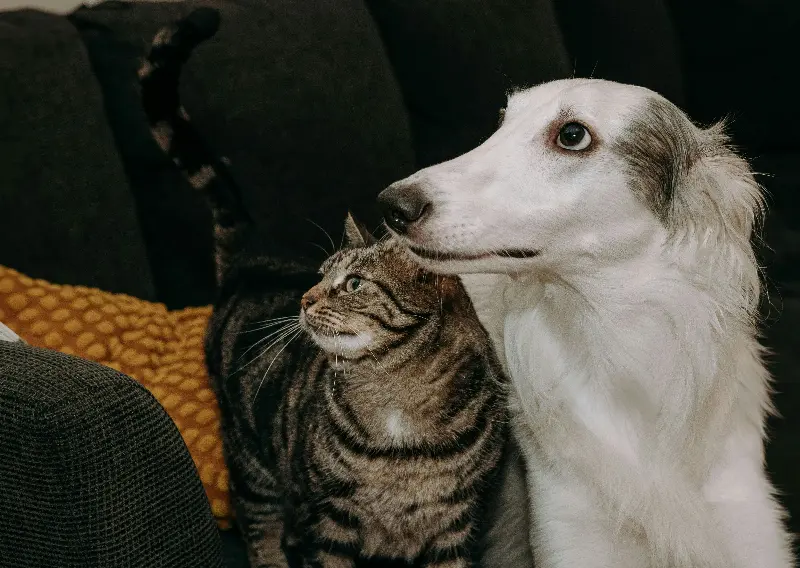
As July 4th approaches, keep in mind that pets can experience an increase in anxiety due to loud noises from the holiday festivities. Every year, veterinary clinics and emergency centers receive an influx of calls due to this stress. Pets have even ingested fireworks!
With a little planning, you can help your dog tolerate this time of year. Here are some ways to soothe your pet’s anxiety and keep them safe.
Create a haven. During times of overstimulation, it’s a good idea to create a place where your dog will feel most comfortable. Set up your dog’s crate in a quiet space away from windows, like the basement or a larger closet, so they have a harder time seeing and hearing the fireworks. Because their crate is a comfortable and safe place, it is also a good choice to prevent them from causing danger to themselves or their environment. A loose cloth or blanket can also be placed over the crate to give the feeling of calm. Provide your pup with familiar toys and treats – consider freezing bone broth into ice cubes to keep your dog occupied.
Play white noise. Leave a fan, television or radio on to mask firework sounds. Some reports have said that classical music can also have a calming effect on dogs, as well as music series like "Through a Dog’s Ear," which was created specifically to soothe pups. An anxiety vest may also work in some cases. If you don’t have one, try a snuggly fitted T-shirt.
Comfort your dog. If you are able, stay home with your dog or leave them in the care of a trusted person who can verbally comfort your pup. Be careful about incorrect verbal cues while interacting with your dog. Often, it’s not the word used but the tone that impacts how your dog understands and reacts to you. Sounding frantic, even if you’re saying, “It’s OK,” may cause your dog to believe that something is in fact wrong. Stay calm and do your best to reassure your pet.
Exercise your dog beforehand. Go on a long walk or have a play session before dusk to increase the chances that you’ll tire your dog out and avoid the sounds altogether. When you do go out, make sure your dog is secure on their leash.
Steer clear of fireworks. Though it sounds obvious, do not take your dogs to firework shows or leave them outside in the yard during fireworks, especially if you live near where the fireworks will be. Keep your dog inside and away from the commotion, especially if you aren’t sure how they’ll react.
Ensure your pet has proper identification. The Fourth of July has one of the highest numbers for dogs running away from home. Make sure your pet has a form of identification, like an ID tag on their collar with up-to-date info, or better yet, a microchip. Having your dog microchipped means they have a better chance of being returned to you promptly and safely if they do run away.
Desensitize your dog to firework sounds. If you suspect your dog will freak out at the sound of fireworks, try playing firework audio (very softly!) so your dog can become acclimated. “Counterconditioning” combines pairing soft sounds of noises like fireworks or thunder with a treat your dog likes. Start the volume low so your pup can notice it, but doesn’t show signs of stress – like panting, pacing, leaving the area, or trying to hide. Other tactics include increasing the volume gradually, switching the source of the sound, and using different recordings.
Speak to your vet about medication. If your pet’s anxiety is severe, consider making an appointment with your veterinarian in advance of the holiday to discuss potential medications to soothe your dog. Prescription of anti-anxiety medications, over-the-counter CBD, dog-calming treats, or dog anxiety vests are all options that your vet may recommend. If you and your vet decide that a prescription is your pet’s best bet, there are a few things to keep in mind. First, request the medication at least a week earlier than needed. Second, remember to give your pet a practice dose before the holiday to see how they respond. Lastly, never share medication with another pet or give more than the recommended dosage.
Consider hiring a dog trainer. If fear and reactivity are negatively impacting your dog’s life, consider enlisting the help of a dog trainer. Many dogs and their owners need the expertise of a good trainer or board-certified behavioralist to help desensitize their dog to fireworks or other fears.
For more information on responsible dog ownership, visit the AKC at www.akc.org.