



From the misty valleys of the North to the central coast and the Ta Pa plains of the South, the enchanting beauty of Vietnam unfolds through the lens of a drone.
Vietnam appears like a vibrant silk ribbon when viewed from above, where the misty valleys of the North connect with the curving coastline of the Central region and the fertile waterways of the South. Each region possesses its own unique character, creating a diverse landscape of nature and culture, offering endless inspiration for exploration to travelers.
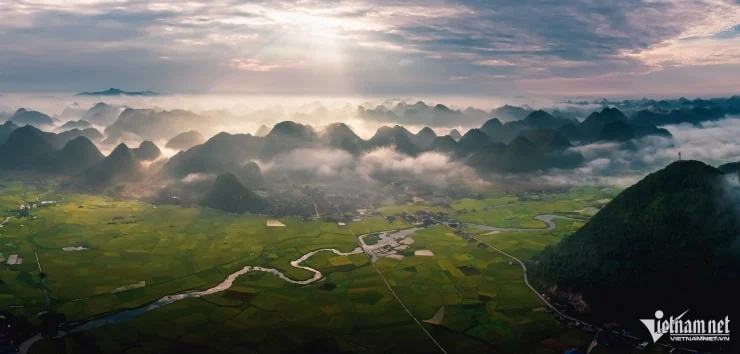
Northern Vietnam: Green Valleys and the Rhythm of Highland Life
Bac Son is a famous valley in Lang Son province, about 160km from Hanoi . It is known for its landscape of limestone mountains surrounding vast rice fields, creating one of the most beautiful valleys in the Northeast region. From above, the contrast between the green of the rice paddies and the majestic mountains creates a spectacular scene.
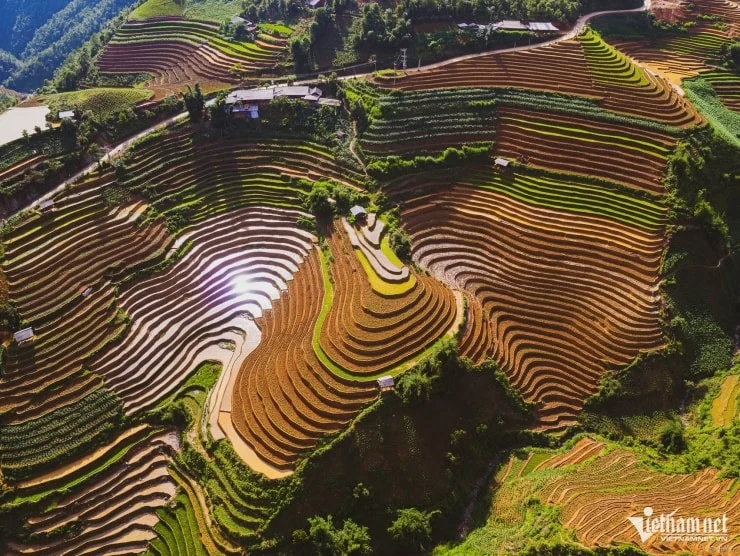
Further northwest, Mu Cang Chai ( Lao Cai ), about 300km from Hanoi, is a must-see destination. It's one of the most beautiful terraced rice field viewing spots in Vietnam, where the curves of the rice paddies embrace the hillsides, creating a work of art forged by both man and nature.
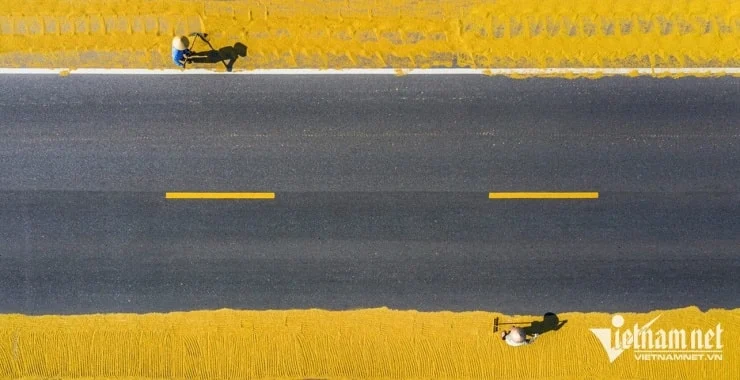
In the midland region, Vinh Yen (Phu Tho province) offers a tranquil glimpse into agricultural life. During harvest season, usually in May-June and September-October, the village roads around Vinh Yen are ablaze with the golden color of drying rice. Locals often utilize the concrete or asphalt road surface to spread tarpaulins for drying agricultural products, creating characteristic splashes of color typical of the Northern Vietnamese countryside.
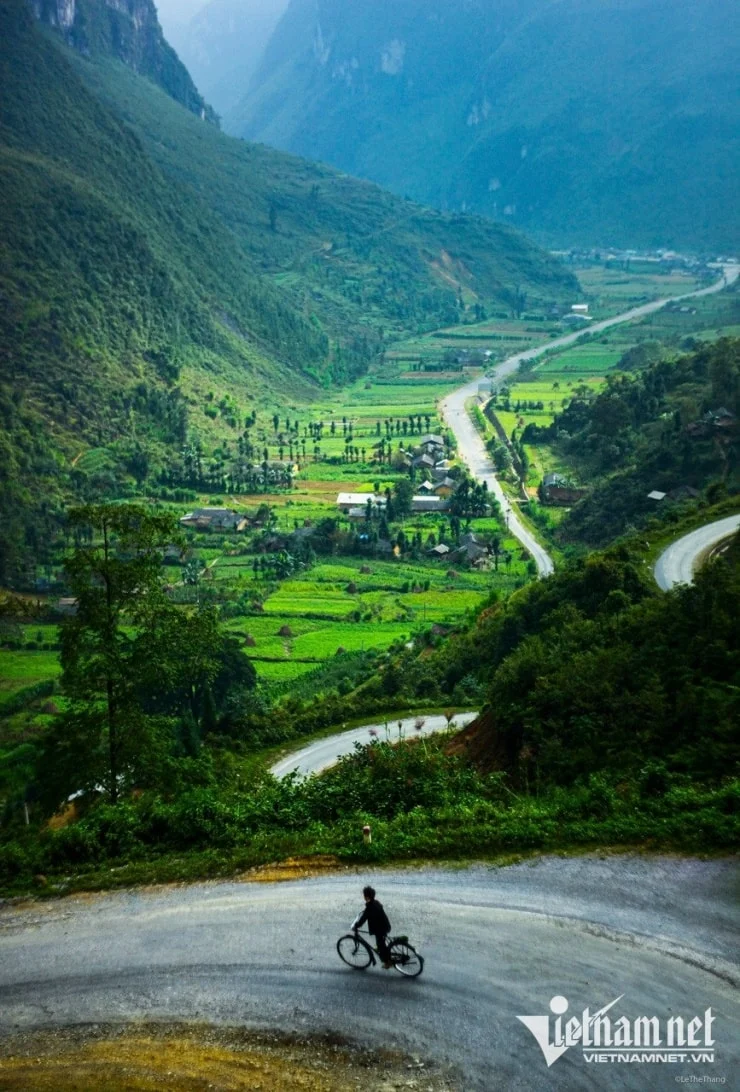
Meanwhile, Pho Cao (Tuyen Quang) captivates with the pristine beauty of its rocky plateau. This community tourism destination stands out with its distinctive Hmong traditional houses, nestled amidst the gray, jagged rock formations and vibrant flowers that bloom every spring.
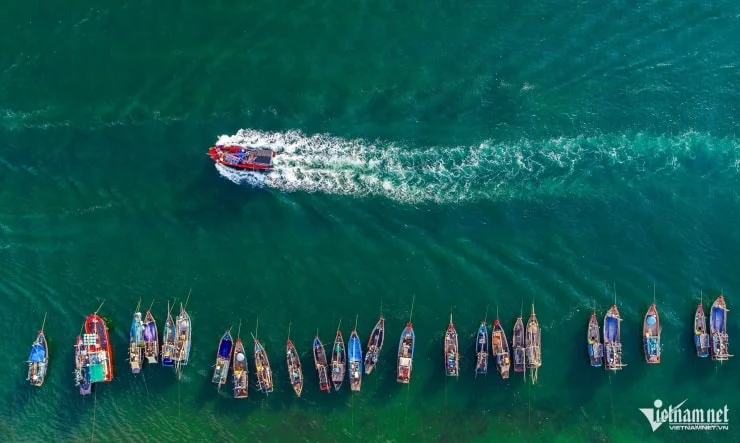
Central Vietnam: A pristine coastline and cultural heritage
Central Vietnam welcomes visitors with Sa Ky Beach in Quang Ngai province. This relatively unspoiled coastal area is famous for its role as an important gateway to Ly Son Island. Viewed from above, the clear blue water and the bustling activity at Sa Ky port create a vibrant seascape.
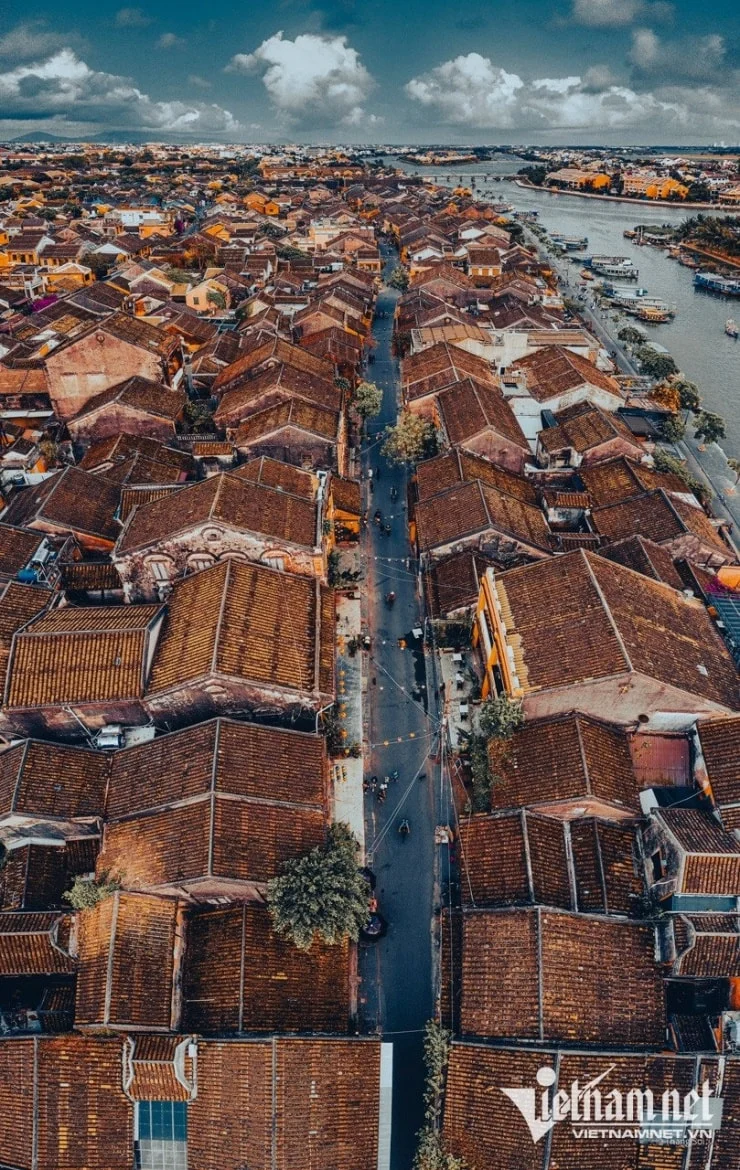
Located about 30km south of Da Nang city center, Hoi An emerges with its moss-covered tiled roofs and distinctive golden hues. Recognized as a UNESCO World Heritage Site in 1999, this ancient town has preserved its architectural and historical value, making it an iconic destination for tourism in Central Vietnam.
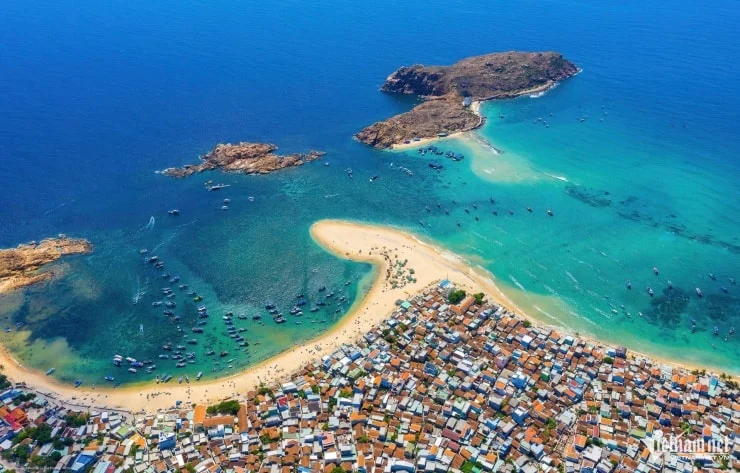
Southern Vietnam: The Colors of the Peninsula and the Borderlands
Located in the eastern part of Quy Nhon Dong ward, Gia Lai province, Nhon Hai fishing village is a peaceful coastal community. Situated on a peninsula, Nhon Hai offers a tranquil space where people and the sea blend harmoniously in the bustling life of a coastal fishing village.
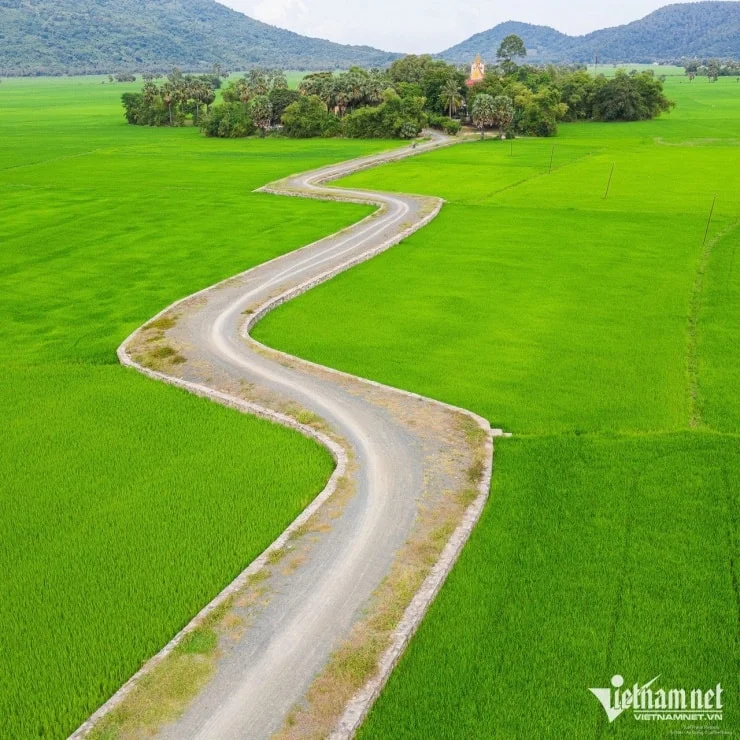
The journey concludes at Ta Pa rice fields, one of the most beautiful natural landscapes in Tri Ton district, An Giang province. Particularly attractive during the rice harvest season, Ta Pa is not only a natural destination but also bears the strong cultural imprint of the Southwestern region of Vietnam, attracting many tourists to explore and experience it.