



A new study adds evidence that lobsters not only react instinctively but may actually feel pain, sparking calls for a change in how these crustaceans are treated.
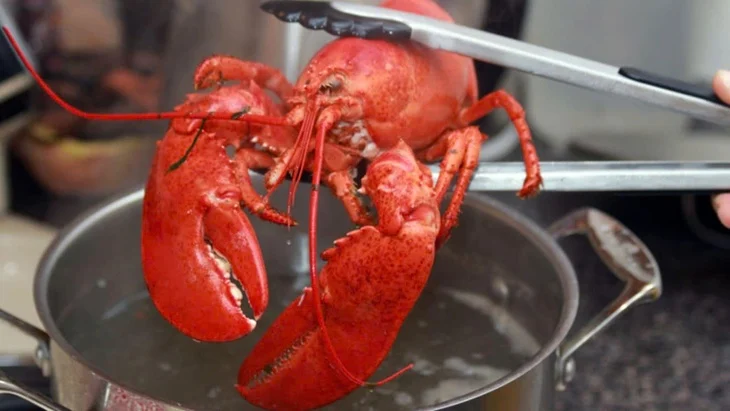
Several countries, such as Norway, New Zealand, and Austria, have banned boiling live crustaceans for animal welfare reasons. - Photo: Anastasia Tveretinova
A study published in Scientific Reports on April 13th has provided further evidence that lobsters are capable of sensing pain, rather than simply reacting to stimuli. This finding is increasing pressure on many countries to reconsider the long-standing practice of boiling live lobsters.
The study focused on the Norwegian lobster, scientifically known as Nephrops norvegicus . Scientists used two common human painkillers, aspirin and lidocaine, to test the lobster's reaction to mild electrical stimulation.
The results showed that individuals treated with painkillers exhibited significantly less of the "tail-flapping escape" reaction compared to the group not treated with the medication. This is a characteristic behavior that helps lobsters escape danger.
According to the researchers, if this were simply a mechanical reflex, painkillers would not suppress it. This suggests that their nervous systems may process pain signals in a more complex way.
Animal physiologist Lynne Sneddon notes that the fact that painkillers in humans also work on lobsters suggests a significant similarity in how the nervous system processes sensation. This raises ethical questions about how humans treat and slaughter crustaceans.
In fact, some countries like Norway, New Zealand, and Austria have banned boiling live crustaceans for animal welfare reasons. In the UK, species such as lobsters, crabs, and octopuses have also been recognized as creatures capable of feeling pain under the 2022 Animal Welfare Act.
Scientists are now exploring more humane methods, such as stunning animals with electricity before slaughter, to minimize pain for them.
This research not only changes how we view lobsters but also contributes to expanding our understanding of the cognitive abilities of invertebrates. As more evidence emerges that they are capable of feeling pain, the question is no longer "do they feel pain?", but rather "how should humans treat them?".