



With an elite crew and the world's most powerful rocket, the Artemis II mission will make its first flight around the Moon after more than half a century of waiting.
NASA has scheduled the Artemis II launch for 6:24 PM ET on April 1st. The launch window will last for two hours. In case weather or technical conditions are not ready, backup launch opportunities will be extended until April 6th.
The mission marked the return of humans to the Moon after more than 50 years. Using the Space Launch System (SLS), Artemis II carried the Orion spacecraft and four astronauts on a 10-day journey.
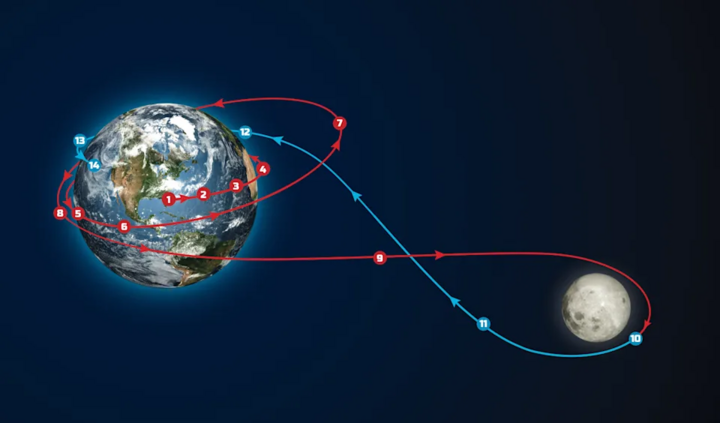
This diagram illustrates the flight path of Artemis 2, depicting the Orion spacecraft's journey from Earth around the Moon and back. (Source: Roen Kelly)
The Artemis II crew was a convergence of exceptional individuals with a combined 660 days of experience in space and 12 spacewalks. The team included Commander Reid Wiseman, Pilot Victor Glover, and two specialists, Christina Koch and Jeremy Hansen.
Notably, Christina Koch will become the first woman to undertake this mission, while Jeremy Hansen will be the first Canadian astronaut to join the mission. The crew composition is seen as reflecting the trend toward international cooperation in the Artemis era.
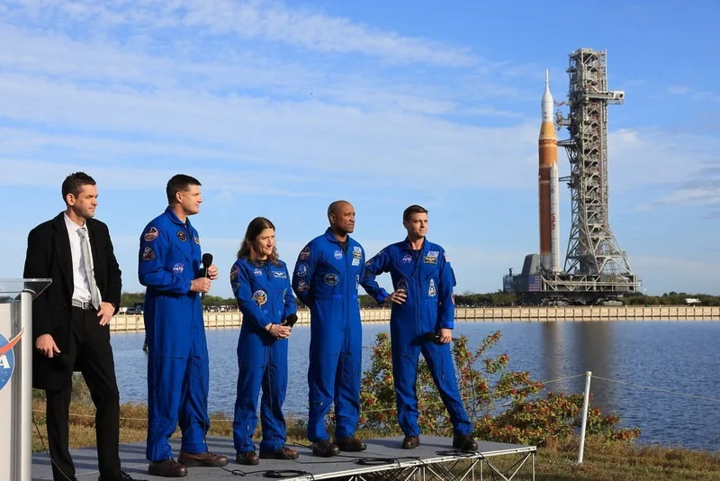
From left to right: NASA Administrator Jared Isaacman, Canadian astronauts Jeremy Hansen and Christina Koch, pilot Victor Glover, and Artemis II commander Reid Wiseman answer questions from the press. (Source: NASA)
Before embarking on its acceleration towards the Moon, the Orion spacecraft will spend 24 hours in high Earth orbit. This is a crucial period for the engineering team and crew to conduct a comprehensive check of the spacecraft's life support and control systems.
One of the most complex technical tests is the docking simulation phase. After separating from the upper stage of the SLS rocket, the astronauts will manually control the Orion spacecraft to rotate and re-engage with the rocket stage. This maneuver aims to assess the spacecraft's maneuverability and accuracy in confined space – skills vital for future space station landing and assembly missions.
After completing its tests in Earth orbit, the Orion spacecraft turned around and activated the Service Module's engines. This engine firing would provide enough velocity for the spacecraft to escape Earth's gravity and begin its journey toward the Moon.
However, the astronauts will not set foot there, nor will they risk approaching it to enter orbit like the Apollo missions did.
The spacecraft will follow a figure-eight orbit, using the Moon's gravity to automatically "spring" back towards Earth without consuming too much fuel for the return journey.
This is a crucial step for NASA to confirm that the Orion spacecraft is ready for the Artemis III mission – the mission to actually land humans on the surface of the Moon in the coming years.
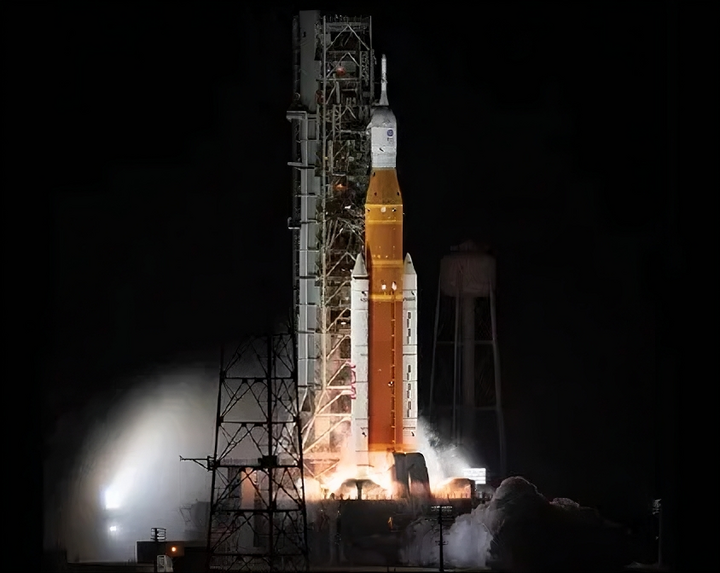
(1) The SLS rocket on a launch pad from the Kennedy Space Center, beginning Artemis 2's journey around the Moon. (Source: NASA)
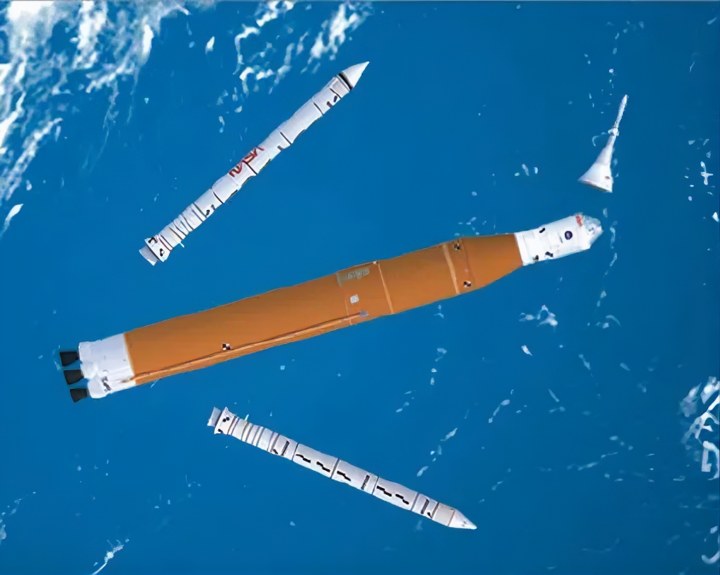
(2) The SLS rocket sheds its solid propulsion stages, shielding, and escape system during the Ascent Jettison phase. (Source: Roen Kelly)
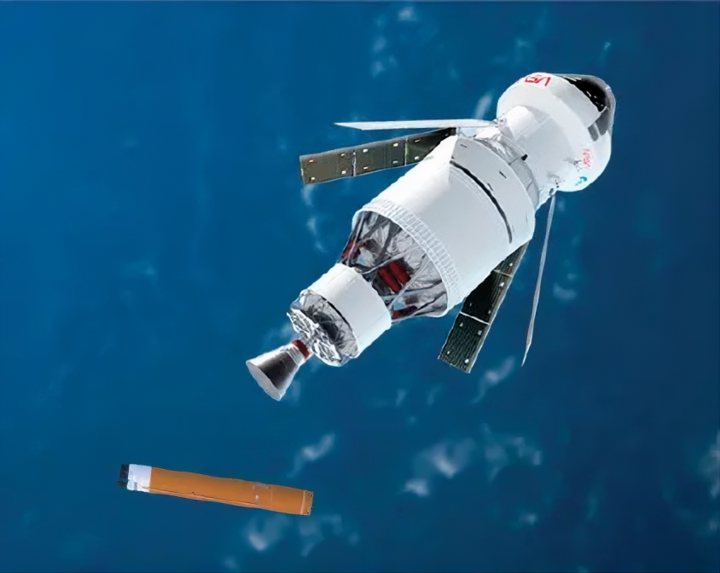
(3) The core stage of the SLS missile ceases to function and separates. (Source: Roen Kelly)
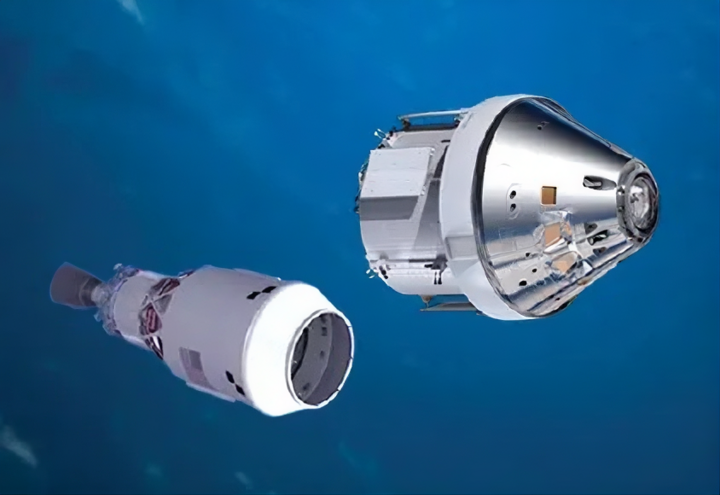
(6) The Orion spacecraft separates from the ICPS booster stage and performs a simulated approach maneuver, illustrating a crucial test step in the Artemis 2 mission. (Source: ESA/NASA)
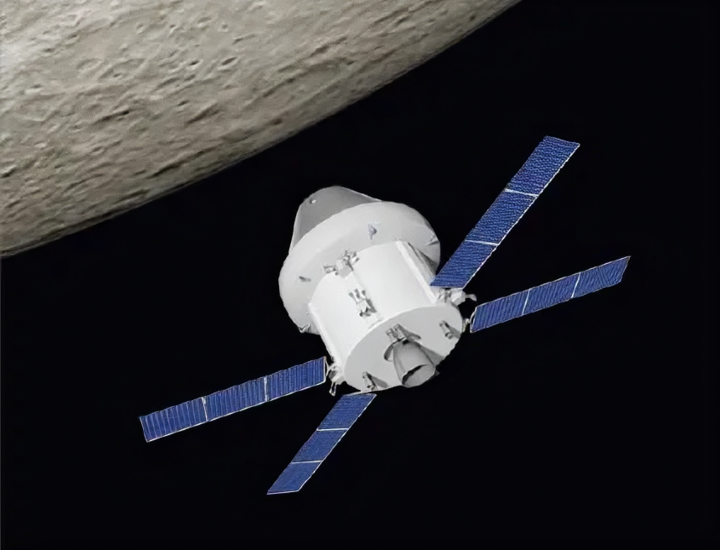
(10) The Orion spacecraft made a four-day journey in free orbit around the Moon before returning to Earth. (Source: ESA/NASA)
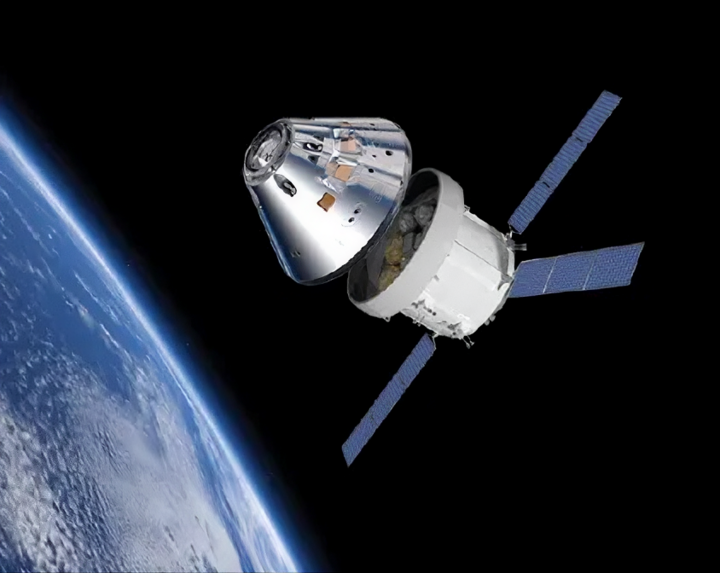
(12) The Orion crew module separates from the service module, marking the final step in its journey back to Earth. (Source: NASA)
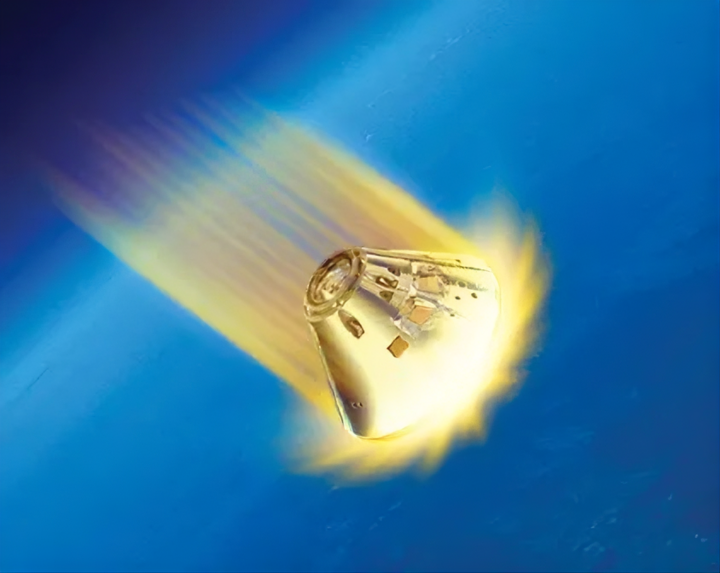
(13) Orion crew module re-enters Earth's atmosphere. (Source: Roen Kelly)
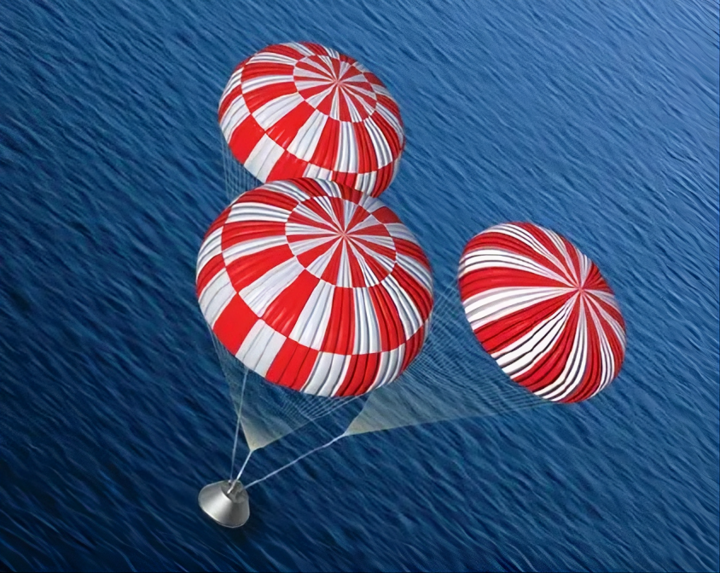
(14) Orion crew module lands in the Pacific Ocean. (Source: Roen Kelly)