



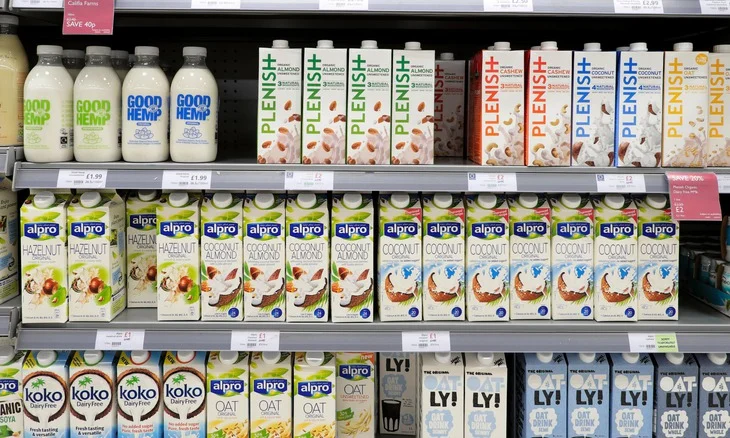
According to The Guardian, in 2020, about one-third of Britons drank plant-based milk instead of cow's milk, and spending on these types of milk increased by £100 million in the same year. - Photo: ALAMY
On January 14th, a headline published on the Daily Mail website in the UK attracted much attention when it warned that consuming plant-based milk during the Veganuary movement (eating vegetarian for the entire month of January each year) could subtly harm people's IQ.
This information quickly spread on social media, causing many consumers to worry that replacing cow's milk with plant-based milks could negatively impact intelligence and brain health.
According to a verification report by Dr. Elise Hutchinson published on the Food Facts website on November 14th, the Daily Mail's headline was deemed misleading, distorting the core issue addressed in the article.
In an article published in the Daily Mail, Professor Kristien Boelaert highlighted the role of iodine in fetal brain development.
She stated that even mild iodine deficiency during pregnancy can affect a child's cognitive abilities, lowering their IQ and reading comprehension skills.
This conclusion is based on observational studies and warnings from the World Health Organization, which show a link between iodine deficiency and cognitive decline in children.
A long-term observational study in the UK, tracking over 1,000 mother-child pairs, showed that children whose mothers were iodine deficient in early pregnancy were at a higher risk of scoring lower on language IQ and reading comprehension.
According to Food Facts, the situation in the UK is quite unique because the country does not mandate the addition of iodine to table salt like many other countries.
For many years, cow's milk and dairy products were the main source of iodine in the UK, due to iodine being added during the farming and production process.
As more and more people switch to plant-based milks—which are not fortified with iodine —the risk of iodine deficiency may arise if there is no suitable alternative.
Ms. Hutchinson emphasized that drinking plant-based milk does not harm intelligence, as long as the diet still provides sufficient iodine from other sources, such as iodized salt or fortified foods.
Numerous studies at Cambridge University indicate that women of reproductive age in the UK have lower iodine levels compared to many Western countries that have implemented mandatory iodized salt policies.
Ms. Boelaert argues that this is a systemic problem, stemming from public nutrition policies, rather than a direct consequence of consuming or avoiding a specific food group.