



The Korean culinary trend is increasingly emphasizing the texture of dishes rather than flavor, partly thanks to videos on social media, where food is experienced as a visually "tactile" sensation.
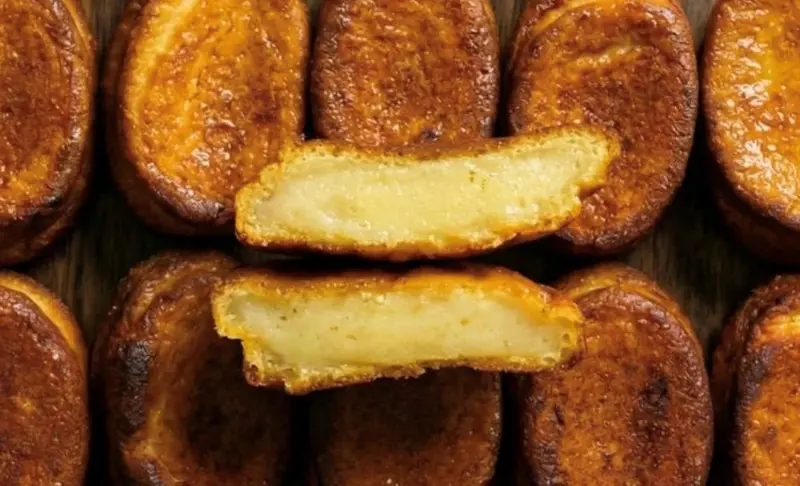
The cuisine is appealing because of its crispy , chewy, and tender textures.
One recent weekend afternoon, Hwang In-woo, a university student in his early twenties, lined up to buy "butter rice cakes"—a trending dessert he hadn't intended to try before.
Hwang said he often "follows" the latest food trends in Korea, mostly at the suggestion of his girlfriend, who constantly finds new dishes on social media and invites him to try them out.
"I probably wouldn't have taken the initiative to buy these things if she hadn't," Hwang said.
Interestingly, as Hwang inadvertently became caught up in culinary trends, he gradually realized a common thread that extended beyond just taste.
“Most of them have a chewy or soft texture, so you don’t need much effort or concentration to enjoy them. The Dubai-style cookies surprised me the most. They were soft on the outside, but had crispy parts inside. That feeling is something I’ll never forget,” he said.
Hwang's observations reveal a subtle but distinct shift in Korean food culture, where texture—how food stretches, resists, melts, or crumbles in the mouth—is becoming a key factor influencing consumer behavior.
In Korean desserts, trendy drinks, and even seasonal seafood, the key is not just the taste, but also the sensory experience.
This shift is most evident in the dessert market, where numerous treats consistently gain popularity by offering the same sensory experience.
The Dubai-style cookies that garnered significant attention earlier this year helped shape this trend. Made with marshmallow dough filled with pistachio cream and kataifi pastry, the cookies offer a multi-layered texture experience, combining stickiness, chewiness, and crispness in a single bite.
Although the initial hype has somewhat subsided, the format continues to maintain its appeal. Major bakery and coffee shop chains in South Korea, such as Paris Baguette and A Twosome Place, subsequently launched their own versions.
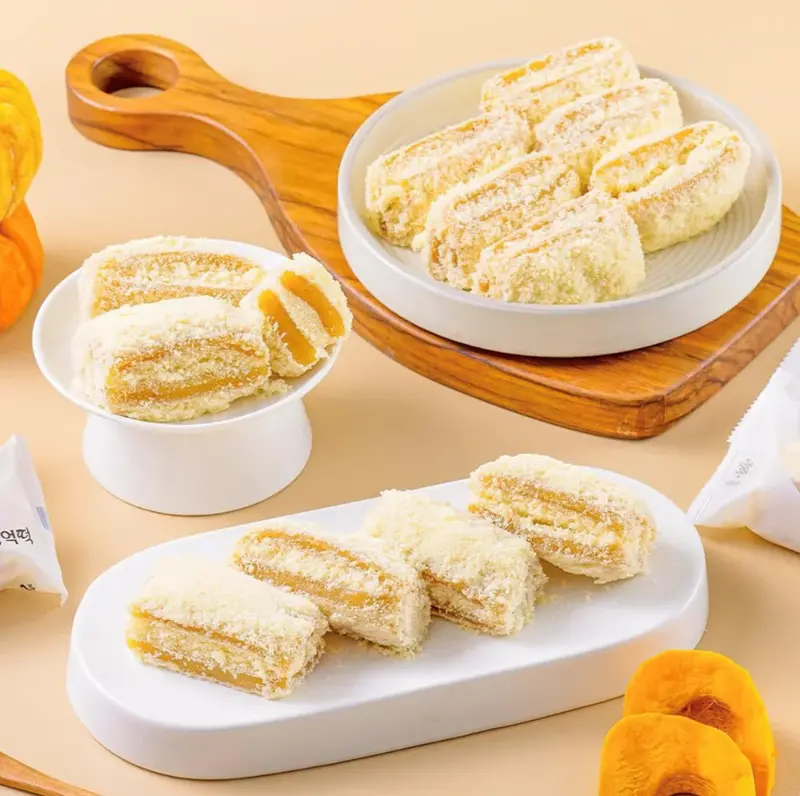
This trend continues to evolve with new variations. "Butter rice cakes" have recently become popular, combining a lightly crispy outer layer with a dense, creamy, and chewy filling inside.
Similarly, in the southwestern city of Gwangju, the long-established rice cracker brand Changeok is also attracting renewed attention with its pumpkin injeolmi – a variation of traditional Korean rice crackers that emphasizes weight, elasticity, and a gradually softening texture.
On social media, these dishes are rarely showcased simply through their taste. Instead, they are recreated as "moments," such as a hand pulling apart a sticky surface, or a piece of cake stretching long enough to satisfy the viewer's anticipation.
This visual language, though repetitive, is effective in transforming the tactile sensation into an experience that can be "consumed" through the screen.
This shift also reflects a larger change in how young consumers approach food.
In an ecosystem dominated by short videos , the dining experience no longer begins at the table but starts right on the screen. Unlike taste—which cannot be fully conveyed through the digital environment—texture is easily "translated" into visuals and perceived instantly.
In that sense, texture becomes a bridge between the actual act of eating and the mediated anticipation in the digital space, transforming food into something that can be experienced even before it is consumed.
Keeping pace with the beverage market in South Korea.
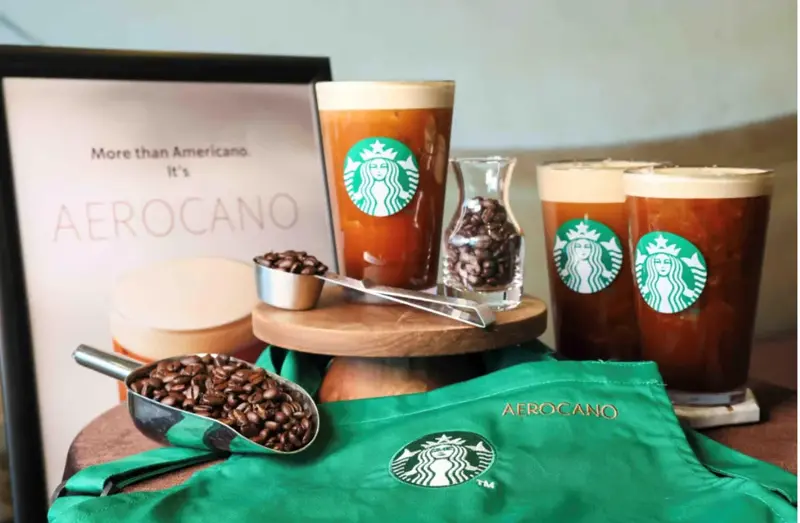
A similar trend is beginning to shape the beverage market in South Korea.
Last month, Starbucks Korea introduced Aerocano , a version of Americano enhanced with ultra-fine bubbles thanks to aeration technology.
By introducing air into the beverage, the company altered the drinking sensation without significantly changing the flavor, creating a lighter and smoother coffee experience.
The market's reaction was swift. In just one week, the drink surpassed 1 million cups sold, becoming the fastest-selling iced beverage in the brand's history in South Korea.
Competitors like Paik's Coffee and Compose Coffee quickly launched similar versions based on foam, demonstrating that texture is becoming a new competitive "battleground" in the country's fiercely competitive coffee industry.
The trend of emphasizing texture isn't limited to sweets or drinks; it has also spread to seasonal culinary culture in South Korea.
As spring arrives, ingredients like baby octopus (jjukkumi) and ice goby also regain attention online, not only for their flavor but also for their unique textures.
Jjukkumi, harvested in the western and southern coastal regions of South Korea from March to May, is highly valued for its roe-filled head, which provides a slightly chewy, firm, and crunchy texture.
This is an experience that has long been a favorite in Korean cuisine. Recently, short videos demonstrating how to prepare it to achieve the "perfect texture" have gone viral, turning a familiar ingredient into a social media phenomenon.
Meanwhile, ice gobies, small, translucent fish that only appear briefly in early spring, are now following a similar trajectory. Their soft, almost gelatinous texture has made them a subject of curiosity, especially in videos showcasing them being eaten raw.
In each case, the dish itself is not new. What changes lies in how it is shaped and disseminated.
Professor Lee Eun-hui, a consumer science specialist at Inha University, describes South Korea's snack and dessert market as one of the most dynamic in the world, driven by a rapid trial-and-acceptance cycle.
Young consumers, especially those in their 20s and 30s, tend to be more receptive to and willing to experiment with trends they encounter online, thereby accelerating both their spread and decline.
In the future, experts predict this trend will move beyond single sensations like toughness and towards more complex structures with multiple contrasting textures combined within a single product.
According to SCMP