



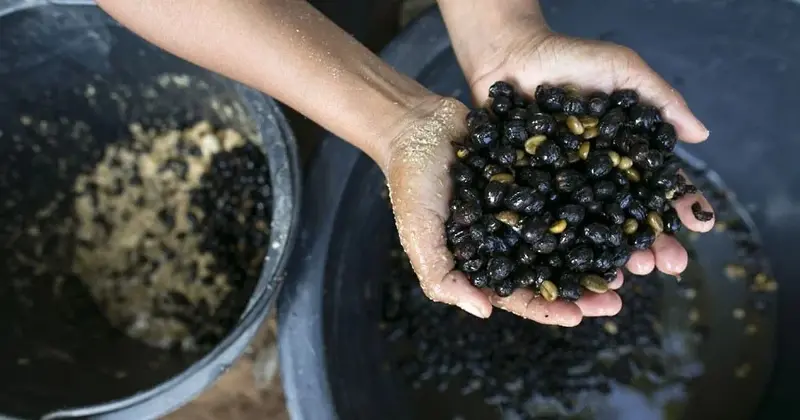
The rich, chocolate-like flavor of Black Ivory coffee may be hidden deep within the guts of Earth's largest land animal.
According to an analysis of the gut microbiota of Asian elephants, scientists believe that certain groups of bacteria in their digestive systems are capable of breaking down compounds that create bitterness, thereby contributing to the distinctive, milder flavor of coffee after processing.
"In a previous study, we found Gluconobacter to be the dominant genus of bacteria in the gut microbiota of civets."
"This group of bacteria is capable of producing volatile compounds from coffee beans, suggesting that microbial metabolism may play a crucial role in the formation of coffee aroma," said Takuji Yamada, a genomics researcher at the Tokyo Institute of Science (Japan).
This finding raises the question of whether the gut microbiome of elephants has a similar influence on the flavor of Black Ivory coffee.

"Elephant dung" coffee, also known as Black Ivory, sells for approximately 75 million VND/kg (Photo: Blake Dinkin).
Black Ivory is classified among the most expensive coffees in the world , with a value far exceeding that of kopi luwak, a famous coffee produced through the digestion of civet cats.
Black Ivory coffee is produced exclusively at an elephant sanctuary in Thailand, where certain elephants are fed fresh, unprocessed coffee cherries. Sanctuary staff then collect the coffee beans from the elephants' droppings, clean them, and roast them for consumption.
This type of coffee has a flavor that is considered superior to many other types of coffee.
Why does "elephant dung coffee" have such a distinctive flavor?
According to the journal Scientific Reports , researchers focused on studying the microorganisms in elephant feces. They collected samples from six elephants in the reserve, including three that had eaten coffee berries and three that had not, which served as a control group.
The only difference in their diets was that the "coffee-eating" elephants received a supplementary ration of bananas, coffee beans, and rice bran.
Therefore, any changes observed in the gut microbiota are most likely due to this dietary supplement.
The bitterness of coffee partly comes from pectin, a compound found in plant cell walls along with cellulose. During the roasting process, pectin and cellulose break down into compounds that give coffee its bitter taste.
When sequencing the fecal samples, the research team found that the "coffee-eating" elephants had significantly higher levels of gut microorganisms involved in breaking down pectin and cellulose. Some bacterial species were even absent from the control group.

By analyzing elephant dung, researchers have identified several species of bacteria involved in digestion that are believed to potentially alter the flavor profile of Black Ivory coffee (Image: Scientific Reports).
Based on previously published data, scientists also compared the microbiota of elephants with that of cows, pigs, and chickens to look for other "candidates" that might be able to digest coffee.
Although some related bacteria can be found in other animals, only the digestive system of elephants possesses the necessary elements to break down pectin and cellulose.
A 2018 study showed that Black Ivory coffee contains significantly lower levels of 2-furfuryl furan compared to regular coffee. This is one of the bitter compounds produced during the breakdown of pectin in the roasting process.
New analysis of the gut microbiota of elephants suggests that the process of partially digesting coffee cherries may help remove components in the beans that create bitterness during roasting, resulting in a milder and more palatable flavor.
"Our findings could shed light on a potential molecular mechanism by which the gut microbiota of elephants contributes to the flavor of Black Ivory coffee."
However, further experimental studies are needed to verify this hypothesis, such as biochemical analysis of the components of coffee beans before and after passing through the digestive system of elephants," Yamada said.