



Not only is Montmartre taller than 130 meters – the highest in the city – but it also offers a unique feeling, like an open balcony where Paris unfolds in its entirety, vibrant and poetic.
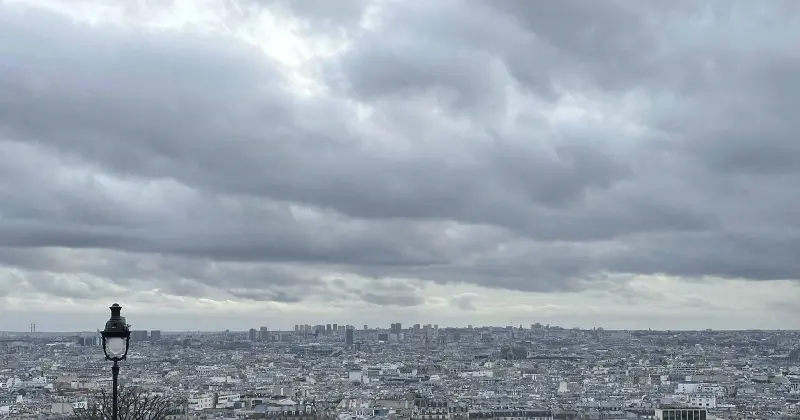
Located north of the French capital, Montmartre Hill has long been an essential stop on any trip to Paris.
Not only is Montmartre taller than 130 meters – the highest in the city – but it also offers a very different feeling: like an open balcony, where Paris unfolds in its entirety, vibrant and full of poetry.
From the hilltop, visitors can enjoy a panoramic view of the city with its grey-blue rooftops, the gently winding Seine River, and the Eiffel Tower in the distance.
On sunny days, the Parisian light casts a soft, misty glow, making the scene both majestic and gentle. This unique perspective has made Montmartre an endless source of inspiration for painting, literature, and photography for centuries.
Perched atop the hill is the Sacré-Cœur Basilica, a religious structure easily recognizable from afar by its pristine white stone, which almost changes color with the light of day. The area in front of the basilica is always bustling but unhurried: visitors sit on the long steps, sipping their coffee, listening to the guitar music and impromptu singing of street artists, and gazing out at the sprawling Paris below.
The architecture, with its large arches and soft yet majestic lines, creates a unique feeling, making Sacré-Cœur not only a tourist attraction but also a place to pause and experience the rhythm of Parisian life in a slower way.
The journey up Montmartre is a memorable experience in itself. Visitors can choose to walk up the long flight of stairs, stopping to take photos as they climb, feeling the city gradually unfold beneath their feet. For those who prefer a more leisurely pace, the funiculaire takes visitors from the foothills up near the cathedral in just a few minutes. Whichever way you choose, the path up Montmartre is always full of surprises with its gentle slopes, houses clinging to the hillside, and street corners that suddenly reveal very "Parisian" scenes – both familiar and new.
Along the steps and pathways in front of the church, visitors can easily spot fences adorned with love locks – mementos of couples from all over the world . These small, simple locks, rich in meaning, add a romantic and everyday touch to the Montmartre landscape.
Another interesting experience that attracts many tourists is taking photos of the "leaning houses" on the grassy hillside in front of Sacré-Cœur. When standing on the sloping terrain and pointing the camera towards the houses below, the photo creates a unique illusion: the ground appears to tilt sharply, while the houses seem to sway and distort. This effect comes from the difference between the human perception of balance and the actual slope of the terrain, resulting in photos that are both humorous and distinctly Montmartre-esque.
Stepping inside the Sacré-Cœur, the atmosphere immediately becomes tranquil. Built in the Roman-Byzantine style, construction began in the late 19th century and was completed in the early 20th century, giving it a distinct appearance compared to the familiar Gothic cathedrals of Paris.
The spacious interior, with its soft lighting, is highlighted by a colossal mosaic on the main dome depicting Christ with his Sacred Heart – one of the largest mosaics in the world. The serene atmosphere inside creates a much-needed sense of tranquility, a delightful contrast to the hustle and bustle outside.
Leaving the cathedral, visitors continue to explore the equally charming side of Montmartre: the small streets around the hill, preserving the artistic spirit and the area's characteristic antiquity. Cobblestone streets, winding staircases, and cafes nestled among old houses create a space very different from modern Paris below.
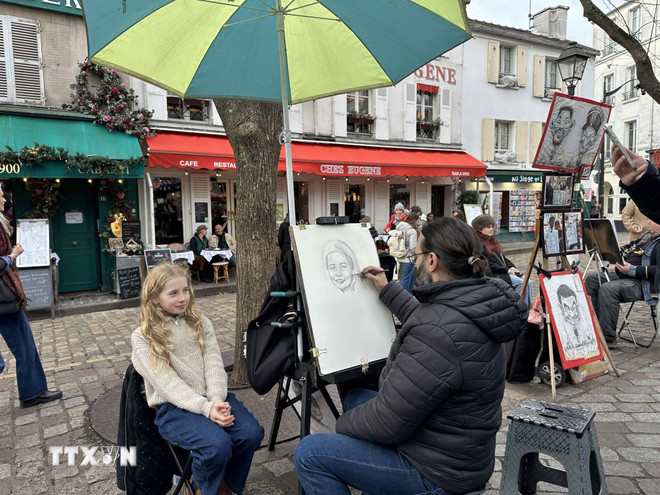
The most famous stop is Place du Tertre, where artists set up their easels all day, painting portraits, landscapes, and recreating Montmartre in their own unique way. Strolling through this square, many feel as if they have stepped back in time, to a period when Montmartre was the center of Parisian art life.
Montmartre is therefore not just a tourist attraction, but a journey of discovery with multiple layers of experience: from the city's panoramic views, architecture, and spiritual spaces, to unexpected, joyful moments and a unique artistic atmosphere.
It is this very blend that has kept Montmartre on the list of "must-visit" places when traveling to Paris - a Paris that is both ancient and vibrant, always leaving an unforgettable impression on visitors.