



High blood pressure is a 'silent killer' that leads to complications such as heart attack, stroke, heart failure, and kidney failure.
High blood pressure is often caused by a high-salt diet, obesity, or genetics. However, a study recently published in the journal Circulation Research has identified an unexpected culprit.
Identifying brain regions that may contribute to high blood pressure.
Scientists from the University of Auckland (New Zealand) have discovered clues to high blood pressure right in the brainstem region associated with respiration.
This brainstem region is called the paralateral brainstem, which is responsible for automatic processes such as respiration, digestion, and heart rate.
Professor Julian Paton, director of the Manaaki Manawa Centre for Cardiovascular Research at the University of Auckland, explains that the paralateral facial region is often involved in "forced exhalation" during laughter, exercise, or coughing. These exhalations require strong contractions of the abdominal muscles, which is quite different from normal exhalation due to the natural elasticity of the lungs.
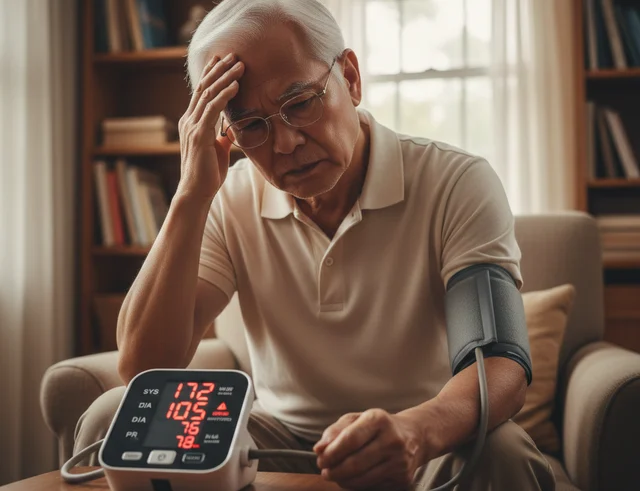
A brain region has been discovered that causes high blood pressure. Illustration: AI
The most important discovery
The most important discovery is that this parafacial region is also connected to nerves that constrict blood vessels. When these nerves constrict blood vessels, blood pressure increases. Professor Paton stated: "We have discovered a brain region that can cause high blood pressure," according to the science news site Scitechdaily.
Convincing evidence
In fact, when the research team disabled the parafacial region on this side, the participants' blood pressure immediately dropped to normal levels.
These findings suggest that certain breathing patterns, particularly abdominal breathing—strong contractions of the abdominal muscles—may contribute to increased blood pressure. Identifying this type of abdominal breathing in individuals with high blood pressure could help physicians determine the underlying cause and guide treatment.