



Simply standing against a wall for a few seconds can help you detect potential spinal problems early. This simple test is being recommended by many experts as a way to "self-examine" your bone and joint health at home.
1. How is the 'standing against the wall' test conducted?
Performing the 'wall stand' exercise is a way to check posture and spinal alignment without equipment. The person stands against a wall so that their heels, hips, upper back, and head all touch the wall, keeping their body in a natural, relaxed position.
According to Dr. Deepak Joshi, Director of the Orthopedics & Spinal Surgery Department at Fortis Mohali Hospital, India, this posture helps to quickly assess muscle balance and detect early abnormalities such as kyphosis or excessive curvature of the neck. Although the exercise may seem simple at first, difficulty maintaining this posture may indicate poor posture, reduced flexibility, muscle stiffness, or early stress on the spine.
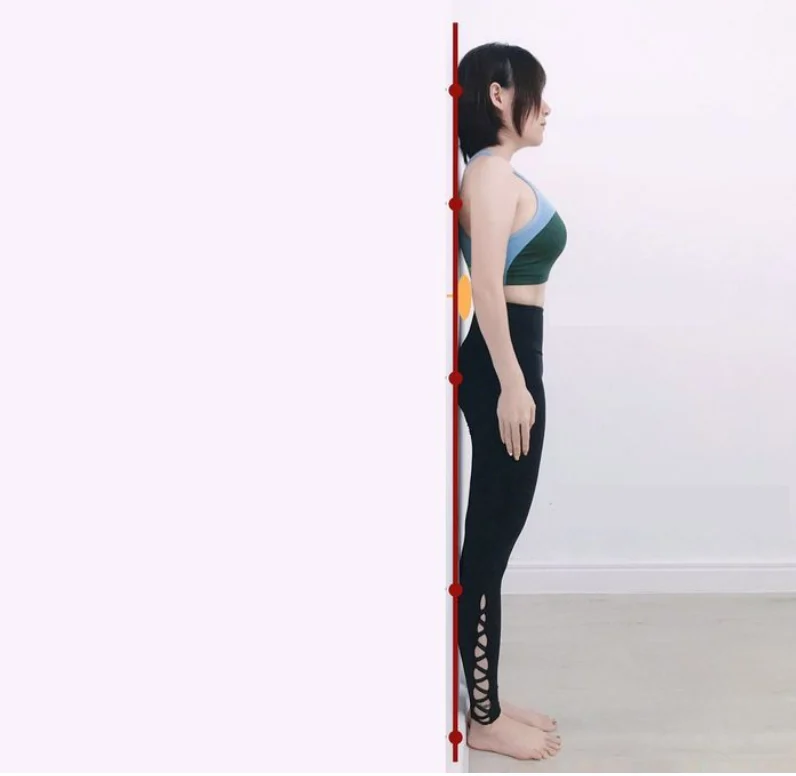
How to take the 'standing against the wall' test.
2. What spinal problems can the wall-standing test detect?
Abnormalities detected in the physiological curvature of the spine.
A healthy spine maintains its natural physiological curves, so when leaning against a wall, the body feels comfortable and not strained. However, if the head has difficulty touching the wall and the shoulders are hunched forward, it may be a sign of an upper back problem. Conversely, if the lower back is excessively curved, this indicates pressure is being placed on the lumbar region.
If these misalignments persist, they can affect the structure of the spine, even leading to reduced rib space or causing neck and back pain.
Early detection of underlying back pain
Back pain doesn't usually appear suddenly but develops subtly from bad habits like prolonged sitting, lack of exercise, or poor posture. The wall test is a simple but effective way to assess spinal alignment and see if posture is silently negatively affecting your back.
For example, difficulty keeping your neck straight, a feeling of tension in your lower back, or a loss of balance when standing are all warning signs that your spine is under pressure. In addition, if there is a significant gap between your neck and back, or difficulty keeping these points in contact with a wall, you may be at risk of problems such as abnormal scoliosis, weak back muscles, and weak abdominal muscles.
Posture warning
Posture not only affects body shape but also directly impacts respiration, energy levels, and bodily function. When the spine is misaligned, the rib cage is more likely to constrict, leading to shallower breathing. In the long run, this reduces endurance and negatively affects overall health.
This signals a more serious problem.
While not every imbalance or misalignment necessarily indicates a serious condition, difficulty maintaining a standing position against a wall during repeated examinations should not be overlooked.
The cause of these problems can ultimately lead to stiffer back muscles, fatigue, and even reduced lung capacity due to improper chest posture. In other words, the body tends to compensate by making muscles stiff, joints lose flexibility, and fatigue more quickly. Over time, this can progress to chronic pain and affect quality of life.
3. How to use the daily quiz
The value of the test lies in performing it regularly, as each test helps identify early signs before pain begins. Furthermore, it's a test that monitors changes in the body to correct posture and prevent long-term problems.
If posture improves, it indicates that lifestyle changes are on the right track. Conversely, if the situation worsens, adjustments to factors such as sitting posture, screen height, or exercise time are necessary to avoid potential spinal problems.
The 'wall-standing' test is not just a simple exercise, but also a tool for early detection of spinal risks. In a context where more and more people are becoming sedentary, quick checks like the 'wall-standing' test can contribute to preventing long-term health problems.