


- 1. Taro soup with shrimp
- 2. Taro soup with minced lean pork
- 3. Fish and taro porridge
- 4. Steamed taro served with eggs
- 5. Taro cooked with tofu
- How to combine yam with protein in a balanced way?
Yams come in many varieties, differing in color, shape, and flesh texture. Common varieties include purple-fleshed, white-fleshed, and light purple yams. Depending on the variety, growing region, and local culinary practices, yams can be used in soups, steamed dishes, pies, or sweet preparations.
Sweet potatoes have a rich, chewy texture, are easy to eat, and are often used in many family dishes. This root vegetable mainly provides carbohydrates, as well as fiber and several vitamins and minerals.
However, yams are not a significant source of protein. Therefore, combining yams with protein-rich foods such as shrimp, lean meat, fish, eggs, or tofu is a simple way to increase the nutritional value of the dish. This combination helps the meal provide both carbohydrates for energy and protein necessary for the body.
1. Taro soup with shrimp
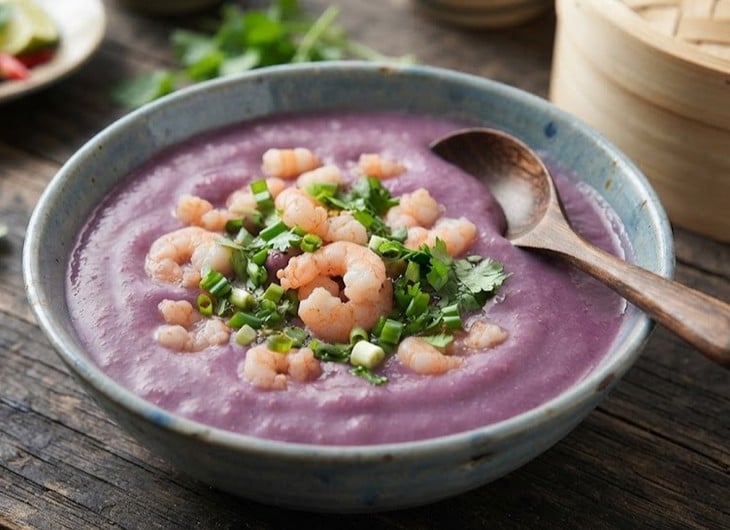
Purple sweet potato soup with shrimp.
Taro soup with shrimp is a familiar dish, combining the earthy flavor of taro with the natural sweetness of shrimp. Taro provides carbohydrates, while shrimp is a source of protein and provides several micronutrients such as vitamin B12 and selenium.
Taro can be chopped or grated to create a natural thickness for the broth. Shrimp are peeled, chopped, or left whole and cooked with the taro until tender. Green onions, cilantro, and dill can be added for extra flavor.
To make the meal more balanced, the soup can be served with green vegetables and an appropriate amount of rice to meet each person's energy needs.
2. Taro soup with minced lean pork
Lean pork provides protein and can be combined with taro to create a soft, easy-to-eat soup. Taro provides carbohydrates and energy, while the pork adds protein.
Finely chop or slice the taro and cook it with minced pork until tender. It's best to use lean pork and limit the amount of oil used in the cooking process.
A meal with taro soup, lean meat, green vegetables, and an appropriate amount of carbohydrates will be more diverse in terms of nutritional content. The amount of taro or rice should be adjusted according to each person's energy needs, rather than applying a fixed portion for everyone.
3. Fish and taro porridge

Fish is a source of protein that can help diversify your diet. When combined with yam, the porridge provides both carbohydrates and protein, and you can add vegetables like celery and chrysanthemum greens to increase fiber and micronutrients.
You can use snakehead fish, basa fish, or any other type of fish that suits your taste. Steam or boil the fish until cooked, carefully remove the bones, and separate the meat. Cook the taro with rice until soft, then add the fish meat and season to taste.
Some types of fish, especially fatty fish, also provide omega-3 fatty acids such as EPA and DHA. However, the levels of these substances vary depending on the type of fish.
4. Steamed taro served with eggs
Steamed sweet potatoes with eggs is a simple option for breakfast or a protein-rich snack. Sweet potatoes provide carbohydrates, while eggs provide protein along with some vitamins and minerals.
Peel and chop the taro, then steam until soft. Eggs can be boiled and served with the taro. For a different way to eat it, you can mash the taro and serve it with chopped boiled eggs, adding a little pepper and green onions.
Steaming and boiling methods don't require much oil, keeping the dish relatively simple. If used as a main meal, you can add green vegetables and fruits for a more varied serving.
5. Taro cooked with tofu
Tofu, made from soybeans, is a plant-based protein source that can be combined with yam. This dish helps diversify the protein source in the diet while providing carbohydrates from the yam.
Sweet potatoes can be cooked until tender in broth, then tofu is added along with some vegetables or mushrooms. It's not necessary to fry the tofu beforehand, which can help limit the amount of added oil.
The protein content of a dish depends primarily on the amount of tofu used, not on the yam. Therefore, if the goal is to increase protein intake, attention should be paid to the portion sizes of accompanying protein-rich foods.
How to combine yam with protein in a balanced way?
Yams can be part of a varied diet but are not a high-protein food. The main nutrient in yams is carbohydrates, which contribute to energy; in addition, this root vegetable provides a good amount of fiber and some vitamins and minerals.
To create a more balanced meal, you can combine yam with a protein source such as shrimp, fish, lean meat, eggs, or tofu, and add green vegetables and fruits. This combination helps the meal include more food groups instead of focusing too much on one type of root vegetable.
The cooking method also affects the total energy content of the dish. Steaming, boiling, and stewing usually require less added oil compared to frying. For dishes with added sugar, coconut milk, or a lot of oil, these should be used in moderation, especially if the dish appears frequently on the menu.
In general, yams are a starchy food that can provide energy and contribute to a feeling of fullness. When combined with shrimp, lean meat, fish, eggs, or tofu, yams can become an ingredient in dishes that are both delicious and protein-rich, helping to diversify and balance the diet.