



Beta-carotene is a plant pigment that plays an important role in the immune system, vision, and skin. This nutrient is abundant in orange, yellow, and dark green fruits and vegetables, helping the body produce vitamin A safely and naturally.
1. What is beta-carotene and why does the body need this nutrient?
- 1. What is beta-carotene and why does the body need this nutrient?
- 2. How much beta-carotene does the body need each day?
- 3. Foods rich in beta-carotene
- 3.1. Pumpkin: A top source of beta-carotene
- 3.2. Sweet potatoes
- 3.3. Carrots
- 3.4. Spinach
- 3.5. Butternut squash
- 3.6. Mustard greens
- 3.7. Cantaloupe
- 3.8. Kale
- 3.9. Apricots
- 3.10. Red bell peppers
- 3.11. Broccoli
Beta-carotene is a plant pigment belonging to the carotenoid group, responsible for the characteristic red, yellow, and orange colors of many fruits and vegetables. In the body, beta-carotene acts as an antioxidant and is converted into vitamin A when needed.
Vitamin A plays an essential role in immune function, helping the body fight infections; maintaining vision, especially the ability to see in low light conditions; and contributing to the protection and regeneration of the skin. Unlike supplemental vitamin A, which can accumulate and become toxic at high doses, beta-carotene from food is metabolized more efficiently and is safer for health.
2. How much beta-carotene does the body need each day?
There are currently no specific recommendations for beta-carotene; the requirement is calculated based on vitamin A.
- 700 mcg RAE/day for women (RAE is the recommended daily intake of vitamin A)
- 900 mcg RAE/day for men.
Approximately 12 mcg of beta-carotene from food is equivalent to 1 mcg of vitamin A (RAE). Beta-carotene from fruits and vegetables is only metabolized when the body needs it, so the risk of excess is very low. In rare cases, excessive intake may cause carotenodermia – a yellowish-orange skin discoloration, a benign and non-dangerous condition.
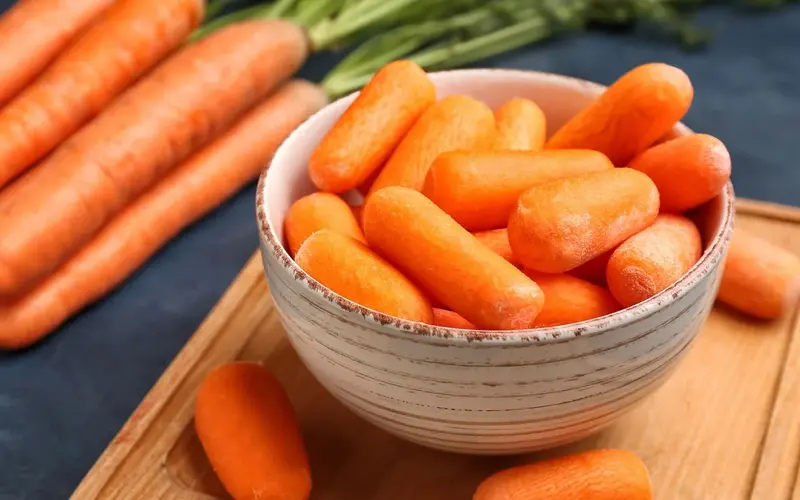
Carrots are a top source of beta-carotene.
3. Foods rich in beta-carotene
Here are 11 foods richest in beta-carotene:
3.1. Pumpkin: A top source of beta-carotene
- Beta-carotene content: 17,000 mcg
- Serving size: 1 cup of canned pumpkin.
Pumpkins are distinguished by their bright orange color – a sign of their very high beta-carotene content. This food is low in calories, high in fiber, helps create a feeling of fullness, and aids digestion. Canned pumpkin has the same nutritional value as fresh pumpkin and is convenient for preparing both sweet and savory dishes. Avoid pumpkin pie fillings that contain added sugar.
3.2. Sweet potatoes
- Beta-carotene content: 14,300 mcg.
- Serving: 1 medium-sized baked sweet potato, peeled.
Sweet potatoes are not only a rich source of beta-carotene but also provide about 21% of the daily vitamin C requirement. Vitamin C helps boost immunity, protects cells from oxidative damage, and supports collagen production – crucial for healthy skin and wound healing.
3.3. Carrots
- Beta-carotene content: 12,995 mcg.
- Serving size: 1 cup of cooked carrots, sliced.
Carrots are one of the most common sources of beta-carotene. Cooking carrots helps break down the plant cell walls, thereby improving beta-carotene absorption. Carrot juice has also been shown to help the body utilize this nutrient more effectively.
3.4. Spinach

- Beta-carotene content: 11,300 mcg
- Serving size: 1 cup of cooked spinach.
The deep green color of spinach comes from chlorophyll, which masks the orange pigment of beta-carotene. In addition to this nutrient, spinach also provides iron, folate, vitamin K, and lutein – an important antioxidant for eye health.
3.5. Butternut squash
- Beta-carotene content: 9,370 mcg
- Serving size: 1 cup cooked butternut squash
Butternut squash has a smooth texture, a mild buttery flavor, and is a source of beta-carotene and more than 30% of the daily vitamin C requirement. It's an ideal choice for soups and baked goods.
3. 6. Mustard greens
- Beta-carotene content: 8,570 mcg.
- Serving size: 1 cup of cooked mustard greens.
Mustard greens are a good source of vitamins A, C, E, and K. Just one serving provides more than six times the daily requirement of vitamin K. Sautéing them with a little olive oil helps increase the absorption of beta-carotene – a fat-soluble nutrient.
3.7. Cantaloupe
- Beta-carotene content: 4,450 mcg
- Serving size: 1 cup.
Cantaloupe is high in water content, helping to rehydrate the body, while also providing vitamin C and potassium. With its natural sweetness and no processing required, it's a simple way to supplement your daily beta-carotene intake.
3.8. Kale
- Beta-carotene content: 2,040 mcg
- Serving size: 1 cup cooked
Kale is rich in beta-carotene, vitamins C and K, and antioxidants such as lutein and zeaxanthin. Cooking helps reduce bitterness and improves nutrient absorption.
3.9. Apricots
- Beta-carotene content: 1,690 mcg
- Serving size : 1 cup of fresh apricots, halved.
Apricots provide beta-carotene, vitamin C, and fiber. Dried apricots are also rich in nutrients but contain more sugar, which should be noted by those controlling their blood sugar.
3.10. Red bell peppers
- Beta-carotene content: 1,660 mcg
- Serving size : 1 cup stir-fry
Red bell peppers are rich in beta-carotene and vitamin C. Light cooking helps retain nutrients and increases absorption.
3.11. Broccoli
- Beta-carotene content: 1,449 mcg
- Serving size: 1 cup cooked.
Broccoli provides beta-carotene, fiber, vitamins C and K, and folate. It also contains glucosinolates – plant compounds with antioxidant and anti-inflammatory properties.
Readers are invited to read more: