



Amidst numerous changes, the traditional mother-of-pearl inlay craft of Chuôn Ngọ village is facing many challenges in its journey to preserve and promote its traditional cultural values.
The essence of thousand-year-old mosaic art.
Located on the left bank of the Nhue River, about 30km south of Hanoi's city center, Chuon Ngo mother-of-pearl inlay village (Chuyen My commune, Hanoi) is a place that produces exquisite handcrafted mother-of-pearl inlay products, closely associated with the lifestyle and traditional cultural identity of our nation for generations.
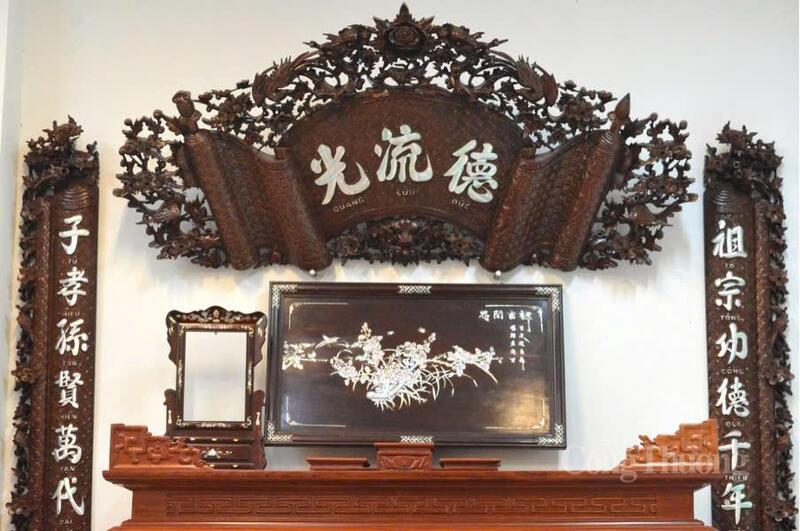
Exquisite mother-of-pearl inlay products crafted by the skilled hands of the people of Chuon Ngo village. Photo: Duong Thao
According to records from Chuon Ngo village, the mother-of-pearl inlay craft here began to develop around the 11th-16th centuries, with the founder of the craft being Mr. Truong Cong Thanh - a talented general under King Ly Nhan Tong. Before his death in 1099, Mr. Truong Cong Thanh passed on the mother-of-pearl inlay craft to the people of Ngo village. From then on, the craft developed and spread to many villages in the commune and some neighboring areas.
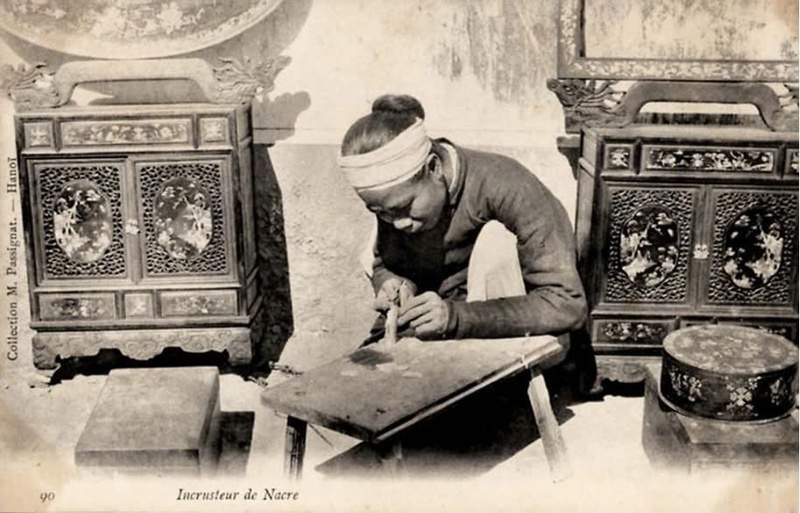
The art of mother-of-pearl inlay has been passed down through generations. (Photo: Archival image)
The mother-of-pearl inlaid products of Chuon Ngo village, such as horizontal plaques, couplets, wooden beds, and tea cabinets, are the culmination of long-standing cultural values and have witnessed many important historical periods. In the 1970s, a group of artisans led by Mr. Nguyen Van To crafted more than 100 badges of President Ho Chi Minh for a major political event of the Central Committee.
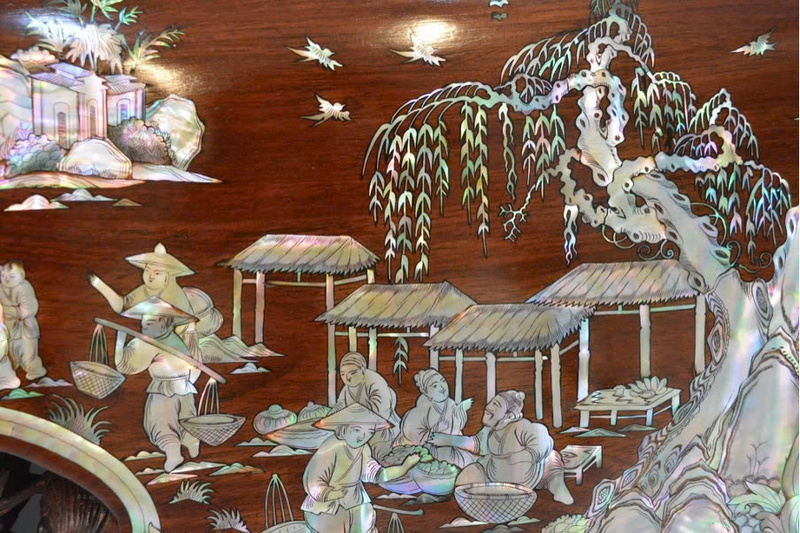
The patterns on mother-of-pearl inlaid products embody the essence of the nation's long-standing culture throughout history. Photo: Duong Thao
To transform rough, unpolished blocks of wood into exquisite mother-of-pearl inlay products requires a careful and meticulous crafting process by the artisans of Chuôn Ngọ village. Each step, from drawing the design; sawing the mother-of-pearl shells according to the drawing; carving the wood; attaching the shell pieces to the wood; grinding, inlaying, and detailing... all demand the skill and perseverance of experienced craftsmen.
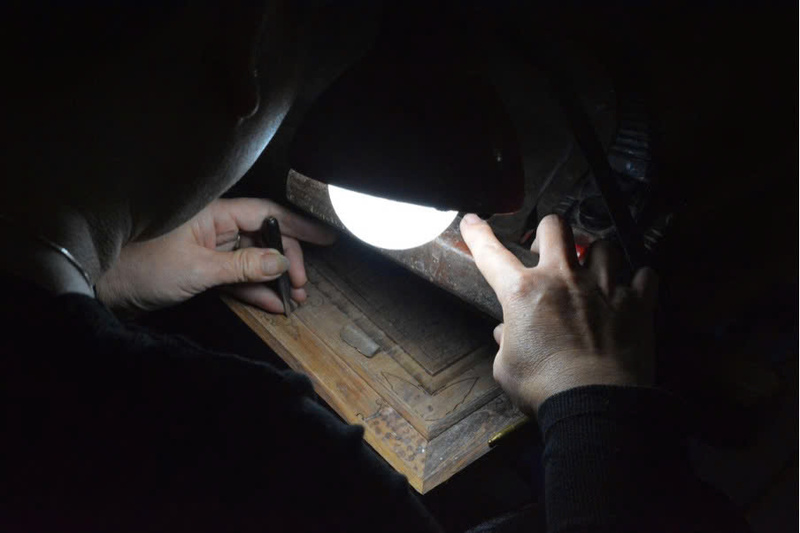
The process of mother-of-pearl inlay is carried out by skilled craftsmen. Photo: Duong Thao
Ms. Nguyen Thi Tam (54 years old), owner of the Tai Nguyet mother-of-pearl inlaid wood furniture production facility, has been in the profession for 30 years. For her, mother-of-pearl inlay is a unique art form that requires craftsmen to diligently hone their skills for at least a year before they can master it.
“In traditional mother-of-pearl inlay, the lotus motif is the most difficult step, requiring meticulousness and care from the craftsman to carve the small details without breaking them. This is the process of attaching each piece of mother-of-pearl and shell to the pre-carved positions to create harmonious color patterns for the product,” shared Vu Van Minh (37 years old), an inlay craftsman at the Tai Nguyet production facility, about the most challenging step in mother-of-pearl inlay.
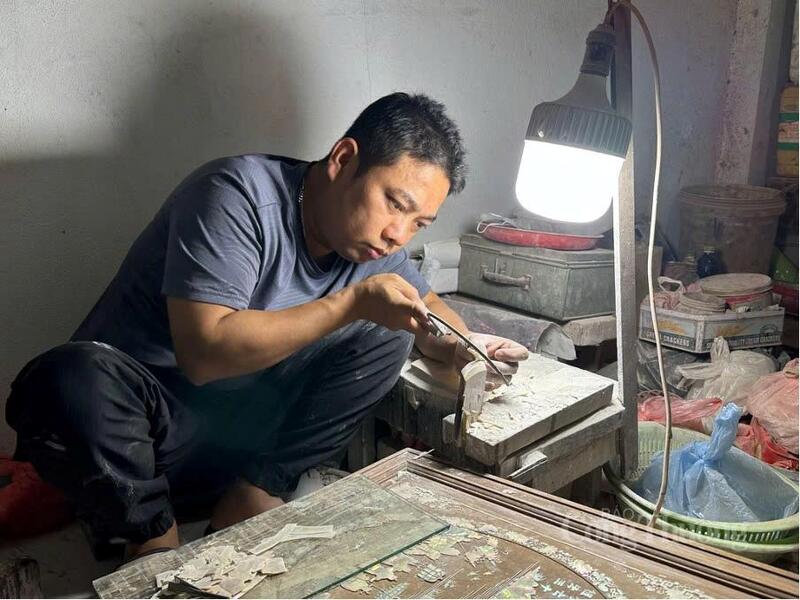
Mr. Vu Van Minh is performing the process of assembling the screw assembly according to the blueprint. Photo: Duong Thao
The color of the product will depend on the type of shell used for inlay. Currently, Ms. Tam's workshop uses two main types of shells: green and red. Products inlaid with red shells are more expensive than those inlaid with green shells, due to their rarity and unique color.
Ms. Tam said: "Currently, the shells used for inlaying are usually imported from island nations like Indonesia and Singapore... The price of the product will depend on the type of shell used for inlaying and the size and variety of the item. Some types cost only about 50 million VND, but some are worth billions of VND."
Despite their high cost, mother-of-pearl inlay products are not merely commodities for economic gain. They are the culmination of the intellect, patience, and creativity of the Vietnamese people. Therefore, today, with the rise of modernity and automation, very few people possess the patience and passion to pursue and stick with this craft.
The struggle to keep the art of inlaying alive.
Nguyen Thi Tam's workshop currently has only 5 workers, all skilled craftsmen with decades of experience. Having worked in mother-of-pearl inlay since his youth, nearly 20 years ago, Vu Van Minh is a keen observer of the gradual decline of this traditional craft.
“When I started learning the craft in 2003, it was a very popular job. Back then, every household in Chuon Ngo village was involved in mother-of-pearl inlay, because a piece of mother-of-pearl inlay was very valuable. Now, fewer people pursue this craft because they have more opportunities for easier jobs with higher incomes, and not everyone has the patience to do this kind of handicraft,” Minh said.
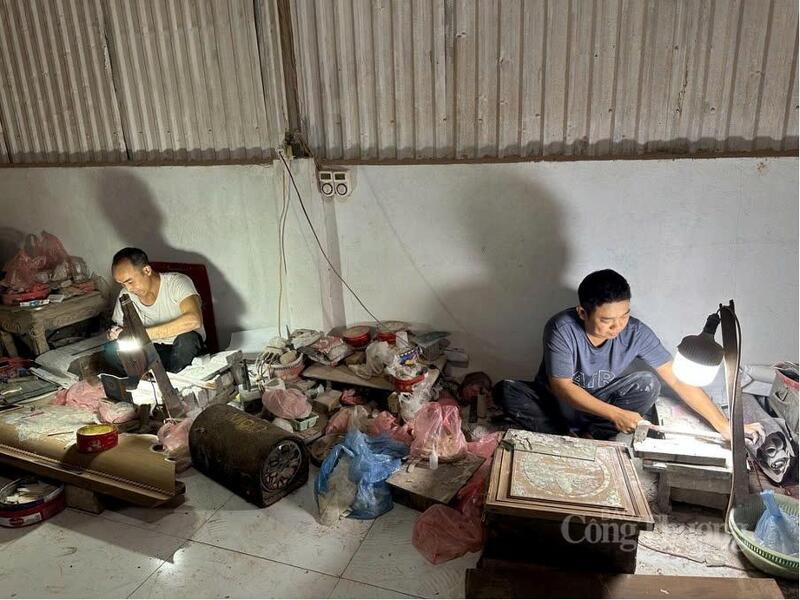
During peak season, work pressure increases due to a shortage of workers. Photo: Duong Thao
Sharing the same concern about preserving the craft, Ms. Nguyen Thi Nu (41 years old) - an inlay worker at the Tai Nguyet production workshop - confided: "Previously, the inlay craft had many people working in it, but now with industrial zones and many other jobs, they are gradually abandoning the craft. In Chuon Ngo village, now only 1-2 establishments still maintain the traditional handcrafted mother-of-pearl inlay."
According to Ms. Nụ, after the inlay artisans with 20-30 years of experience retire, Chuôn Ngọ village may no longer have anyone to continue the traditional craft: "This craft requires perseverance, so currently, very few young people in the village are still learning mother-of-pearl inlay. After artisans around my age retire, the village will probably no longer be able to preserve the mother-of-pearl inlay craft."
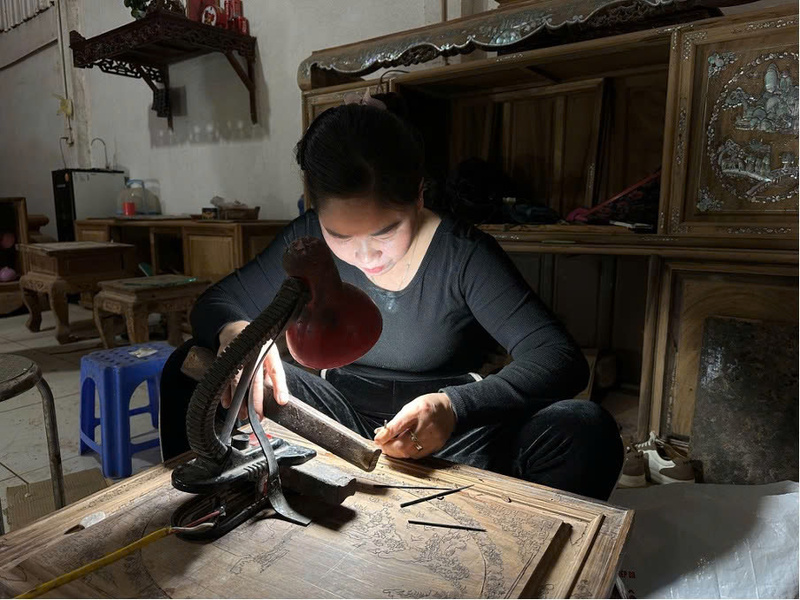
Ms. Nụ has always been worried about the traditional craft disappearing. Photo: Dương Thảo
Furthermore, in the context of a rapidly integrating market, Chuon Ngo mother-of-pearl inlay is still struggling to find its place in the market. Ms. Tam said that the customer base for mother-of-pearl inlay products is quite specific and difficult to reach, so sales are gradually decreasing. The price of the product is also not as low as industrially processed wood products, so it attracts fewer buyers.
"Currently, the mother-of-pearl inlay products in my shop are difficult to access in the overseas market. Mostly, only tourists order small mother-of-pearl items like bowls, plates, and vases as souvenirs," added Ms. Tam.
To integrate more deeply into various markets, Ms. Tam and her son have promoted their shop's products on social media platforms and at craft village fairs to reach a wider range of customers. The development of their business in the craft village not only provides residents with a more stable income but also creates an opportunity to spread the value of traditional mother-of-pearl inlay art to the younger generation.
Within the commune, the center for showcasing traditional craft products serves as a key link connecting tourism and promoting OCOP (One Commune One Product) products with cultural experiences. Currently, the cooperative has over 8 products recognized as OCOP products, including 3 products that won third prize at the city level: the mother-of-pearl inlaid painting "Hibiscus - Pheasant," mother-of-pearl inlaid vases, and a souvenir jewelry box. All are exquisite handcrafted products with high artistic value, loved by consumers both domestically and internationally.
To ensure that the sounds of chiseling and inlaying in Chuon Ngo village continue to resonate, preserving the essence of traditional mother-of-pearl inlay art, in the future, artisans, business owners, and inlay craftsmen in the village need to actively focus on passing on their skills to younger generations. In addition, appropriate support policies from all levels of government will also help motivate people to continue practicing their craft, preserving it, and spreading its traditional values amidst today's modernization.