


Understanding how differences in glycemic index (GI) affect blood sugar levels can influence daily food choices, especially for those with diabetes, prediabetes, or those concerned about their sugar intake.
How do oranges and bananas affect blood sugar?
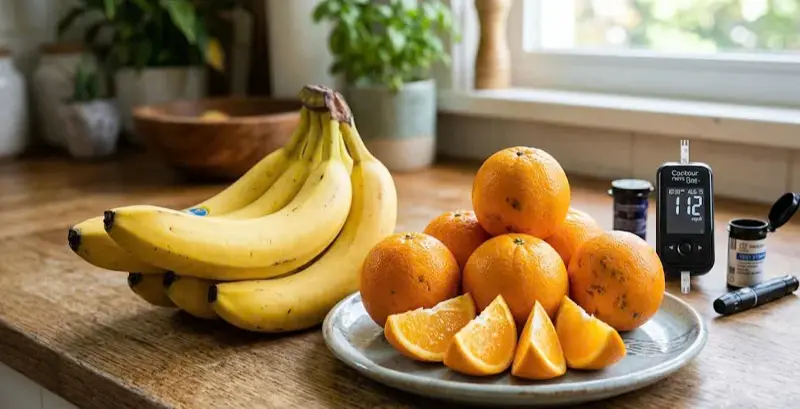
If you need to manage your blood sugar levels, you should choose fruits with a low glycemic index (GI).
Oranges may be better for blood sugar control because they have a lower glycemic index (GI), around 35, meaning they typically cause less of a blood sugar spike compared to bananas, which have a higher GI, around 48.
Unripe bananas contain less resistant starch, a type of carbohydrate that is difficult to break down, which slows digestion and may improve glucose absorption. Research suggests that instead of eliminating specific fruits, the most important factor in blood sugar control is:
- The diet focuses on whole foods.
- Minimal processing.
- Lower glycemic index.
Comparing nutritional content
Compared to oranges, bananas contain more carbohydrates and calories, which can lead to a higher glycemic response in some people. With fewer carbohydrates per serving and a lower glycemic index than bananas, oranges may have less of an impact on blood sugar levels. When eaten in appropriate portions, both of these fiber-rich foods can be part of a healthy diet for blood sugar control.
| Nutritional value comparison: 1 medium-sized green banana (118 g) versus 1 medium-sized green orange (131 g) | ||
|---|---|---|
| Nutrients | Banana | Orange |
| Calories | 105 | 61.6 |
| Carbohydrate | 26.9 g (10% of the daily nutritional value) | 15.5 g (6% of the daily nutritional value) |
| Fiber | 3.07 g (11% of the daily nutritional value) | 3.14 g (11% of the daily nutritional value) |
| Total sugar content | 14.4 g | 12.2 g |
| Vitamin C | 10.3 mg (11% of the daily value) | 69.7 mg (77% of the daily value) |
| Potassium | 422 mg (9% of the daily value) | 237 mg (5% of the daily value) |
| Magnesium | 31.9 mg (8% of the daily value) | 13.1 mg (3% of the daily value) |
| Calcium | 5.9 mg (0.5% of the daily value) | 52.4 mg (4% of the daily value) |
The impact of bananas on blood sugar levels
Ripeness is a crucial factor affecting blood sugar levels when eating bananas; overripe bananas have a much higher glycemic index than unripe or green bananas. Very ripe bananas are associated with a higher risk of hyperglycemia (high blood sugar).
According to a review of clinical trials, people with type 2 diabetes and obesity who supplemented their diets with 30 to 40 grams of resistant starch from green bananas had lower fasting blood glucose levels, lower fasting insulin levels, and lower insulin resistance compared to the control group.
Bananas may be suitable for a diabetes-friendly diet if they meet the following conditions to control post-meal blood sugar levels:
- Eat in small portions.
- Combine it with protein or healthy fats.
- It's best to eat them when they're still slightly green rather than overripe.

The impact of oranges on blood sugar levels
Oranges are often considered one of the best fruits for controlling blood sugar levels because they are rich in vitamin C, which has antioxidant activity linked to metabolic health.
Oranges contain citrus pectin , a type of soluble fiber that is difficult to digest and absorb. Studies suggest that citrus pectin may help slow down the digestion and absorption of glucose after meals.
Citrus pectin can also help prolong feelings of fullness and improve lipid levels.
Oranges contain hesperidin and naringin , two flavonoids found in citrus fruits. Animal studies suggest these compounds possess antidiabetic, antioxidant, lipid-lowering, and anti-inflammatory properties, which may improve fasting blood glucose levels and insulin sensitivity. However, human evidence has not consistently demonstrated these benefits, so more research is needed.
Ways to reduce the impact of eating fruit on blood sugar levels.
Applying these strategies can help you minimize the impact of bananas, oranges, and other fruits on your blood sugar levels:
Eat the whole fruit, not just juice it: Whole fruits contain fiber, water, and intact plant cell structures that help slow glucose absorption. Because juicing removes most of the fiber, fruit juice produces a faster glycemic response.
Combine fruit with protein or healthy fats: Pairing fruit with protein- and healthy fats helps reduce post-meal glycemic response by slowing gastric emptying and carbohydrate absorption. Consider pairing fruit with nuts, Greek yogurt, cheese, or other nuts for this effect.
Moderate portion sizes are recommended: Glucose response is influenced by glycemic load (GL), a measure of the amount of carbohydrate in a typical serving. Research indicates that a high GL in the diet can accumulate due to overeating carbohydrate-rich foods, including those with a low glycemic index.