



During hot days, air conditioning helps you sleep better, but improper use can affect your health and waste electricity. So how can you stay cool, healthy, and save electricity at the same time?
What is the "ideal" temperature for sleep?
Many people have a habit of setting their air conditioners to very low temperatures to "cool down quickly." However, the US Environmental Protection Agency recommends an ideal temperature for sleeping of around 25-27°C. This range helps the body maintain a stable temperature, avoiding a large difference with the outside environment.
Dr. Neha Pathania, a dermatologist in India, says that sleeping in an excessively cold environment can dry out the skin, cause dehydration through the mucous membranes, leading to a dry throat, nasal congestion, or even headaches upon waking.
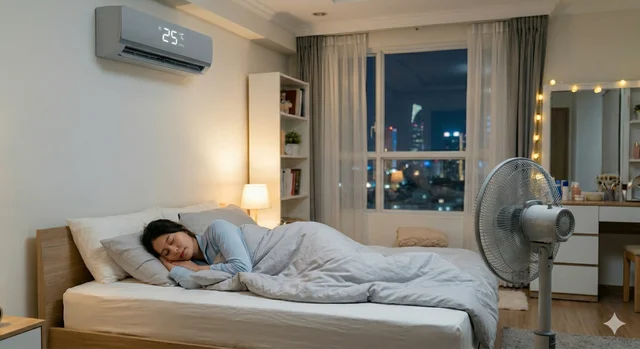
During hot days, experts recommend setting the air conditioner to 25 degrees Celsius and using a fan to help the cool air spread more quickly and evenly.
Photo: AI
Why should you use sleep mode or a timer?
At night, the body's temperature naturally decreases in preparation for deep sleep. If the air conditioner maintains a continuously low temperature, the body may become "excessively cold" towards morning.
According to the U.S. Department of Energy, the "sleep" mode gradually increases the temperature over time, which is both physiologically appropriate for the body and significantly saves electricity. Experts also say that increasing the temperature by just 1°C can reduce electricity consumption by about 3-5% compared to maintaining a continuously low temperature.
Dry air – the “silent enemy” when sleeping with air conditioning.
Air conditioners work by removing moisture from the air, making the environment drier than usual. This can affect the respiratory system and skin.
Dry air can irritate the mucous membranes of the nose and throat, making you more susceptible to dry coughs or mild sore throats, according to the Cleveland Clinic .
Dr. Rajeev Jayadevan, an Indian public health expert, also warned that enclosed, low-humidity air-conditioned environments can increase the risk of respiratory discomfort if used for extended periods without additional humidity.
Simple solution: Drink enough water throughout the day, or place a small bowl of water or use a humidifier in your bedroom.
Air flow and sleeping position are also very important.
Sleeping under a direct airflow from an air conditioner can cause muscle cramps, neck and shoulder pain, or even colds. Experts recommend adjusting the airflow direction towards the ceiling or to the sides to ensure even air distribution.
Additionally, you should use a light blanket to keep your body warm, especially your abdomen and neck.
Close the room completely, but don't forget to ventilate it.
To save electricity, it's necessary to keep the room doors closed when the air conditioner is on. However, if the room is too closed for a long time, the air will become stuffy.
Experts recommend opening windows during the day or after turning off the air conditioner to allow for air exchange, creating a healthier living environment.
Combine fans - a simple electricity-saving tip.
Using a fan in addition to the air conditioner helps the cold air spread faster and more evenly. This allows you to set the temperature higher while still feeling cool, significantly reducing energy consumption.
According to experts, maintaining a reasonable air conditioner temperature, using energy-saving modes, maintaining humidity, and cleaning the unit regularly will help you sleep well, protect your health, and save electricity during the hot season, according to Cleveland Clinic .