


Sprouting is a natural process where tubers begin to use their stored nutrients to grow into new plants. When sprouts appear, some of the starch in the tuber is converted into sugar to nourish the sprouts as they grow, according to the health website Verywell Health (USA).
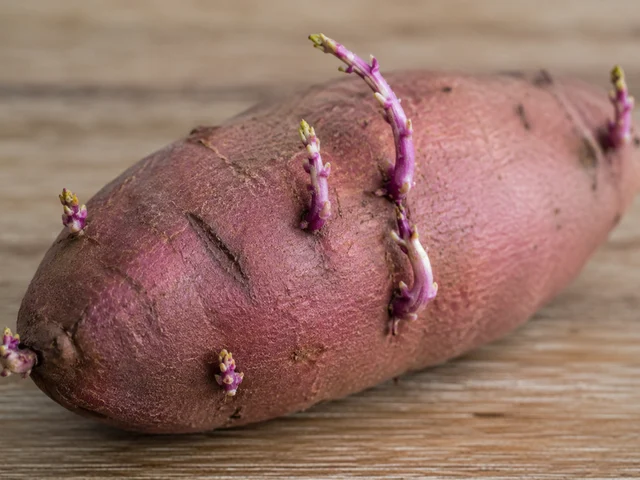
Sweet potatoes that have sprouted are still edible if they are firm, have no strange odor, and are free of mold.
PHOTO: N. Quy created using AI
Therefore, the potatoes may be sweeter than usual. However, their texture may also change, becoming drier or fibrous after cooking.
Potatoes that have sprouted are still edible if...
According to nutrition and food safety experts, sprouted sweet potatoes are generally edible if the tuber is still firm, not rotten, free of mold, and does not have an unusual smell, says nutritionist Samantha Peterson (USA).

If there are only a few small sprouts and the tuber is still firm, you can cut off the sprouts and prepare it as usual. Sweet potatoes sprouting doesn't necessarily mean they are poisonous or inedible.
Concerns about sprouted sweet potatoes mainly stem from warnings related to potatoes. However, sweet potatoes and potatoes are two different types of plants, so their reactions to sprouting are not the same.
Potatoes contain natural compounds such as solanine and chaconine. When potatoes sprout or turn green due to exposure to light, the levels of these substances can increase. If absorbed in large quantities, they can cause nausea, abdominal pain, diarrhea, or other symptoms of poisoning.
Meanwhile, sweet potatoes don't accumulate solanine at alarming levels like potatoes. Therefore, the appearance of sprouts on sweet potatoes mainly reflects the natural transformation of the tuber rather than indicating an increase in toxins. This is why experts generally consider sprouted sweet potatoes much safer than sprouted potatoes.
How to store sweet potatoes
To extend their shelf life, sweet potatoes should be stored in a cool, dry place away from direct sunlight. Excessive heat or high humidity can promote sprouting and increase the risk of spoilage.
Potatoes should not be stored in sealed plastic bags because moisture easily accumulates, creating conditions for mold to grow. Instead, store them in baskets or cardboard boxes with ventilation holes.

Additionally, potatoes should be kept away from fruits that produce a lot of ethylene gas, such as apples. This gas can accelerate the ripening and aging of vegetables, causing potatoes to sprout more quickly.
Another point to note is that sweet potatoes should not be stored in the refrigerator. Very low temperatures can alter the starch structure, causing the potatoes to lose their natural sweetness and become harder or drier after cooking, according to Verywell Health .