



Horses are familiar animals that have been closely associated with humans for a long time. However, there are some interesting facts about them that you may not know.
We have officially entered the first day of the Year of the Horse (Bính Ngọ). Ngọ is the seventh of the twelve zodiac animals, symbolizing the horse.
When mentioning horses, many people immediately think of a powerful, strong, and fast animal. Horses have been closely associated with humankind for a long time, used for agriculture , transporting goods, as a means of transportation, or in warfare…
On the occasion of the Lunar New Year of the Horse, let's explore some interesting facts about horses that you may not know.
Horses can sleep standing up.
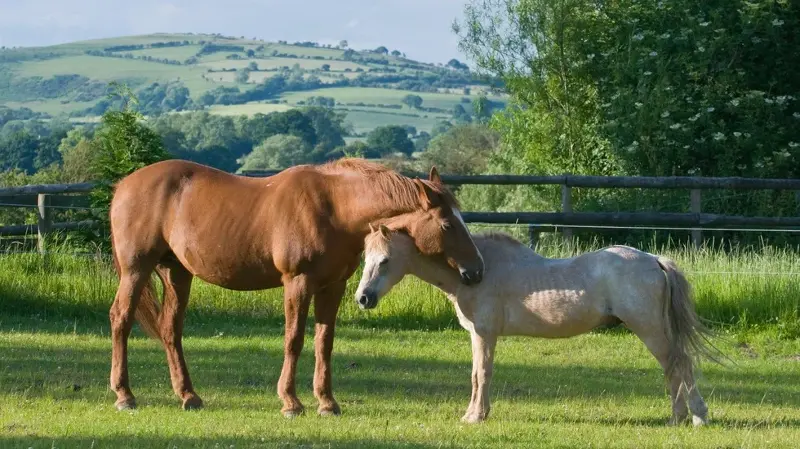
Horses can stand and take short naps to avoid enemies when necessary (Photo: Getty).
Many animals need to lie down and find the most comfortable position to fall asleep. However, horses can sleep while standing.
Horses have a joint locking mechanism thanks to the special tendon and ligament structure in their legs, which helps them maintain balance when napping. They will choose to sleep standing up if there is no suitable space to lie down or in cases where they need to be wary of enemies.
However, horses can only get light sleep while standing. To fully recover, horses still need to lie down to fall into a deep sleep. A horse's total sleep time is only about 2 to 5 hours per day, and they only need about 30 minutes of deep sleep to avoid sleep deprivation.
Horses cannot vomit or belch.
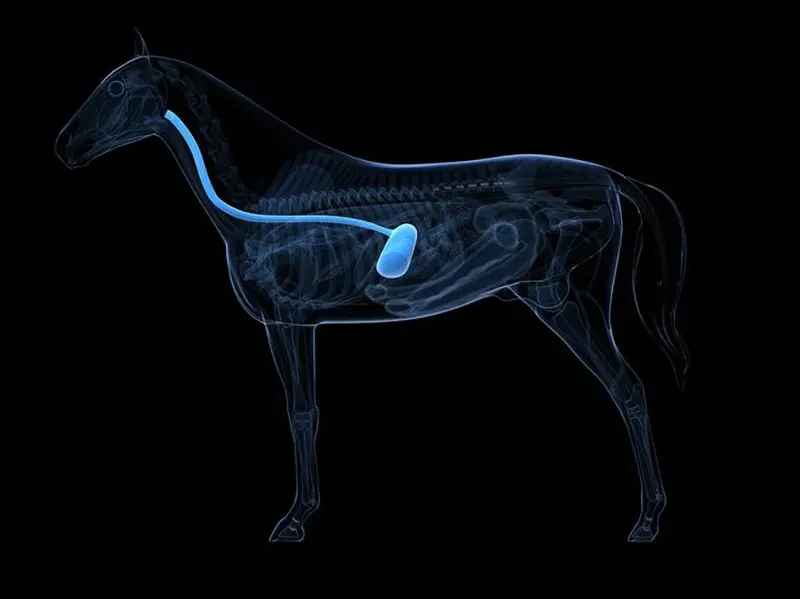
The unique digestive system of horses prevents them from vomiting or belching (Photo: SCIEPRO).
The horse's digestive system is a one-way street. Unlike many other livestock or ruminants (animals that regurgitate food to chew it again), horses have small stomachs designed for food to travel in one direction down the intestines, so they cannot vomit or belch.
The structure of a horse's digestive system allows it to absorb energy quickly, enabling it to eat continuously in small amounts and move quickly without resting after a full meal. However, this digestive system can also make horses prone to bloating and intestinal blockages because they cannot vomit food when needed.
Quarter Horse - The most popular horse breed in the world.
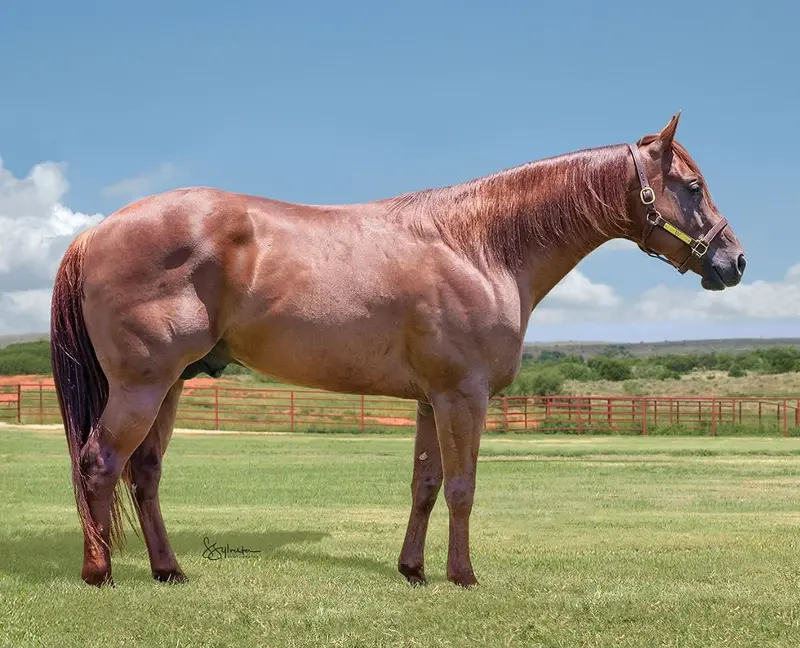
The quarter-mile horse is the most common horse breed in the world (Photo: King Ranch).
The Quarter Horse, also known as the quarter-mile horse, is a breed native to the United States and is the most popular horse breed in the world, with an estimated more than 6 million individuals.
This breed of horse was developed through selective breeding over many generations. Thanks to their speed and strength, Quarter horses are often bred for racehorses, pack horses, or show horses. This breed has a friendly, gentle temperament, making it suitable for beginners learning to ride.
The name "quarter mile horse" comes from the fact that this breed of horse can accelerate very quickly during the first quarter mile (400m) in horse races.
Horses can live up to 40 years.
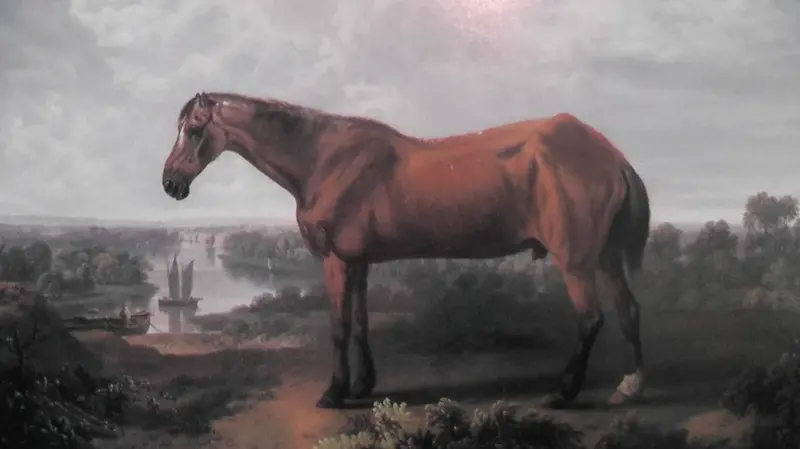
A drawing illustrating Old Billy, the world's longest-living horse ever recorded (Photo: Edmund L. Seyd).
The average lifespan of a horse can range from 30 to 40 years, depending on the breed and care. Smaller breeds, often kept as pets such as ponies, can live up to 40 years. Racehorses or horses used for carrying goods or plowing generally have shorter lifespans due to their strenuous physical activity.
The Guinness World Record for the oldest horse ever recorded is Old Billy in England, with a lifespan of 62 years (from 1760 to 1822).
Arabian horses have fewer bones than other breeds.
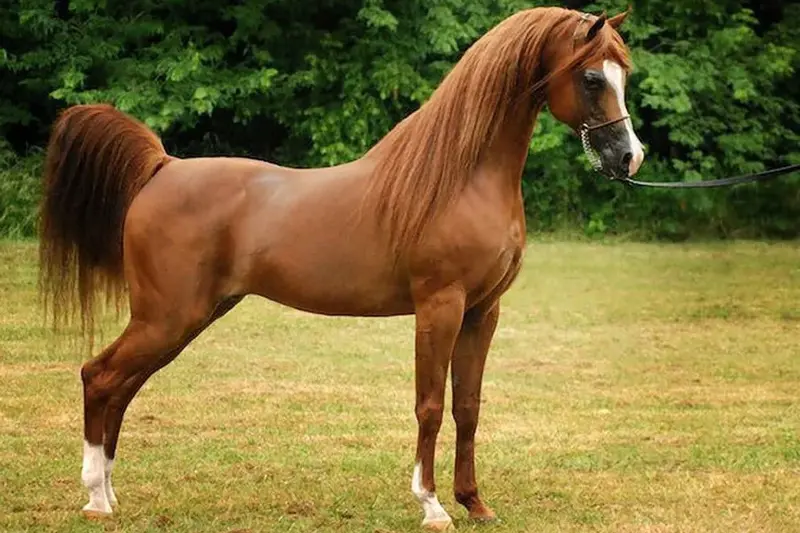
Arabian horses have a distinctive and unique appearance due to having fewer bones compared to other horse breeds (Photo: Instagram).
Arabian horses, originating from Arabia, are world-renowned for their beautiful appearance and speed. They are one of the oldest horse breeds in the world, dating back over 4,500 years, and have been used to create many other horse breeds.
One characteristic of Arabian horses is that they have fewer bones than other horse breeds. Specifically, this breed has one fewer pair of ribs, one fewer lumbar vertebra, and one fewer caudal vertebra.
The absence of these bones gives Arabian horses a shorter and more robust back, a more streamlined physique, and a tail that is often held high, creating an elegant and noble appearance.
Horses are social animals, and are highly social creatures.
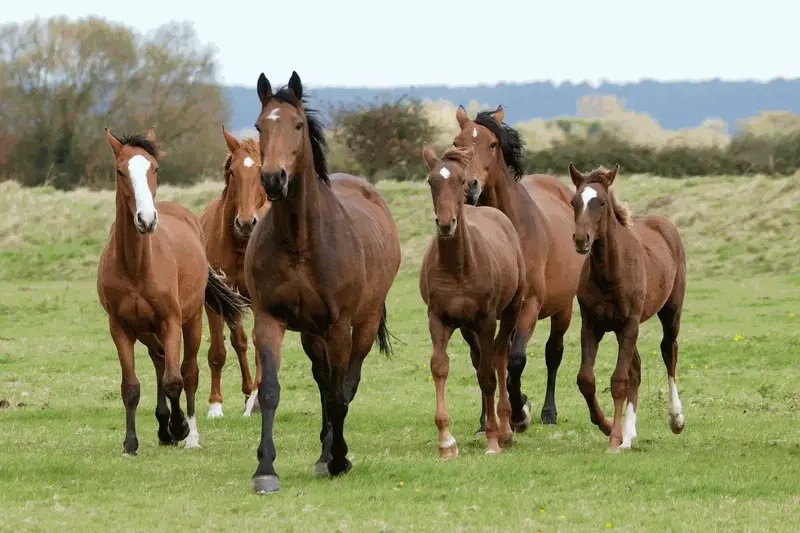
Horses are highly social animals (Photo: Jelka).
Wild horses live in herds of 10 to 15 individuals, with the strongest male horse acting as the lead horse, responsible for maintaining order and protecting the herd.
Domesticated horses will also feel more comfortable if they have companions. A domesticated horse's companion could be another horse or even other livestock such as goats, donkeys, mules, dogs, etc. They will become stressed if they have to live alone.
Humans domesticated horses 5,500 years ago.
Dogs may have been domesticated by humans as early as 14,000 years ago. Cats became human companions around 8,500 years ago. Horses were domesticated later, sometime between 5,000 and 5,500 years ago.
The successful domestication of horses is considered one of humanity's turning points, as horses have helped change the way humans travel, transport goods, produce agricultural products, and even change the way wars are fought.
Horses are extremely intelligent animals.

Horses are very intelligent and can be trained to follow commands (Photo: Horse Nation).
Like dogs, horses can be trained to perform tasks at the request of humans. Horses have very good memories, similar to those of elephants, and can remember the people who cared for and trained them even after a long time apart.
Wild horses also demonstrate their intelligence by knowing how to socialize, recognize commands from the alpha horse, and remember their environment to avoid dangerous areas they have encountered before…
Horses can only breathe through their noses.
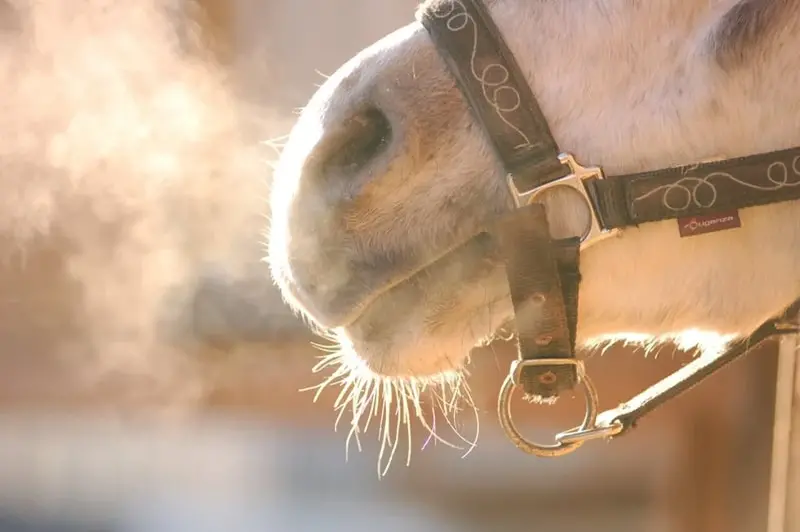
Horses can only breathe through their noses because there is no passage from the mouth to the lungs (Photo: Westvets).
Unlike humans and many other animals that can breathe through both their noses and mouths, horses can only breathe through their noses. This is because horses do not have a passage from their mouths to their lungs.
At rest, a horse's breathing rate is only 8 to 16 breaths per minute, increasing to 120-150 breaths per minute when galloping. The horse's breathing is synchronized with its stride, with each step corresponding to a breath. This optimizes oxygen intake into the lungs, increasing athletic efficiency and making horses excellent long-distance runners.
Horses also have very large lungs, with a volume of 40 to 55 liters, which help supply the necessary oxygen to the muscles during strenuous exercise.
Horses have very good hearing and eyesight.
Horses have excellent hearing, allowing them to hear sounds in the range of 55 to 33,500 hertz, so they can hear sounds that humans cannot.
In addition, horses have excellent eyesight, with a near 360-degree field of vision. Their eyes are also larger than those of any other land mammal.
Foals can stand up and run just a few hours after birth.
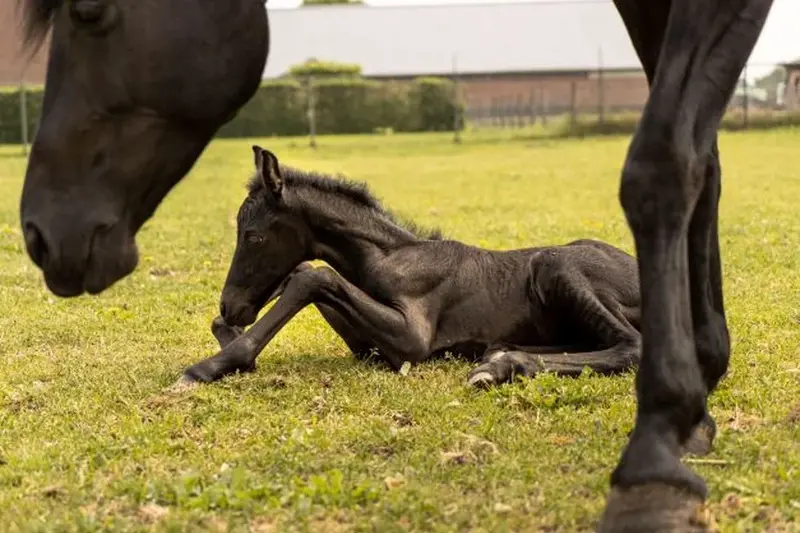
Horses can stand up and run after their mothers just a few hours after giving birth (Photo: Foal).
Herbivorous animals, including horses, are able to stand up, walk, and run shortly after birth. This is a survival instinct for herbivores, helping them escape predators in the wild.
Within just one hour of birth, foals can stand up, and after only two hours, they can run proficiently alongside their mothers.
The world's fastest horse breed can reach a top speed of 70 km/h.
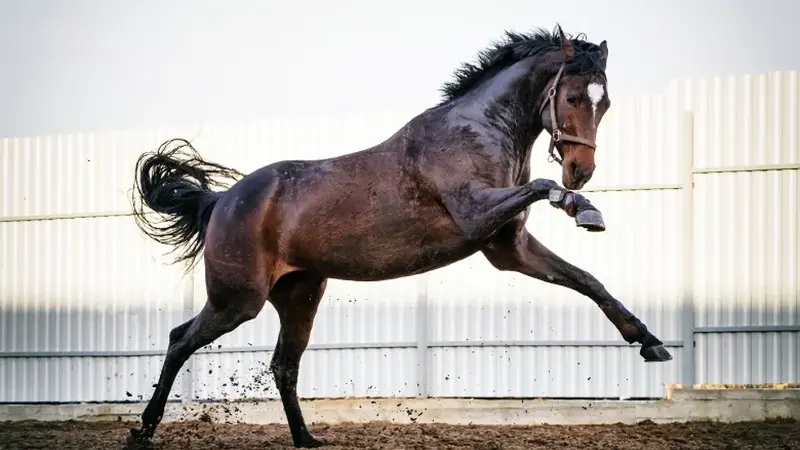
Thoroughbred horses are the fastest horses in the world and can maintain high speeds over long distances (Photo: Pinterest).
Thoroughbred horses – also known as purebreds or English horses – are a breed of horse created by crossbreeding Arabian stallions and English mares from the late 17th century. These horses were bred for racing, so they can achieve very high speeds.
Thoroughbred horses can reach a top speed of 70 km/h and maintain an average speed of 60 to 65 km/h during the race.
The thoroughbred horse Winning Brew holds the world record for the fastest horse run, achieving a speed of 70.76 km/h in a race in 2008.