



On March 12, the US National Aeronautics and Space Administration (NASA) announced that the Artemis 2 mission could be launched as early as April 1, marking the first crewed flight past the Moon in over 50 years.
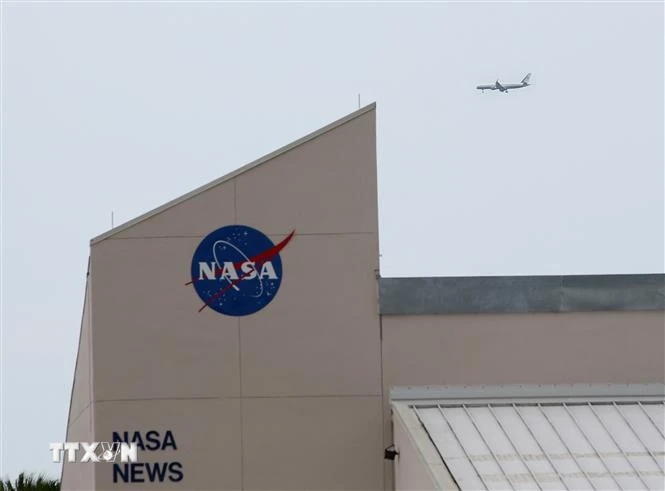
On March 12, the US National Aeronautics and Space Administration (NASA) announced that the Artemis 2 mission could be launched as early as April 1, marking the first crewed flight past the Moon in over 50 years.
At a press conference, Lori Glaze, a senior NASA official, said the agency is aiming for a launch date as early as April 1st after several technical issues caused a delay to the initial February launch plan.
According to Glaze, this was a test flight, so there were still inherent risks, but NASA's engineering team and systems were ready, although some work remained to be completed.
Ms. Glaze stated that the launch is scheduled for 6:24 PM on April 1st (local time). NASA has also prepared several other possible launch times for the following days.
Artemis 2 will be the first crewed lunar orbiter mission in over half a century. The astronauts on the mission include three American astronauts, Reid Wiseman, Victor Glover, and Christina Koch, and one Canadian astronaut, Jeremy Hansen.
According to the plan, after launch, the spacecraft will orbit the Earth before leaving orbit to head towards the Moon, making a flyby of the Moon without landing, then returning to Earth and landing in the ocean.
The crew's projected flyby of the Moon is expected to range from approximately 6,437–9,656 km above the lunar surface, depending on the launch time.
Following Artemis 2, NASA plans to deploy Artemis 3 in preparation for landing on the Moon, while Artemis 4 aims to make its landing mission in early 2028.
On the same day, NASA announced that one of its probes had re-entered Earth's atmosphere in the early morning of March 12 (US time), many years earlier than initially predicted.
According to NASA, the Van Allen Probe A re-entered the atmosphere at 6:37 a.m. Eastern Time, nearly 14 years after its launch into orbit in August 2012.
The U.S. Space Force has confirmed that the Van Allen Probe A spacecraft re-entered the atmosphere over the eastern Pacific Ocean . NASA stated that much of the spacecraft's structure is expected to have burned up upon re-entry, but some parts may still remain.
Van Allen Probe A, along with its twin Van Allen Probe B, was designed to study the Van Allen radiation belts – rings of charged particles trapped by Earth's magnetic field, which protect the planet from cosmic radiation and solar storms.
The two Van Allen spacecraft operated between 2012 and 2019, collecting unprecedented amounts of data on Earth's radiation belts. During their research, scientists discovered a temporary third radiation belt that may have formed as solar activity increased significantly.
When the mission ended in 2019 due to the two spacecraft running out of fuel, scientists predicted the spacecraft would re-enter Earth's atmosphere in 2034. However, stronger-than-expected solar activity in the current cycle has increased atmospheric drag, causing the spacecraft's orbits to decline more rapidly and leading to an earlier return.
According to NASA, data from this mission continues to support research into space weather and its impact on satellites, astronauts, and Earth-based technology systems such as communications, navigation, and power grids.
NASA says the Van Allen Probe B spacecraft is not expected to re-enter the atmosphere before 2030.