



Archaeologists have discovered an additional 13,000 pieces of ancient pottery inscribed with text at the Athribis site in Egypt, forming the largest collection ever unearthed at a single location.
According to an announcement by the Egyptian Ministry of Tourism and Antiquities, a joint Egyptian-German archaeological team discovered approximately 13,000 ostraca (ancient pottery fragments) at the Athribis site in the Sohag province of southern Egypt.
The newly discovered collection brings the total number of ostraca found at Athribis to approximately 43,000 pieces. This is the largest collection of ostraca ever discovered at a single archaeological site in Egypt, surpassing even the famous collection at Deir el-Medina.
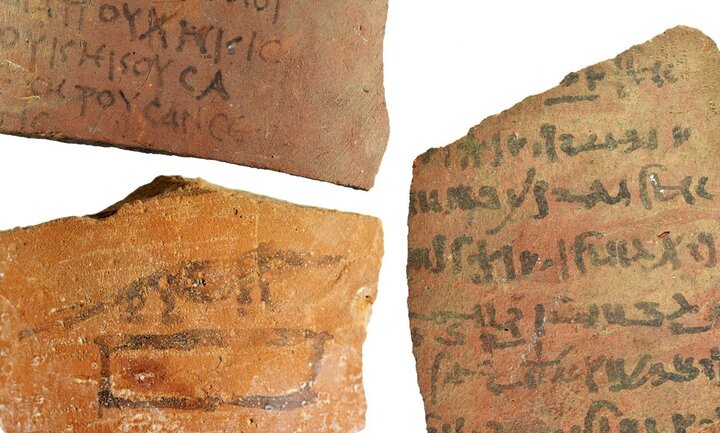
Newly excavated ostraca at the Athribis archaeological site, Egypt. (Photo: Egyptian Ministry of Tourism and Archaeology)
The Athribis site is located in the village of Nagaa El-Sheikh Hamad, about 7 km west of the center of Sohag province. In the past, it was a city situated on fertile land along the Nile River, playing an important religious and administrative role in ancient Upper Egypt.
Ostraca are essentially broken pieces of pottery that were used by ancient people as writing surfaces, as an alternative to the expensive papyrus paper.
It contains various documents related to the daily lives of the Athribis residents, such as tax receipts, delivery orders, accounting books, administrative lists, and even schoolchildren's written assignments.
Some fragments also contain religious documents, including hymns, prayers, and records of offerings presented to the temple. These documents help researchers reconstruct a fairly detailed picture of the society, economy , and beliefs of the settlement that existed for over 1,000 years.
The majority of ostraca is written in Demotic script, accounting for approximately 60-75% of the total. This is followed by Greek, at 15-30%. A small number are inscribed in Hieratic, Hieroglyphic, Coptic, and Arabic scripts, along with a few dozen fragments containing only drawings or geometric patterns.
Notably, researchers have identified over 130 texts related to astrology and the zodiac, mostly written in Demotic and Hieratic scripts. This makes Athribis the archaeological site with the oldest astronomical documentation in Egypt.
All the excavated ostraca is being analyzed as part of the Ostraca d'Athribis project, led by Professor Sandra Lippert at the French National Centre for Scientific Research (CNRS).
The research team, comprising more than a dozen experts in ancient languages, writing, and pottery, has been involved in the project since the 2018-2019 excavation season. They expect these pottery fragments to help reconstruct in greater detail the social, economic, and religious history of the region across various periods.
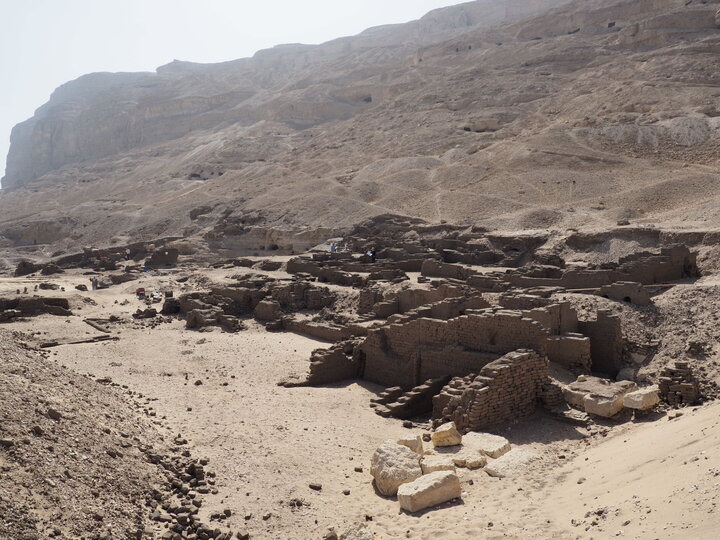
The Athribis archaeological site in Egypt. (Photo: Athribis Project)
Egyptian Minister of Tourism and Antiquities Sherif Fathy said the new discovery makes a significant contribution to a better understanding of Egyptian history and strengthens the country's position as a leading archaeological center in the world.
Meanwhile, Hisham El-Leithy, Secretary-General of the Supreme Council of Antiquities of Egypt, affirmed that the collection at Athribis has set a world record for the number of ostraca discovered at a single site.
Archaeologists plan to continue expanding the excavation site in the coming years, hoping to find even more ostraca. This collection is not only a valuable archive but also a living testament to the enduring vitality of Egyptian civilization over millennia.