



Excessive hair loss in the morning isn't just due to genetics or hormones. Few people know that some seemingly harmless nighttime habits can silently weaken hair and make it prone to breakage and falling out while sleeping.
1. Sleeping habits that cause hair loss
1.1 Using pillowcases made of materials that are not good for your hair.
Choosing the right pillowcase may seem simple, but it can directly affect hair loss. Pillowcases made from poor-quality materials, that are not breathable, or that contain chemical residues can increase friction between the hair and the pillow surface during sleep. Repeated friction weakens hair strands, making them prone to breakage and falling out, unlike the natural physiological hair shedding cycle.
According to Dr. Chagarla Mythri, a dermatologist in India, silk or satin pillowcases significantly reduce friction thanks to their smooth surface, allowing hair to glide smoothly instead of being pulled taut. This change helps limit scalp irritation, reduces mechanical stress on hair follicles, and creates more favorable conditions for healthy hair growth.
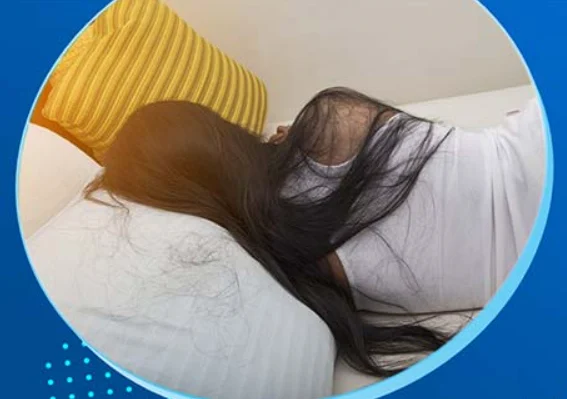
Hair loss during sleep can be caused by the material of the pillowcase or the sleeping position...
1.2 Sleeping position: Lying on your side
Sleeping position also significantly affects scalp and hair health. Lying on your back is considered more beneficial as it reduces direct pressure and friction on the hair. Conversely, sleeping on your side for extended periods can increase repetitive friction on one side of the scalp, making hair more prone to thinning in that area.
Dr. Mythri explains that changing sleeping positions regularly helps distribute pressure more evenly and improves blood flow to the scalp. This is crucial for the body's recovery process and for nourishing hair follicles overnight.
1.3 Sleeping with wet hair
Hair is weakest when wet because the strands swell after absorbing water, making it more prone to breakage. Research published in the Annals of Medicine and Surgery (2022) also showed that sleeping with damp hair can disrupt the scalp's microbiome, increasing irritation and hair breakage. Therefore, completely drying your hair before bed and tying it loosely to avoid stressing the hair follicles will help minimize hair loss.
1.4 Poor sleep
Poor sleep not only makes the body tired but also affects hair. Studies worldwide show that sleep disorders can hinder hair regrowth by increasing cortisol, a stress hormone. High cortisol levels disrupt the hair follicle cycle and slow down regeneration.
Dr. Mythri emphasizes that deep sleep is when growth hormones are released, supporting hair regeneration. In addition, a regular sleep schedule improves overall recovery, including the health of both skin and hair.
2. Simple nighttime tips to reduce hair loss
The hair repair process, including regeneration, takes place during deep sleep, so to minimize nighttime hair loss, everyone should adopt the following simple habits:
- Switch to using silk or satin pillowcases.
- Never sleep with wet hair.
- Tie your hair loosely into a low ponytail or braid it.
- Gently massaging your scalp before bed can help improve hair thickness by increasing blood flow to the hair follicles.
- Use a humidifier to prevent dry scalp.
- Apply a thin layer of serum containing peptides.
- Avoid styling your hair in tight, tight hairstyles at night.
- Get enough sleep, 7-8 hours each night...
3. When is hair loss a serious condition that requires a doctor's visit?
If you notice excessive hair loss, bald patches, or frequently find more than 100 strands of hair on your pillow, consult a dermatologist as this could be a sign of hormonal imbalance, nutritional deficiencies, or other medical conditions requiring specialized treatment. A thorough examination and identification of the cause will lead to more effective treatment and a more noticeable reduction in hair loss.