



The first step many people take when preparing chicken is to wash the meat thoroughly, believing that "the more you wash, the cleaner and safer it is." Is this really true?
Numerous studies indicate that improper washing of chicken can increase the risk of Salmonella infection, according to the Times of India.
What is Salmonella and how dangerous is it?
Salmonella is a group of bacteria that commonly live in the intestines of animals and humans. According to the World Health Organization (WHO), Salmonella causes millions of infections globally, primarily through contaminated food. Common symptoms of Salmonella infection include diarrhea, nausea, vomiting, fever, and dehydration.
Healthy adults usually recover within a week, but in vulnerable groups, Salmonella infection can become serious.
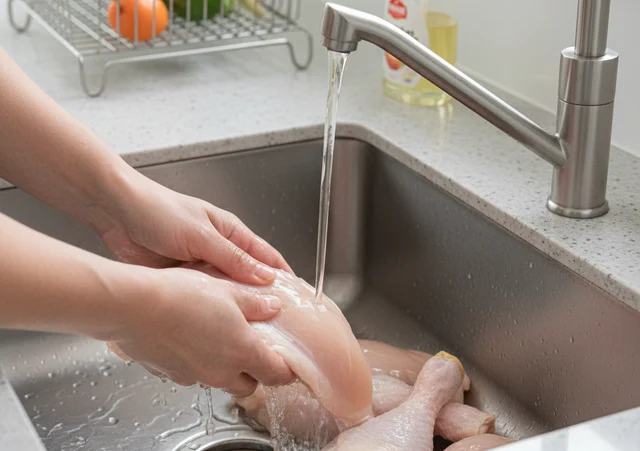
Foods that don't require cooking (such as vegetables and salads) should be prepared first, before handling raw meat and poultry, to reduce the risk of cross-contamination. PHOTO: AI
Are you “putting yourself at risk of getting sick”?
According to a study published in AIP Publishing (USA), the risk comes from water droplets splashing from the surface of chicken meat during washing. The study showed that bacteria can spread to surrounding surfaces via these droplets. Researchers also found that the higher the water tap is positioned, the greater the splashing, increasing the likelihood of cross-contamination.
In addition, a 2019 study by the U.S. Department of Agriculture (USDA) stated: "Washing raw poultry puts consumers at risk of illness if they are not careful."
How to prevent cross-contamination when preparing meat.
Given the risks and consequences mentioned above, the USDA recommends three preventative measures when processing meat:
- Prepare foods that don't require pre-cooking (such as vegetables and salads) before handling raw meat and poultry to reduce the risk of cross-contamination.
- Thoroughly clean and disinfect all surfaces that may have come into contact with or been contaminated by raw meat, raw poultry, or meat broth.
- Cook thoroughly to kill disease-causing bacteria and ensure the meat reaches a safe temperature. Chicken needs to be cooked to a minimum temperature of 74°C to ensure safety.