



Scientists have discovered a surprising finding: Polar bears are actually healthier despite shrinking sea ice.
For decades, researchers have warned that melting ice due to global warming will reduce polar bears' opportunities to hunt, leading to inevitable starvation and weight loss.
Therefore, they were surprised to find that polar bears on the Norwegian island of Svalbard were healthier than expected despite the increasing number of ice-free days.
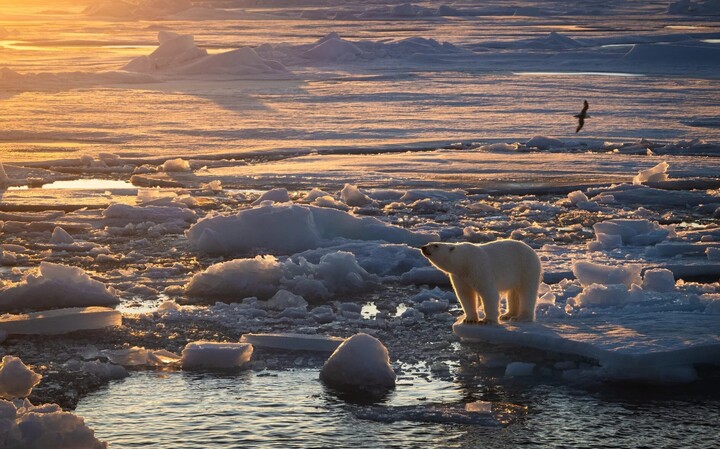
Researchers have previously warned that melting ice due to global warming could threaten the habitat of polar bears. (Photo: SWNS)
According to research published in the journal Scientific Reports , instead of becoming thinner, after initial declines around 1995, both male and female bears gained weight and accumulated body fat.
Researchers believe that polar bears may be improving their health due to the recovery of reindeer, walruses, and harbor seals, species that were previously overhunted by humans.
They believe that shrinking sea ice areas are pushing ring seals into smaller ice floe zones, making them easier to hunt.
"The significant improvement in physical condition during the period of reduced sea ice was unexpected," emphasized Jon Aars, a scientist at the Norwegian Polar Research Institute (NPI) and one of the study's authors.
Jon Aars shared that in 2003, when he began working at the NPI, he was told that bears in Svalbard (a Norwegian archipelago in the Arctic Ocean) would have approximately two months less access to sea ice between 2000 and 2019. He warned that they could become emaciated, leading to a risk of decreased survival rates, reproduction, and population numbers.
"However, the reality shows the opposite, as polar bears are now in good health, despite spending more time on land. According to him, the plausible explanation is that they have adapted by utilizing land-based food sources to compensate for the shortened hunting time on the ice," Jon Aars added.
There are approximately 2,650 polar bears in the Barents Sea around Svalbard, and the population remains stable, despite temperatures having risen by 2 degrees Celsius per decade since 1980.
Experts say the mother bears appear to be able to nurse their cubs and there is no evidence of a decline in the cub population as previously predicted.
However, scientists are still monitoring the situation cautiously. Co-author of the report, Andrew Derocher from the University of Alberta, warned that this recovery is only temporary and said polar bears are "making the most of the situation" but "not adapting genetically."
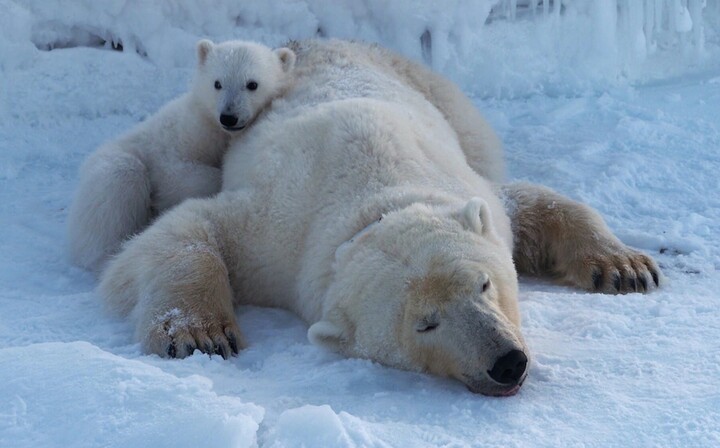
Polar bears are becoming healthier despite shrinking sea ice. (Photo: SWNS)
To conduct this study, researchers used data collected from 1,188 records of 770 adult polar bears, anesthetized and measured for body mass index from 1992 to 2019, comparing changes in “body composition index” to assess fat reserves and body condition.
Commenting on the study, Dr. John Whiteman, a research scientist at Polar Bears International, said the results are positive in the short term, as the health of bears in Svalbard has remained largely unchanged between 1995 and 2019, despite a significant decline in sea ice.
According to him, several regional factors may be supporting polar bears, such as a diverse food source that allows them to adapt flexibly to changing conditions, while maintaining a smaller range, thereby reducing their energy needs.
"However, the overall picture remains unchanged; polar bears still need sea ice, while this environment is shrinking due to climate change," Whiteman said.