


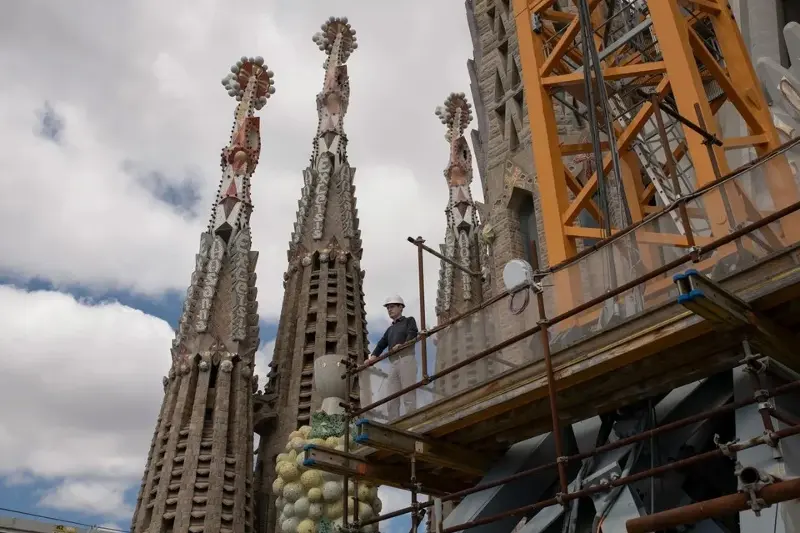
Architect Mauricio Cortés said he hoped Pope Leo XIV would be impressed with the final, recently completed tower of the Sagrada Familia. Photo: Maria Contreras Coll/CNN .
On June 8th, CNN reported that the Sagrada Familia church in Barcelona, Spain, had just completed its final crucial structural element after more than 144 years of construction. The completed piece was a cross weighing approximately 100 tons atop the Jesus Tower, bringing the structure to its maximum height of 152 meters and making it the tallest church in the world .
The event marks a special milestone for Barcelona's iconic structure, which has been repeatedly interrupted by war, political upheaval, and financial difficulties since its commencement in 1882. The Christ the King Tower is scheduled to be inaugurated this week, coinciding with the 100th anniversary of the death of architect Antoni Gaudí.
Although the main structural work is complete, some interior and landscaping elements will continue to be completed in the coming years.
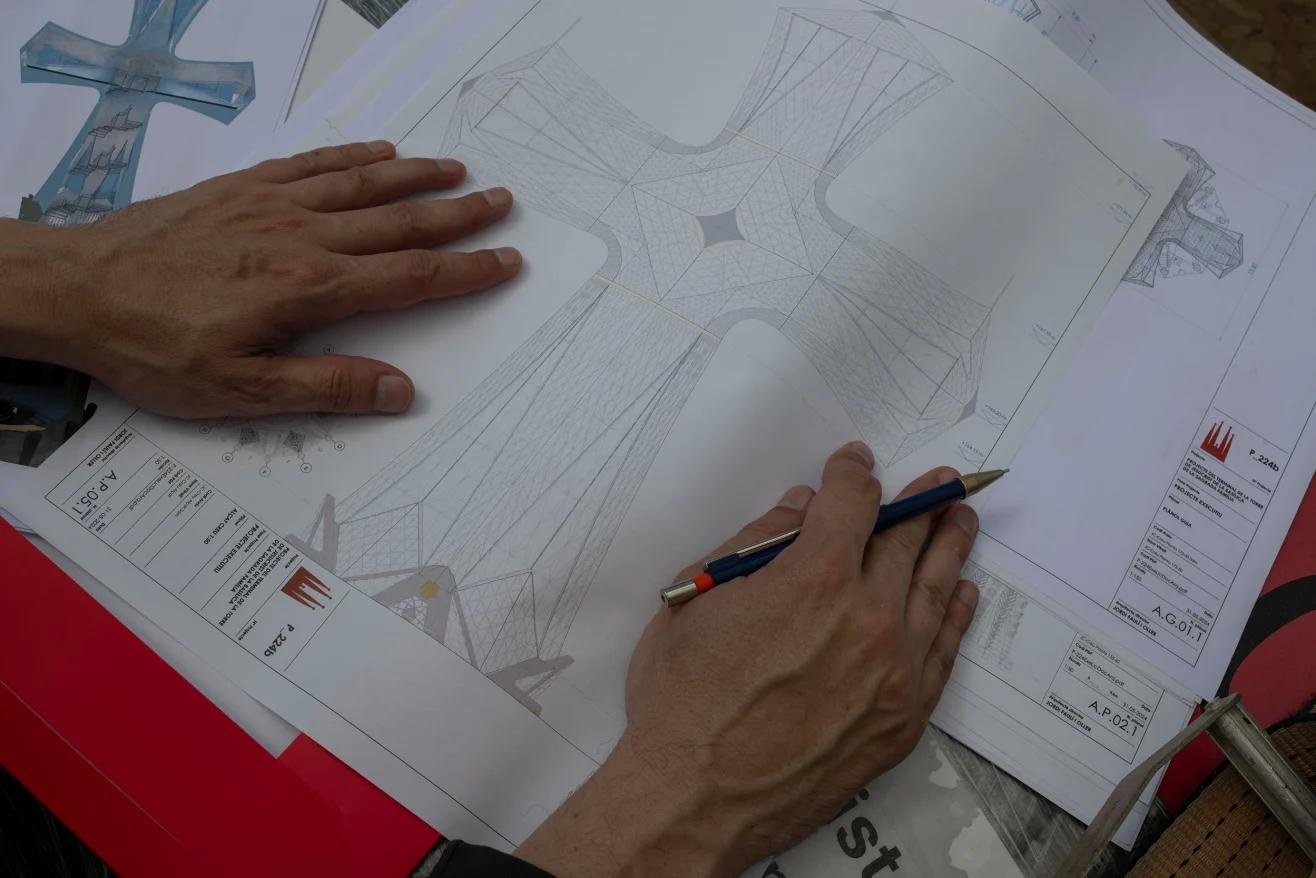
Much of Gaudí's original model was destroyed in the 1930s. The new elements, including the Christ the King tower, were reconstructed using 3D technology based on his surviving design principles. Photo: Maria Contreras Coll/CNN .
The final piece weighs 100 tons.
The Tower of Jesus is the tallest of the 18 towers in the Sagrada Familia. At the top of the tower is a giant cross, as tall as a five-story building and weighing approximately 100 tons, representing the most complex engineering element of the entire project.
Architect Mauricio Cortés said that Antoni Gaudí envisioned a cross that could reflect light during the day and glow against the Barcelona skyline at night. To realize this idea, the construction team used stainless steel and many modern technologies. The cross was manufactured in Germany and shipped to Spain as 14 components before being fully assembled.
"Technology and construction standards have changed considerably today. However, we believe that the current structure remains very close to Gaudí's original vision," Cortés said.
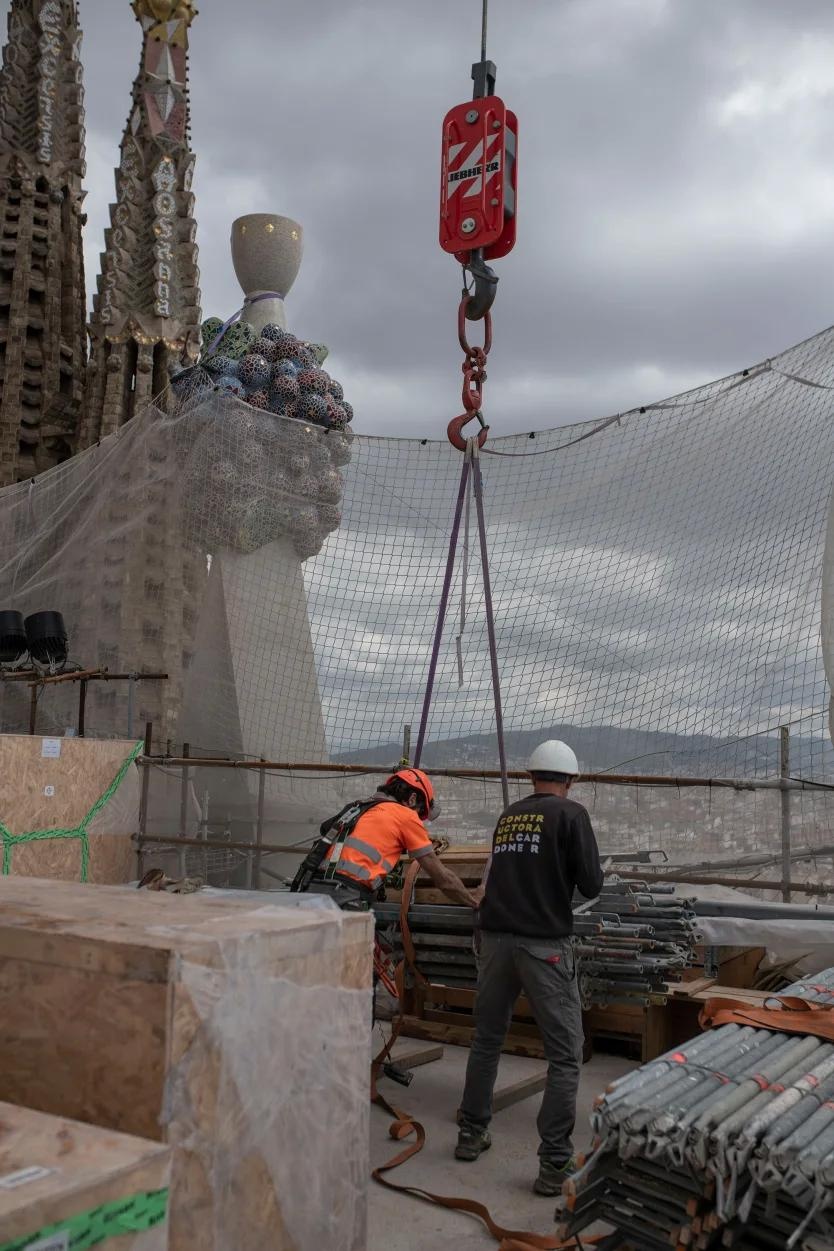
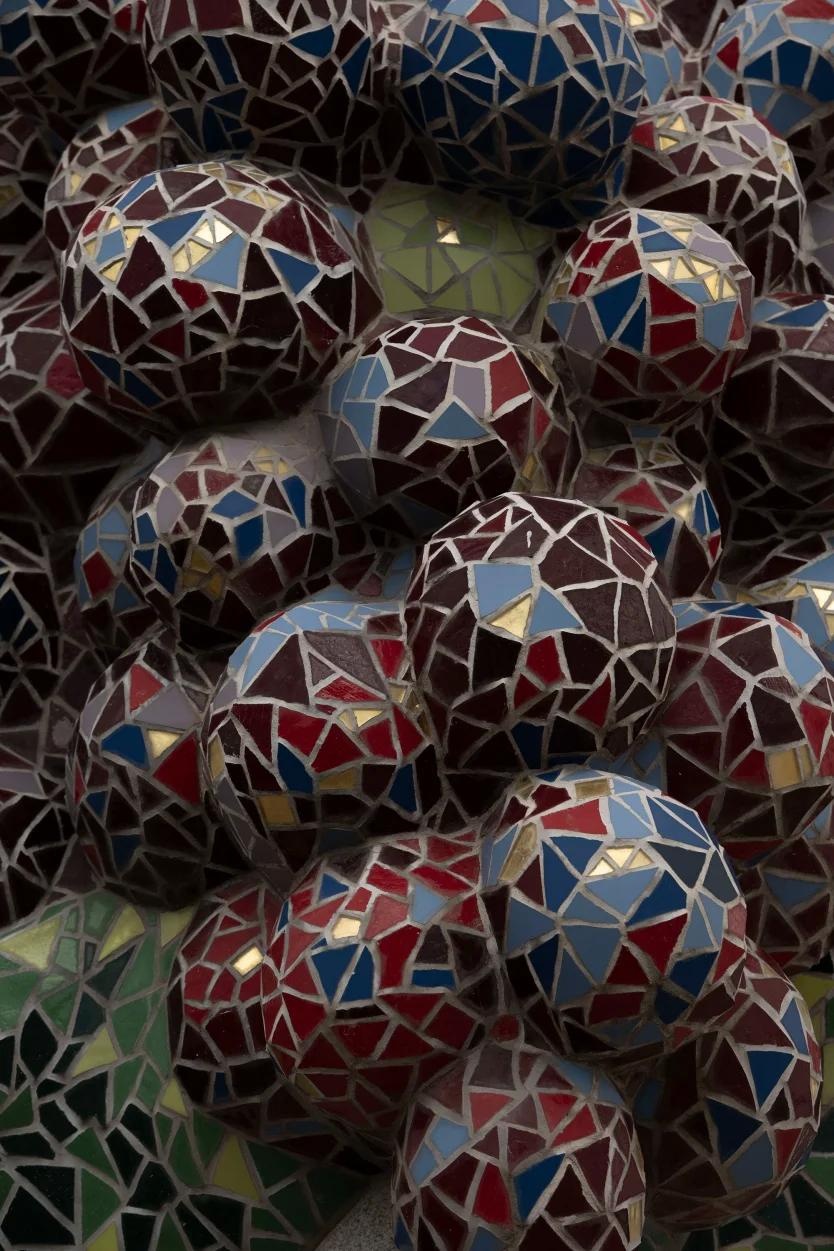
The construction of the new tower was overseen from an elevated workshop (left image). The structure is surrounded by mosaics in the distinctive Catalan style (right image). Photo: Maria Contreras Coll/CNN .
When Antoni Gaudí took over the project at the end of the 19th century, he understood that he would likely not live long enough to see the completion. His famous quote, "My client is in no hurry," is still often cited when speaking of the Sagrada Familia.
Gaudí died in 1926. Ten years later, the Spanish Civil War destroyed many of his important drawings, models, and documents. However, his students and collaborators managed to preserve some of his ideas through photographs, sketches, and notes, providing a foundation for generations of architects to continue perfecting the work.
Currently, the design team uses 3D models and digital technology to recreate the remaining ideas of Gaudí.
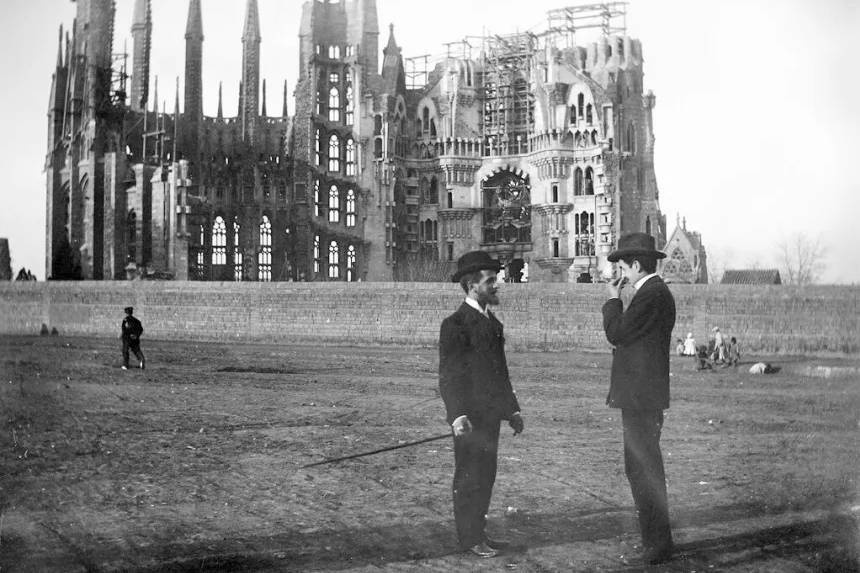
This photograph, taken around 1905, captures the early stages of the construction of the Sagrada Familia, more than 20 years after construction began. Photo: Lleida Museum of Modern and Contemporary Art .
Nearly 5 million visitors a year.
Funding is also one of the major challenges for the Sagrada Familia. As a "shrine of atonement," the structure has been built with donations and revenue from visitors since opening to the public in 2010. This model faced serious difficulties during the Covid-19 pandemic when visitor numbers plummeted. However, Barcelona's tourism industry has recovered quickly.
According to CNN , the church is expected to welcome nearly 5 million visitors in 2025 alone, helping to stabilize funding for the project.
However, Sagrada Familia is not yet completely finished. The remaining interior is expected to be completed by 2028.
In addition, the plan to build the Glory Facade, the main entrance to the cathedral designed by Gaudí, is causing controversy. To construct a large staircase connecting the cathedral to the street, some residential buildings opposite are at risk of being demolished.
Many local residents say they have yet to receive clear information about the area's future. The debate continues even as Barcelona's iconic landmark approaches its final stages of completion.
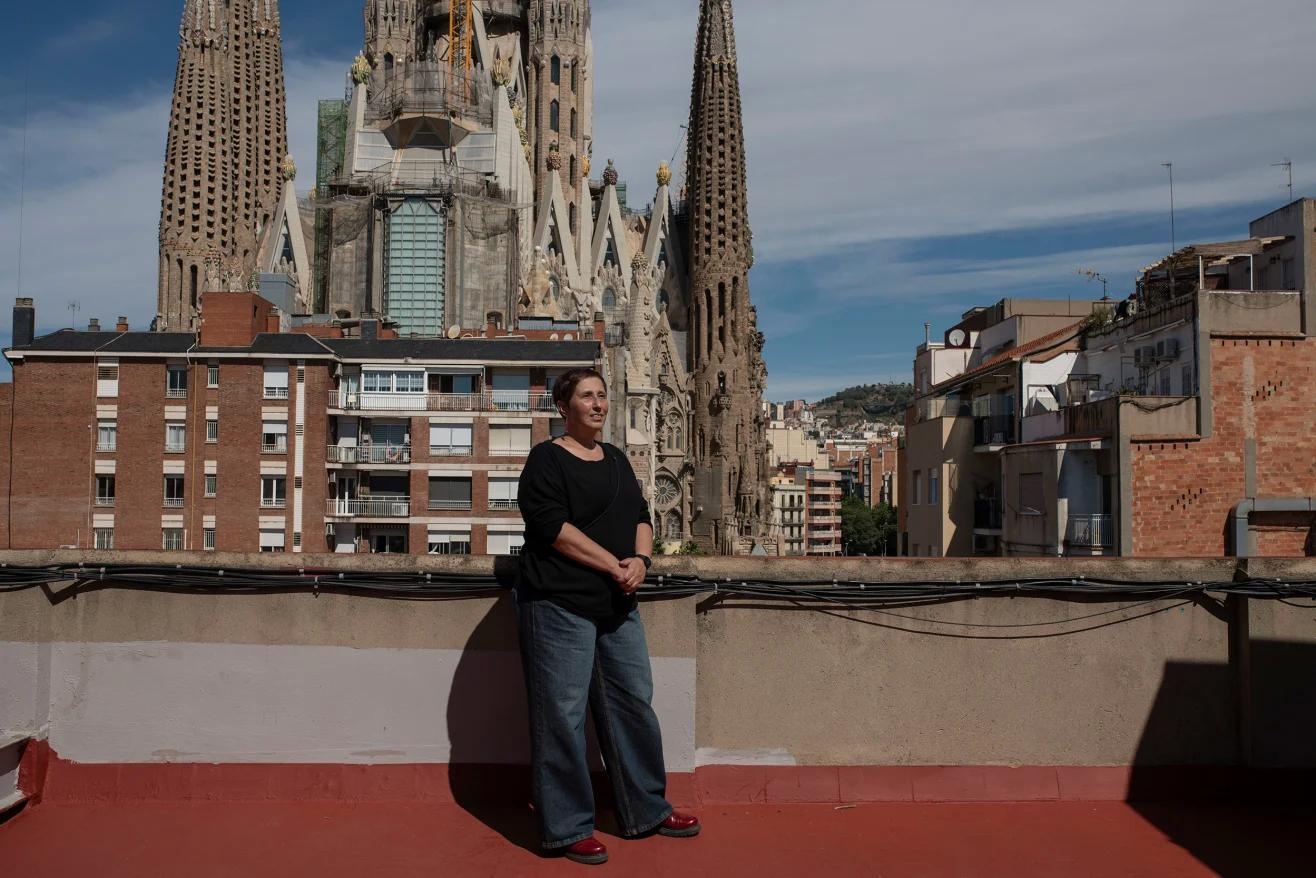
Alicia Busquets, a local resident, is concerned that her home and business could be affected by plans to build a staircase at the church entrance. Photo: Maria Contreras Coll/CNN .