



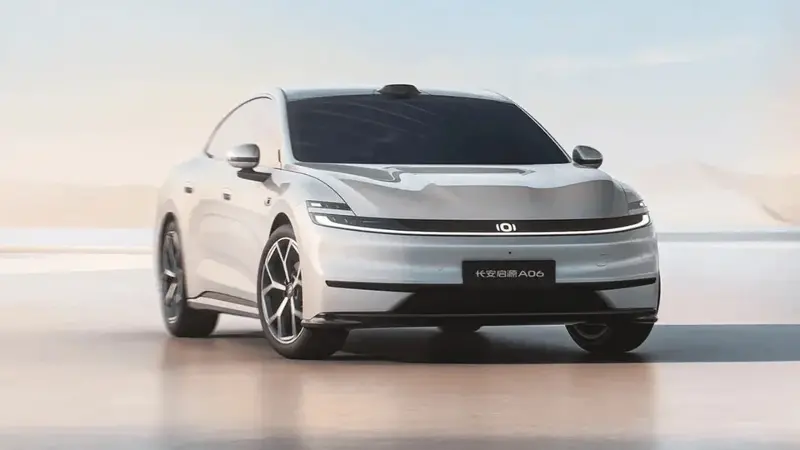
Utilizing Na-ion battery technology from CATL, the Changan Nevo A06 marks a major breakthrough with its ability to operate stably at temperatures as low as -50°C and optimize production costs.
Sodium-ion (Na-ion) batteries, once considered a potential alternative to lithium, have now officially entered large-scale practical application. The Changan Nevo A06 has become the world's first commercially available electric vehicle to use this type of battery, opening a new chapter for the global electric vehicle industry, especially in markets with harsh climates.
Superior performance under extreme conditions
At the heart of the Changan Nevo A06 is the Naxtra battery pack, developed by CATL, the world's largest electric vehicle battery manufacturer. The biggest difference of this battery pack lies in its heat resistance. In real-world tests in Inner Mongolia, the battery pack demonstrated its durability, operating stably at temperatures as low as -30°C, and even sustaining operation in extreme conditions down to -50°C.
Remarkably, at temperatures as low as -40°C, Na-ion batteries retain over 90% of their original capacity. This is an unprecedented figure for currently popular lithium iron phosphate (LFP) batteries, which typically suffer significant performance degradation in cold weather. This is precisely what makes sodium-ion batteries an ideal choice for users in freezing regions.
Technical specifications and economic analysis of sodium
The Changan Nevo A06 version is equipped with a 45 kWh battery pack. According to China's CLTC test cycle, the vehicle can travel approximately 250 miles (roughly 400 km) on a single full charge. While this range is comparable to cheaper electric vehicles using LFP batteries, the energy stability is significantly higher.
Below is a summary comparison table between the Na-ion battery in the Changan Nevo A06 and a conventional LFP battery:
| Characteristic | Sodium ion (Na-ion) battery | Lithium Iron Phosphate (LFP) Battery |
|---|---|---|
| Raw materials | Sodium (1,000 times more abundant than lithium) | Lithium (scarce, expensive) |
| Performance at -40°C | Maintain > 90% capacity | Significant decline |
| Safety | Tall, reduces the risk of overheating. | Medium |
| Scope of operation | Average (suitable for common vehicles) | Diversity |
Besides its operational advantages, sodium is 1,000 times more common than lithium and is distributed widely globally. The shift to sodium-ion batteries helps automakers reduce their dependence on the lithium supply chain, which is currently monopolized by a few countries, and has the potential to lower the cost of electric vehicles in the long term.
The parallel future of two battery technologies
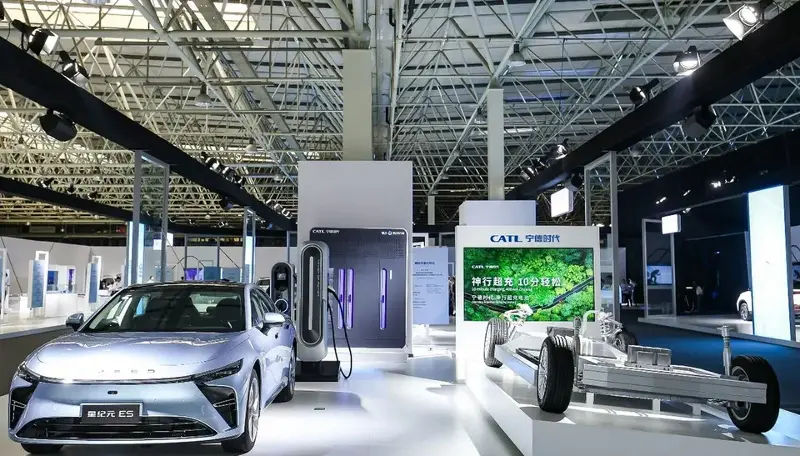
Despite the attention surrounding sodium-ion batteries, CATL continues to improve its lithium-ion batteries to serve higher-end segments. The company recently announced its 5C lithium-ion battery pack, capable of retaining 80% of its capacity after 3,000 charge cycles, equivalent to a driving range of approximately 1.1 million miles.
This new 5C lithium-ion battery technology is also impressive with its ultra-fast charging capability, allowing it to charge from 0% to full in about 12 minutes under ideal conditions. This suggests that in the near future, the electric vehicle industry will have two parallel technologies: Na-ion batteries for mainstream vehicles and cold regions, while lithium-ion batteries will continue to dominate the high-performance and ultra-fast charging segments.
The launch of the Changan Nevo A06 is not only a product milestone but also a testament to the diversification of energy sources, providing consumers with safer and more economical options.