



The photographer who took these photos of the red-crowned cranes is Nguyen Thi Minh Hai. Ms. Hai said that the red-crowned cranes in the photos were captured in Cambodian territory , near the border with Ha Tien ( An Giang province), last February. Every year, from around December to April, a large number of cranes migrate to this area.
This is the third time the female photographer has returned to "hunt" for photos of these stunning red-crowned cranes. Despite being in her late 60s and facing the hardships of traveling, she remains passionate about following the cranes.
Between approximately April 14th and April of the following year, red-crowned cranes migrate to the Cambodia-Vietnam border region.
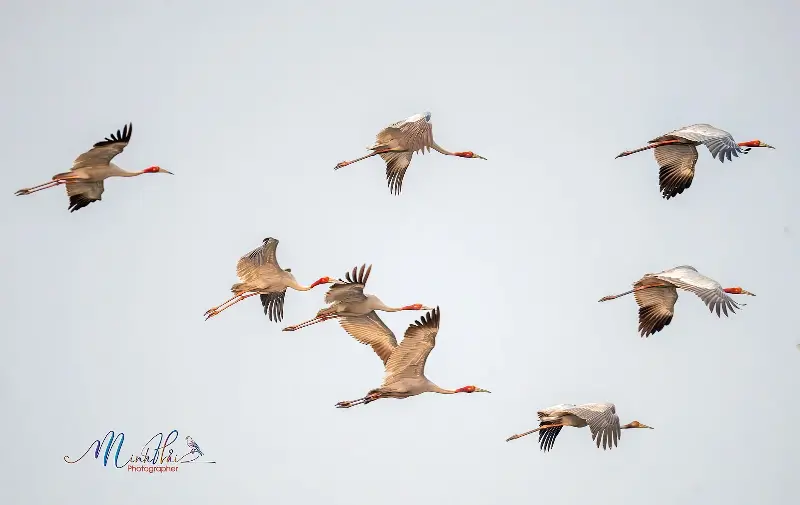
PHOTO: NGUYEN THI MINH HAI
Around this time, many photographers traveled to the area to "hunt" for photos of cranes.
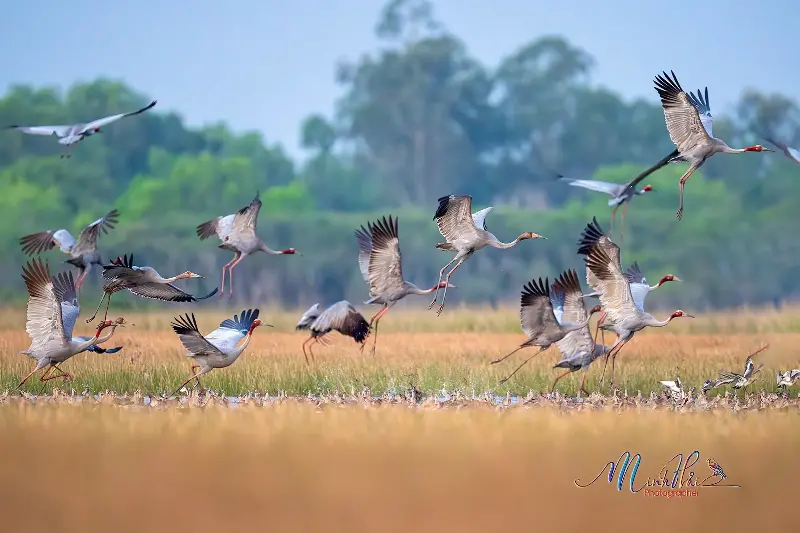
PHOTO: NGUYEN THI MINH HAI
This series of photographs of red-crowned cranes was taken by female photographer Nguyen Thi Minh Hai last February.
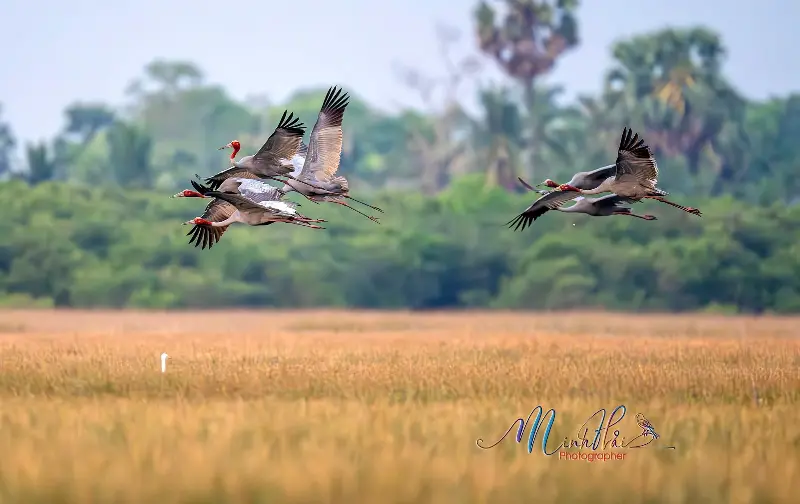
PHOTO: NGUYEN THI MINH HAI
To capture these photos of cranes, the female photographer undertook a long journey traveling from Vietnam to Cambodia.
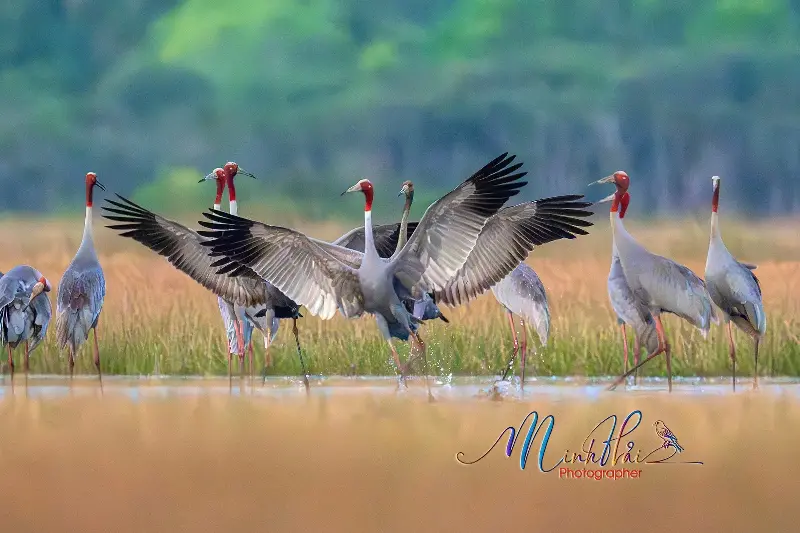
PHOTO: NGUYEN THI MINH HAI
Ms. Hai recounted that at noon (around 12 PM), after completing exit procedures at the Ha Tien border gate, she arrived at the location outside the crane habitat in Cambodia around 3 PM . At 4 PM, she and her photography group began walking through the forest and wading through muddy, black soil areas to reach the rice paddies where the cranes usually appear. After about two hours of waiting, at around 5:30 PM, the first flocks of cranes began flying back.
"On sunny days, the water vapor rising from the rice fields makes photography difficult. The cranes also fly back sporadically, so it's impossible to capture the entire flock," Ms. Hai shared.
However, photographing cranes with her wasn't a one-day affair; it took several consecutive days to get beautiful pictures.
Therefore, the next day, she was back at the shooting location from dawn. In the quiet space, every movement had to be gentle, minimizing any strange noises to avoid startling the cranes. Around 5:30, the cranes began calling to each other, creating lively moments. However, due to the weak light, many of the photos she took did not meet her expectations. Around 6:00, when the sun was just beginning to rise, the cranes flew away again, much to her regret.
To photograph the cranes, Ms. Hai had to spend many days traveling to this area, mostly in the early morning and late evening.
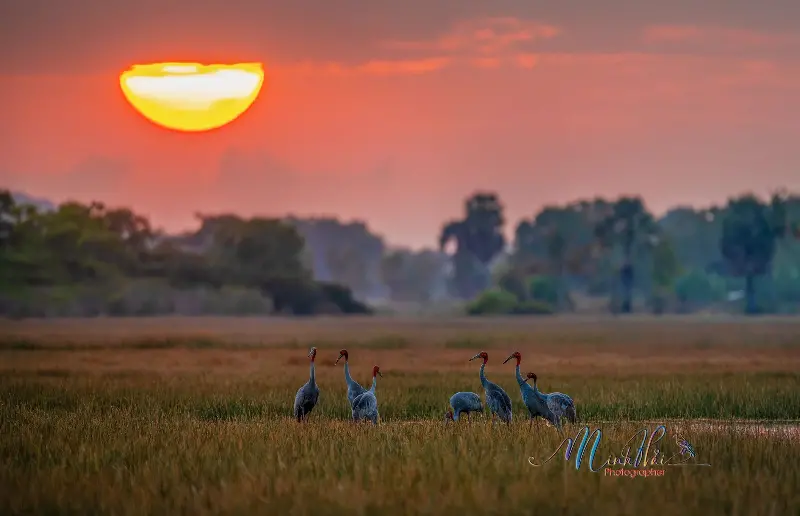
PHOTO: NGUYEN THI MINH HAI
Images show red-crowned cranes and other migratory birds present in the swamp.
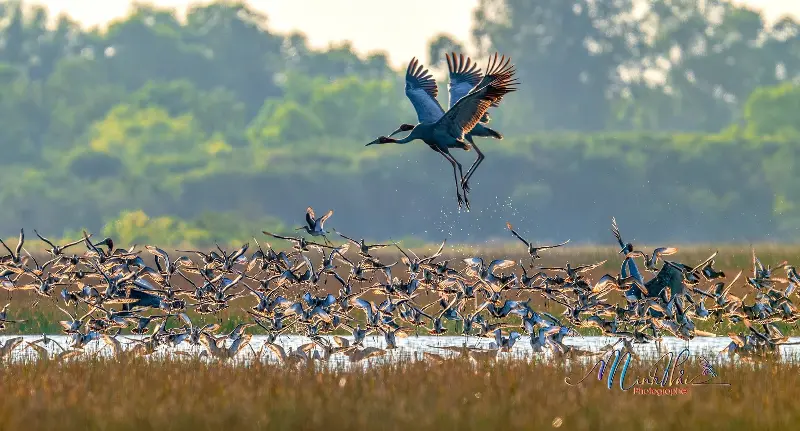
PHOTO: NGUYEN THI MINH HAI
A scene of cranes flying and foraging in the swamp.
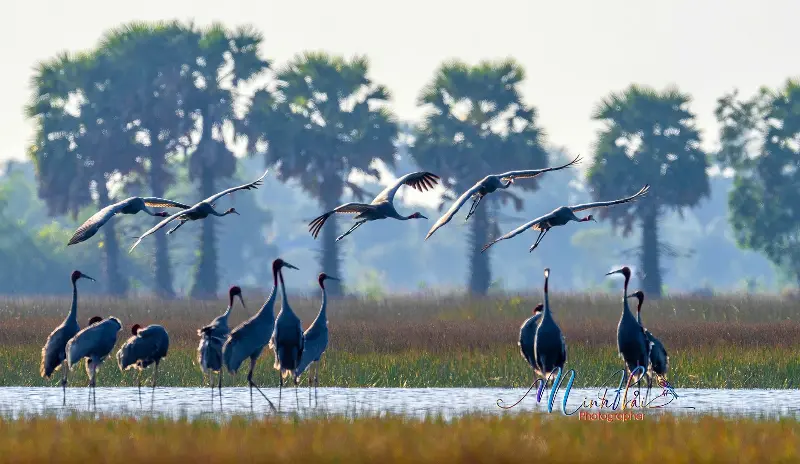
PHOTO: NGUYEN THI MINH HAI
This species has an omnivorous diet that includes small fruits, grasses, frogs, lizards, insects, fish, and more.
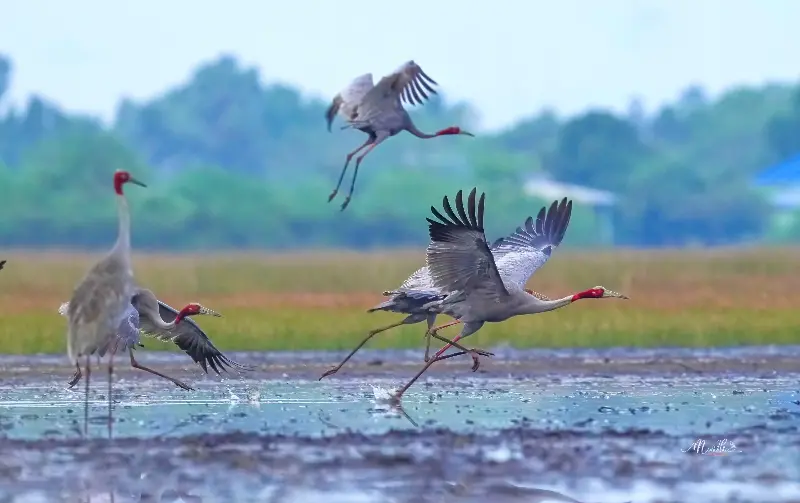
PHOTO: NGUYEN THI MINH HAI
Unlike many other bird species, the red-crowned crane typically has a fixed roosting spot.
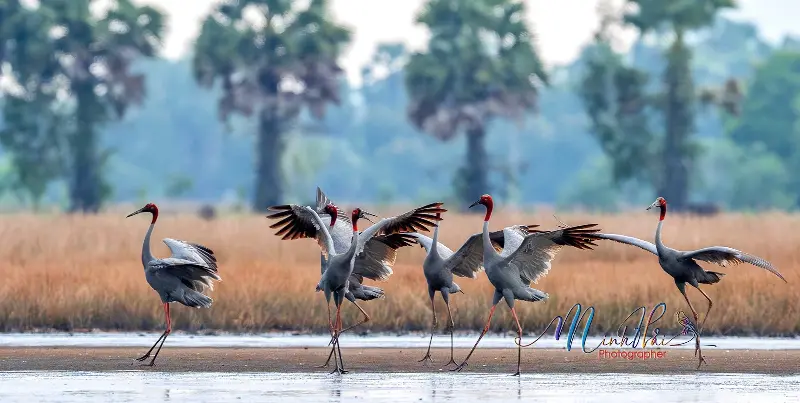
PHOTO: NGUYEN THI MINH HAI
According to the female photographer, the difficulty in photographing cranes lies in the need for a high-performance camera with a high shutter speed to capture a series of images of their active moments. Conversely, if the weather conditions are favorable and the equipment is adequate, the photography is not too difficult.
"Everyone knows that photographing birds is very difficult because of their instinctive behaviors. It takes time, setting up tents and waiting, skipping meals, enduring scorching sun and torrential rain… and still not encountering them. Sometimes, my eyes are red from waiting, and most of the shooting locations are rice fields, swamps, and riverbanks. The most difficult thing for me right now is transportation, especially at my age," Ms. Hai expressed.
Ms. Hai says that each bird species has unique characteristics worth exploring . That's why she has always had a special love for nature photography, wild birds, and especially the red-crowned crane.
The red-crowned crane's feathers are light gray, and its crest is covered with a slightly greenish skin. The rest of its head, throat, and upper neck are covered with rough, orange-yellow skin.
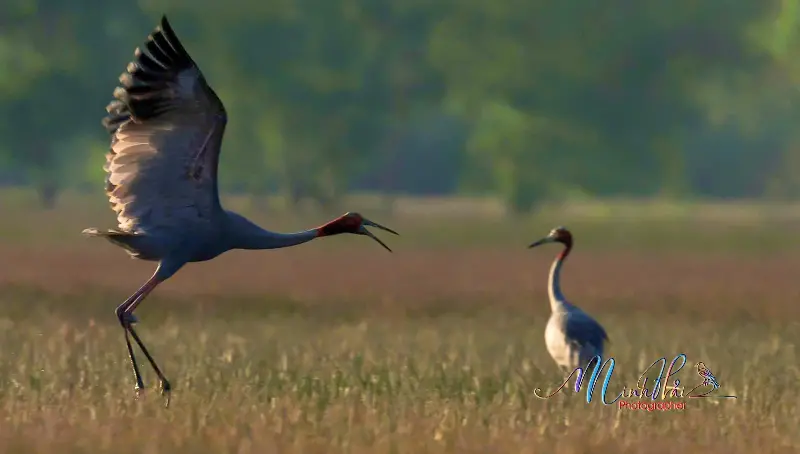
PHOTO: NGUYEN THI MINH HAI
Photographing red-crowned cranes requires a quiet environment, gentle movements, and minimal noise to avoid startling them.
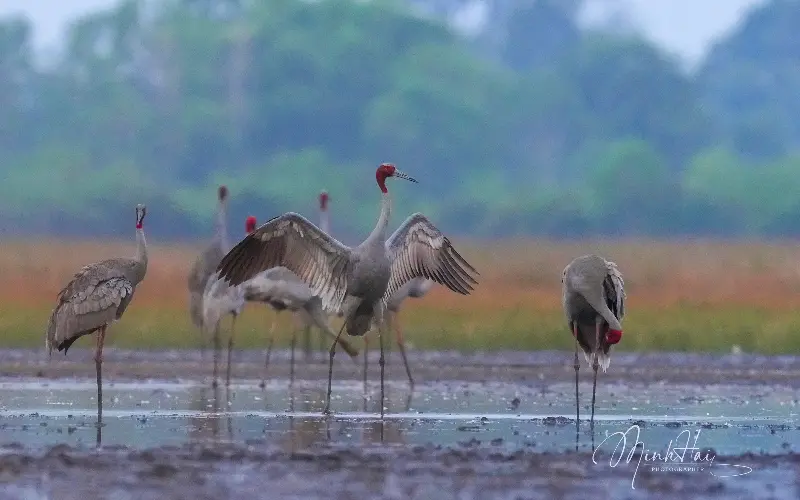
PHOTO: NGUYEN THI MINH HAI
Several other bird species that live in the same area as the red-crowned crane were also photographed by the female photographer.
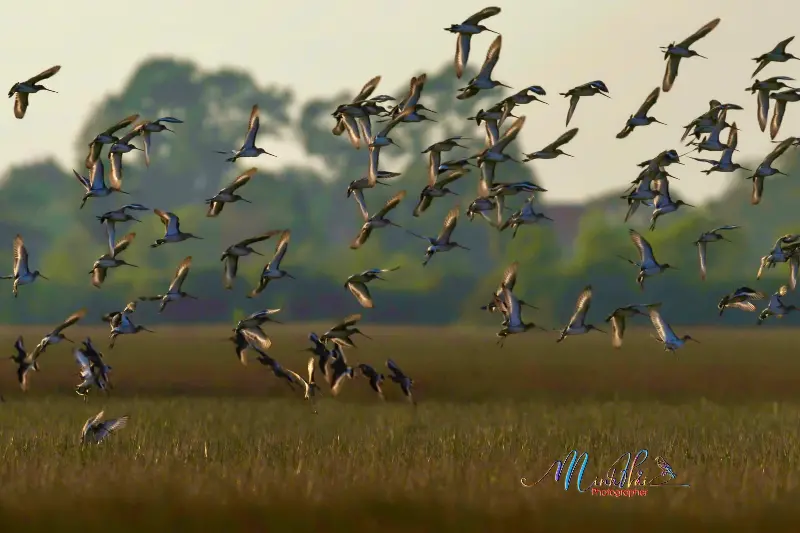
PHOTO: NGUYEN THI MINH HAI
Thanhnien.vn